
Review · POMPEII & VESUVIUS TOURS
Pompeii: Small-Group Guided Tour with Skip-the-Line Ticket
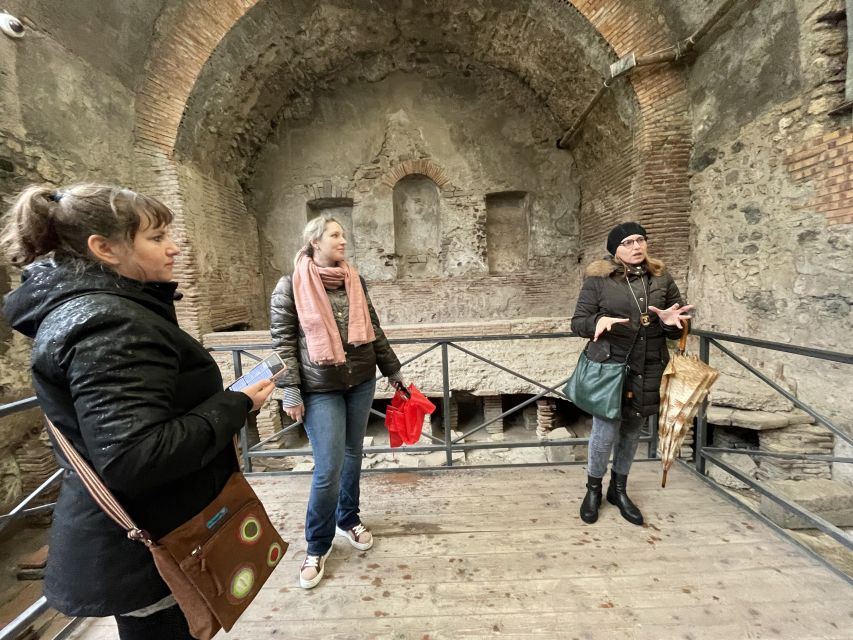
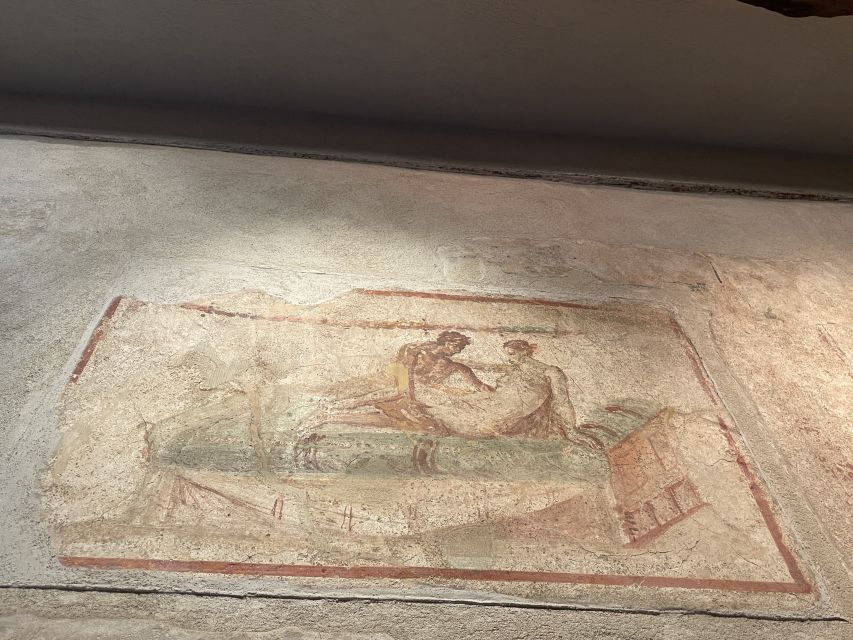
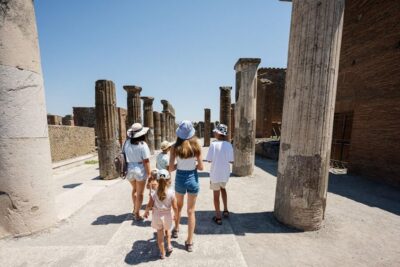
Pompeii is most powerful when you stop seeing it as a ruin and start seeing it as a town. You walk past homes, shops, baths, temples, and streets where daily life ended in 79 AD. The plaster-cast remains are difficult to forget, while the preserved mosaics and painted details bring the Roman city into focus.
I like the separate entrance and pre-reserved ticket, since Pompeii is large and a long wait at the gate eats into your limited sightseeing time. I also like the private format, which lets your guide adjust the pace and answer questions. Guides such as Glauco, Alessia, Vito, and Vincenzo have been praised for clear English, humor, and strong command of the site.
The main drawback is the two-hour limit. Pompeii is enormous, so this tour gives you a smart introduction to the major sights rather than a complete visit. You also need to arrive on time, carry water, and be ready for uneven walking in the sun.
In This Review
- Why this Pompeii tour works well
- A two-hour introduction to a huge ancient city
- Meeting your guide at Piazza Immacolata
- The amphitheater: Pompeii’s public showpiece
- The House of the Faun and Pompeii’s private wealth
- The Temple of Apollo and Pompeii’s religious center
- The Vetutius Placidus House and ancient fast food
- The Garden of the Fugitives and the human cost
- The Forum: ending at Pompeii’s civic heart
- What the guides add to the visit
- Timing, heat, crowds, and walking
- Who should book this experience?
- Booking flexibility and final advice
- FAQ
- How long does the Pompeii tour last?
- Where does the tour meet?
- Is the Pompeii entry ticket included?
- What language is the tour conducted in?
- Is hotel pickup included?
- What should I bring to Pompeii?
Why this Pompeii tour works well
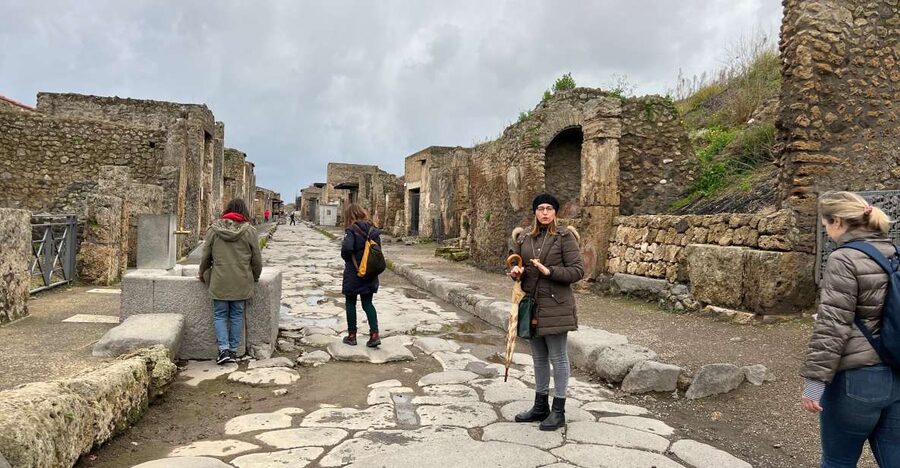
- The route covers the essential sights: You see the amphitheater, House of the Faun, Temple of Apollo, an ancient snack bar, plaster casts, and the Forum.
- Skip-the-line entry saves useful time: A separate entrance helps you get into the archaeological park without spending the opening part of your visit in a queue.
- The guide makes the ruins readable: Instead of looking at broken walls without context, you learn how homes, baths, shops, temples, and public spaces worked.
- Private means personal: The booking covers a group of up to two, and small groups may be able to move around more easily.
- The meeting point is easy to identify: Look for the statue of the Virgin Mary in the piazza opposite the Piazza Anfiteatro entrance, with a Walks In Europe sign.
- You can keep exploring afterward: The tour ends back at the meeting point, and your guide can suggest places to see next.
A two-hour introduction to a huge ancient city
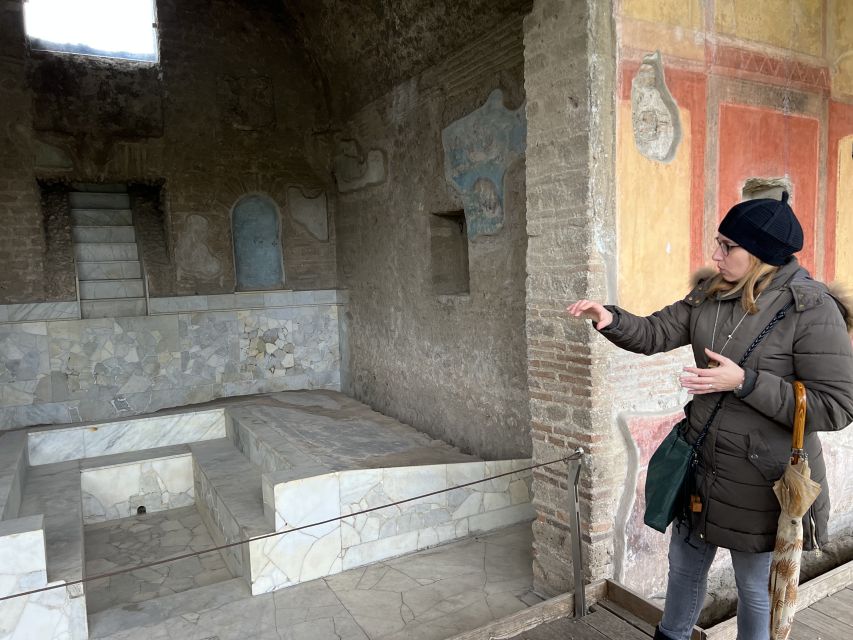
Pompeii is not a single monument. It is a broad archaeological site with streets, houses, public buildings, religious spaces, commercial areas, and entertainment venues spread across a large area. That scale is thrilling, but it can also make a self-guided visit feel scattered.
This tour solves that problem by giving you a route and a story. Your guide links each stop to ordinary Roman life: where people shopped, washed, worshipped, ate, relaxed, and gathered in public. The result is less about memorizing dates and more about understanding how the city functioned.
The tour is conducted in English and lasts two hours. That is enough time to see a strong selection of Pompeii’s major points, but not enough to cover every open house and street. I would treat it as an orientation with substance, then stay longer if your ticket and energy allow.
The advertised price is $282.08 per group of up to two. For two people, that works out to about $141.04 each. That is not a budget admission ticket, but it includes the Pompeii entry fee, reserved access, and a private guide. The value depends on how much you want help making sense of the site. If you already know Pompeii well and enjoy wandering alone, the price may feel high. If this is your first visit, the guidance can prevent you from missing the meaning behind what you are seeing.
More Naples & Pompeii trips worth a second look
- Herculaneum: Skip-the-Line Guided Tour with Archaeologist
★ 4.8 · 3,439 reviews - Mount Vesuvius: Skip-the-Line Ticket and Smart Digital Guide
★ 4.2 · 2,780 reviews - From Naples: Pompeii Skip-the-Line Entry Ticket and Tour
★ 4.4 · 2,753 reviews
Meeting your guide at Piazza Immacolata
The tour begins at Piazza Immacolata, in the piazza directly opposite the entrance gate of Piazza Anfiteatro. Find the statue of the Virgin Mary and look for a guide holding a sign marked Walks In Europe.
Arrive five to ten minutes early. This matters here because it is not possible to join after the tour has started. Pompeii has several entrances and a large flow of people, so do not leave the meeting point until the last moment.
The meeting point is outside the archaeological area, which gives you a clear place to gather before entry. There is no hotel pickup or drop-off, so you must make your own way to the piazza.
Your guide then leads you through the separate entrance using the pre-reserved ticket. Skip-the-line access does not mean every entrance is instantly empty, but it is designed to avoid the regular ticket queue and get you inside faster.
The amphitheater: Pompeii’s public showpiece
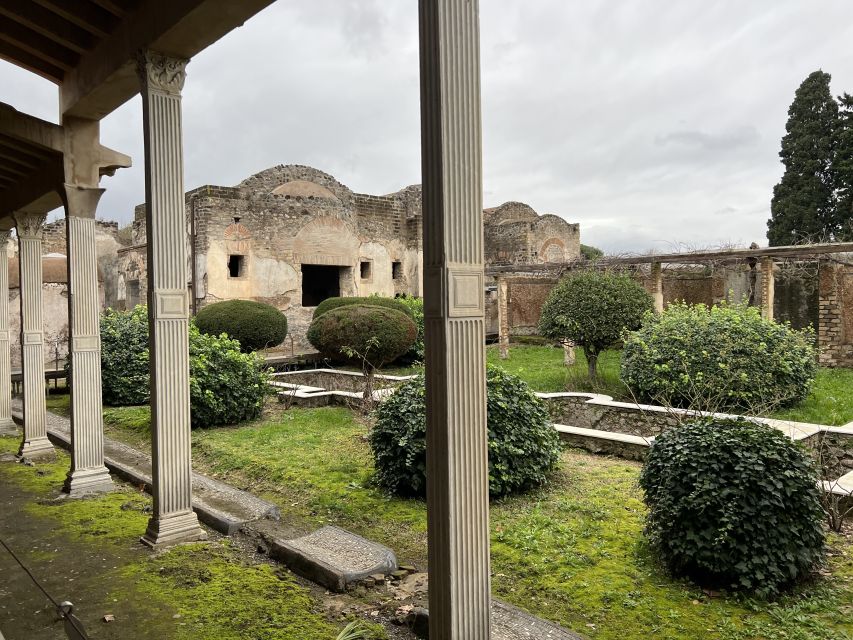
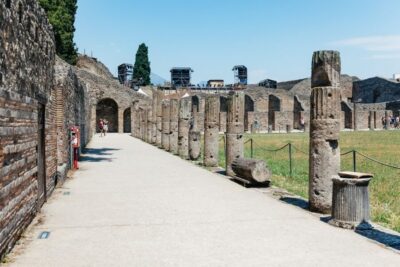
The Pompeii Amphitheater is one of the first major stops. It gives you an immediate sense of the city’s love of public entertainment and the scale of Roman crowds.
Your guide explains how the building was used for gladiatorial contests. The setting helps you picture Pompeii as a living city, not simply a place buried under volcanic material. The amphitheater is also a useful early stop because it shows how public buildings could shape the daily rhythm of a Roman town.
The planned walk here is about 20 minutes. That is enough for an explanation and photographs, but it is not a long, technical study of the structure. If you have a special interest in Roman games, you may want to return on your own after the guided portion.
The House of the Faun and Pompeii’s private wealth
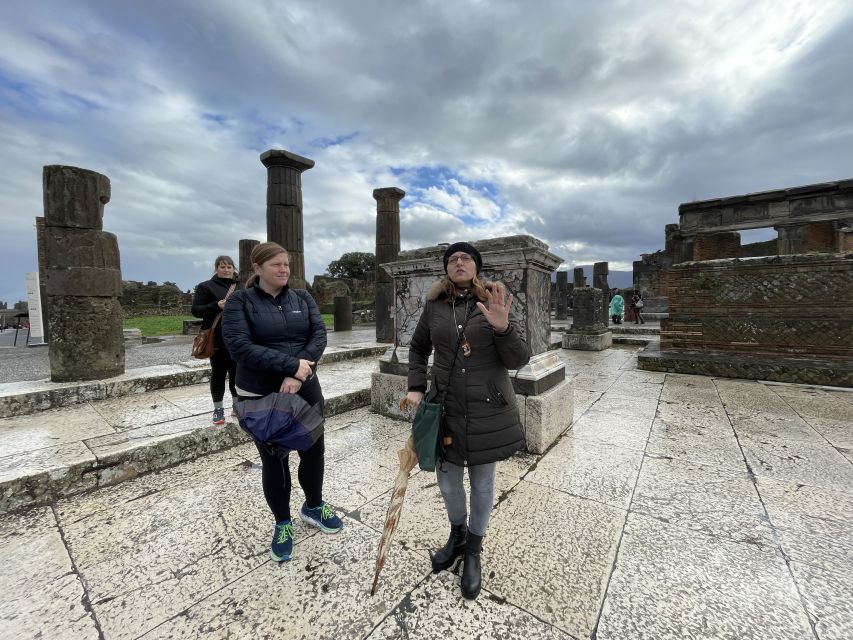
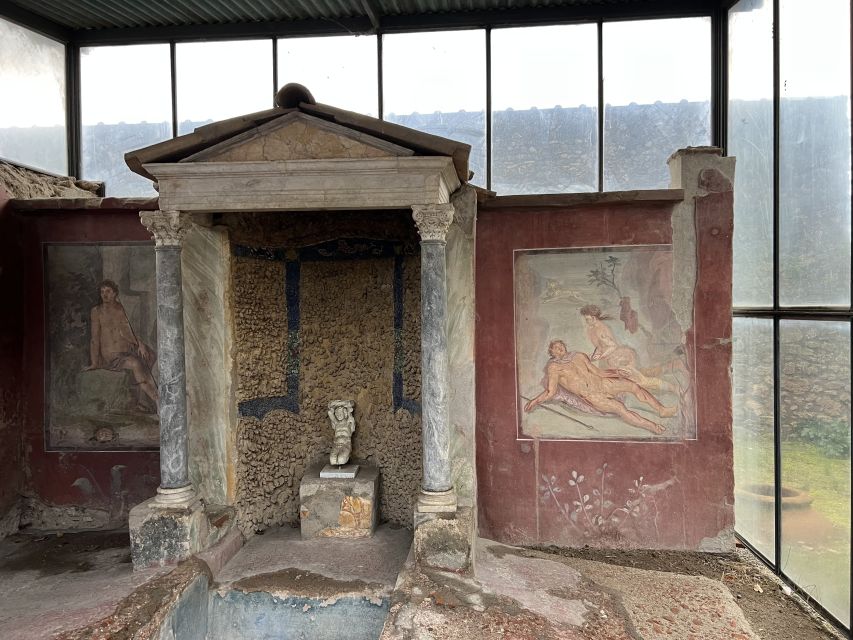
The House of the Faun is one of the city’s best-known residences. Its name comes from a statue of a dancing faun, and the house is famous for its size, decoration, and mosaics.
This stop helps you compare private life with the public buildings seen earlier. Your guide can point out how the layout, artwork, and decoration reveal the status of the people who lived there. The preserved floors and visual details are easier to appreciate when someone explains what you are looking at.
The visit is scheduled for around 20 minutes. That may feel brief if you enjoy Roman domestic architecture, but the short stop keeps the tour moving toward other parts of the city.
A different way to spend the day, same part of Italy:
- Naples: Naples Underground Entry Ticket and Guided Tour
★ 4.4 · 21,781 reviews - Pompeii: Entry Ticket and Guided Tour with an Archaeologist
★ 4.8 · 19,459 reviews - Pompeii: Entry Ticket with Optional Audio Guide
★ 4.2 · 12,360 reviews - Pompeii: Small Group Tour with an Archaeologist
★ 4.8 · 12,264 reviews
The Temple of Apollo and Pompeii’s religious center
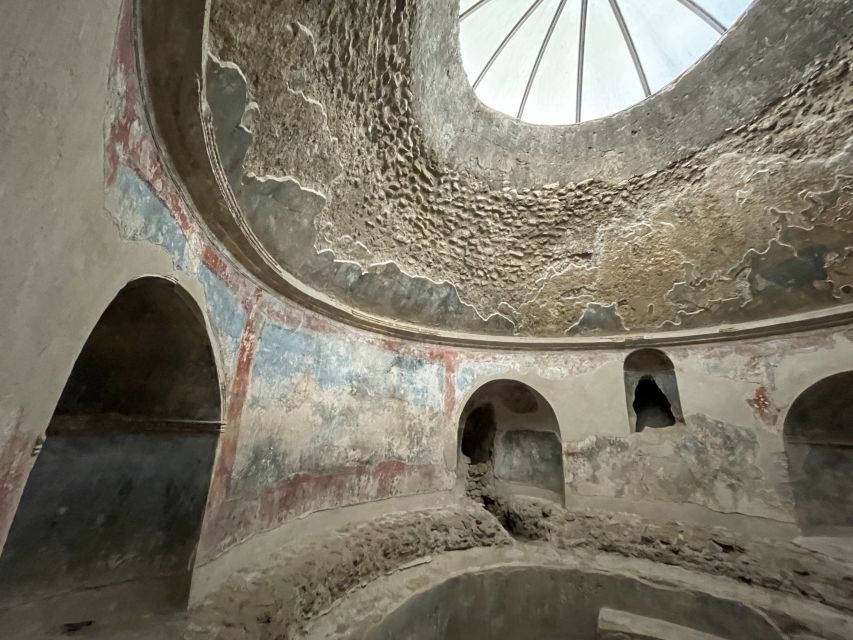
The Temple of Apollo introduces Pompeii’s religious life. It sits near the Forum and gives you a useful link between worship, politics, trade, and public ceremony.
A good guide does more than identify columns and foundations. They explain how this area fitted into the city’s wider civic life and how Roman public spaces were arranged. Guides including Alessia have been praised for discussing Pompeii’s changing interpretations and recent archaeological work, which can add a modern layer to the ancient setting.
The planned walk and guided visit here take about 20 minutes. The temple is especially useful for visitors who want to understand the Forum before reaching it later in the route.
The Vetutius Placidus House and ancient fast food
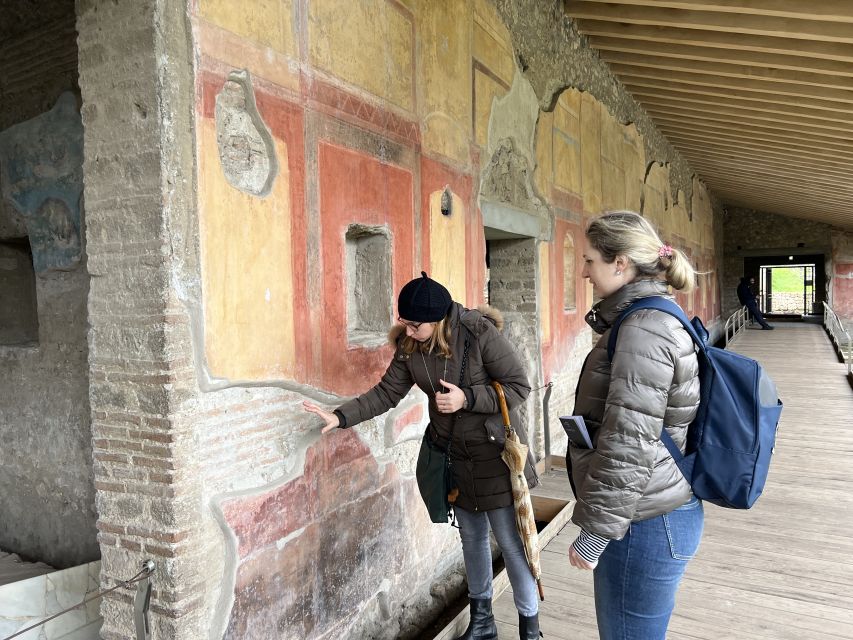
The Vetutius Placidus House and Thermopolium is one of the most relatable stops. A thermopolium was a food and drink counter, a Roman equivalent of a casual takeaway or neighborhood snack bar.
This is where Pompeii can feel surprisingly familiar. You are not just looking at grand temples and wealthy houses. You are seeing a place where people bought prepared food and went about ordinary business.
The stop lasts about 10 minutes. It is short, but it adds welcome variety to the route. After the amphitheater, house, and temple, the thermopolium brings the focus back to practical daily routines.
The Garden of the Fugitives and the human cost
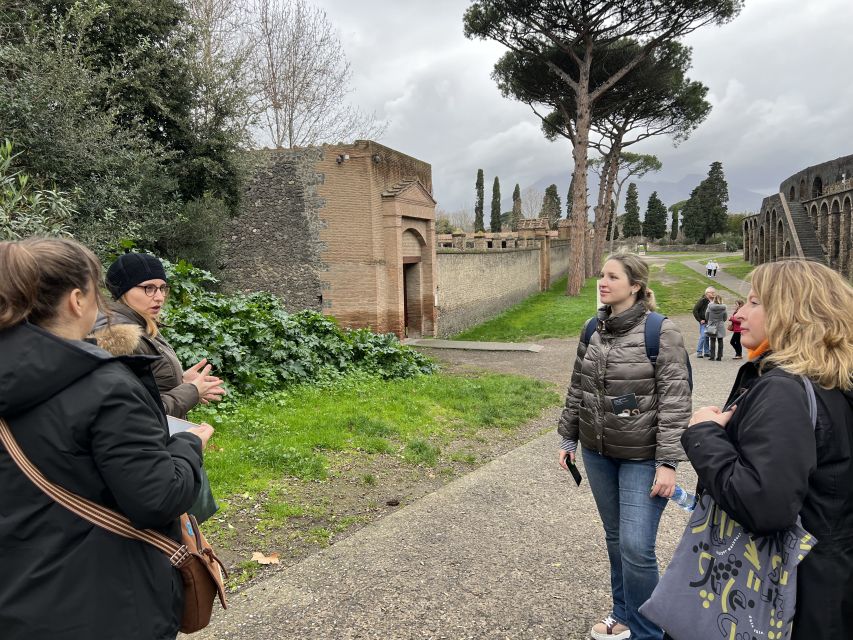
The Garden of the Fugitives is the most emotionally difficult part of the tour. Here you see the famous plaster casts made from cavities left in the hardened ash by people who died during the eruption.
The casts are not the bodies themselves. Archaeologists filled the spaces left in the volcanic material, preserving the forms of the victims. This method reveals posture, clothing details, and the terrible speed of the disaster in a way that written history cannot.
Your guide provides the archaeological and historical context, which is important at a site where it is easy to focus only on shock. The stop connects the city’s beautiful mosaics and busy streets with the people who lived there and never escaped.
The planned visit is about 20 minutes. Take your time emotionally, even if the group continues at a steady pace. The site is moving without needing dramatic treatment.
The Forum: ending at Pompeii’s civic heart
The final major stop is the Foro Civile di Pompei, or Forum. Ending here is a strong choice because the Forum was the public center of Pompeii. It brings together the themes introduced throughout the tour: religion, administration, trade, and social life.
From this broad civic space, you can better understand how the surrounding buildings related to one another. Your guide can help you picture the Forum as a place of movement and public business rather than a collection of isolated ruins.
The Forum is also a grand finale for photographs. After two hours of smaller details, the open public setting gives you a wider view of Pompeii’s organization and importance.
The tour ends back at the original meeting point. You can then ask your guide what to see next or continue exploring independently. This is one of the tour’s practical strengths: you are not simply dropped at the final monument and left to work out your next move.
What the guides add to the visit
The strongest part of this experience is the guide. The names attached to the tour include Glauco, Vito, Caterina, Laura, Alicia, Alessia, Vincenzo, Giovanni, Kiara, and Anso.
Glauco has been singled out for making the subject fun without losing detail. He is also noted for finding routes that avoid larger crowds and for giving suggestions about areas to visit after the tour. One afternoon tour at 4 p.m. was especially appreciated for cooler temperatures and lighter crowds.
Vito is praised for practical advice, including a recommendation to walk on a platform where archaeologists were working. That kind of tip can add something you would not get from simply following a map.
Alessia is known for answering questions, pausing for photographs, discussing current archaeological work, and engaging both adults and teenagers. During one rainy visit, she kept the planned tour going despite the poor weather.
The guides are not interchangeable in personality, but the pattern is clear: expect an informed English-speaking guide who can explain details, answer questions, and adjust the pace when conditions require it. Some groups of two have effectively received a private tour when no other participants joined.
Timing, heat, crowds, and walking
Pompeii is exposed and can be hot. Bring a hat and water, as requested by the operator. Your guide may find limited shade and slow the pace during very hot weather, but there is no way to turn the site into an indoor museum.
The route includes repeated walking over ancient streets and uneven ground. The experience is not suitable for wheelchair users, and anyone with mobility concerns should consider that before booking.
Time of day can shape the feel of the visit. The 4 p.m. start has been appreciated for cooler conditions and fewer people, while a 9 a.m. start can give you a quieter first hour before the site grows busier. Starting times vary, so check availability when booking.
A private group gives you more room to ask questions than a large tour. It can also make it easier for the guide to change the order slightly, avoid congested sections, or spend longer on a point that interests you. You should still expect a planned two-hour route, not an open-ended private day.
Who should book this experience?
I would recommend this tour to first-time Pompeii visitors who want to understand the ruins instead of simply photographing them. It is also a good fit for couples, families with older children, and people who prefer a private setting.
It suits you especially well if you have limited time in Campania. The guide takes you through major highlights without asking you to plan a route through a very large archaeological park.
History fans may want more time at individual houses, inscriptions, or excavation areas. For them, the best plan is to use the tour as a starting framework and continue alone afterward.
This is less suitable if you want complete freedom from the beginning, dislike walking outdoors, or need step-free access. It is also not ideal for anyone arriving late, since late joining is not permitted.
Booking flexibility and final advice
You can cancel up to 24 hours before the start for a full refund, and the reserve-now, pay-later option keeps your plans flexible. Every participant, including children, must bring a valid ID for entry to the Pompeii Archaeological Site.
I would book this tour if you want the main story of Pompeii delivered by one guide, with entry arrangements handled and a small group around you. The high 4.9 rating from 386 bookings fits the experience described here: the most praised qualities are guide skill, clear English, personal attention, crowd-aware routing, and the ability to make complicated history enjoyable.
I would skip it only if the $282.08 group price feels too steep for a two-hour visit or if you plan to spend an entire day studying the site at your own pace. Otherwise, it offers a focused and useful first look, with enough time afterward to keep exploring.
FAQ
How long does the Pompeii tour last?
The guided tour lasts two hours. You may continue exploring on your own after it ends.
Where does the tour meet?
Meet at Piazza Immacolata, in the piazza opposite the Piazza Anfiteatro entrance gate. Your guide will stand near the statue of the Virgin Mary and carry a Walks In Europe sign.
Is the Pompeii entry ticket included?
Yes. The experience includes a Pompeii entry ticket, pre-reserved attraction tickets, and skip-the-line access through a separate entrance.
What language is the tour conducted in?
The live tour guide speaks English.
Is hotel pickup included?
No. Hotel pickup and drop-off are not included, so you must reach the meeting point yourself.
What should I bring to Pompeii?
Bring a hat and water. You must also bring valid identification for every person entering the archaeological site, including children.
Recently reviewed around Naples & Pompeii
- Pompeii Skip-the-line Tour with Archaeologist Guide★ 5.0 · 559 reviews
- Sharing Tour of Pompeii★ 5.0 · 487 reviews
- Skip the Line Guided Tour of Pompeii led by an Archaeologist★ 5.0 · 703 reviews
- Visit in Pompeii – Pompeii Private Tour with Ada★ 5.0 · 436 reviews
- Pompeii Private Tour with an Archaeologist and Skip The Line★ 5.0 · 391 reviews
- Private Day Tour to Vesuvius, Herculaneum & Pompeii with Pick Up★ 5.0 · 279 reviews
- Pompeii Vineyard Escape: Private Wine Tasting & Lunch★ 5.0 · 329 reviews
- Pompeii Guided Group Tour with Entry Ticket and Archaeologist★ 4.5 · 269 reviews
Pompeii & Vesuvius Tours, compared.

Entry Ticket and Guided Tour with an Archaeologist
Read our review →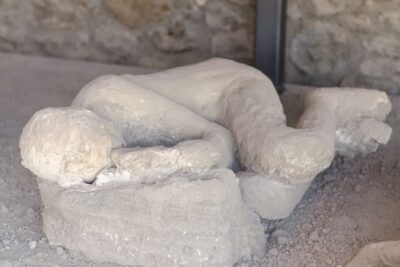


Pompeii Small Group Tour with an Archaeologist
Read our review →
Pompeii, Amalfi Coast and Positano Day Trip from Rome
Read our review →Browse the lists this tour appears in