

Review · POMPEII & VESUVIUS TOURS
Complete Pompeii Skip the Line Tour with Archaeologist Guide
Pompeii is not a museum behind glass. It is a Roman town you walk through, with streets, bakeries, baths, shops, homes, and public buildings still laid out beneath Mount Vesuvius. This tour helps you make sense of that enormous site through an archaeologist guide, rather than leaving you to puzzle over walls and broken columns on your own.
I like two things right away: the small group of 15 or fewer, which makes it easier to hear and ask questions, and the pre-reserved entrance ticket, which saves time at the gate. The guides also bring the place down to human scale, explaining how ordinary Pompeians worked, ate, bathed, shopped, and died.
The main drawback is physical. You walk at a moderate pace over uneven ancient streets, often in strong sun, and the tour may include breaks that feel too long if you want a fast-moving visit. Meeting instructions can also be confusing, so you need to allow time to find the correct entrance.
In This Review
- Key Points Before You Book
- Why an Archaeologist Makes Pompeii Easier to Read
- Entering Pompeii With a Pre-Reserved Ticket
- Pompeii’s Main Street and the Shape of Roman Life
- The Bakery, Shops, and Ordinary Pompeians
- The Temple of Apollo and Roman Forum
- Roman Baths and Public Amenities
- The Plaster Casts and Pompeii’s Hardest Moment
- Full Tour or Two-Hour Express Option?
- Is $71.38 Good Value?
- Practical Advice for Heat, Water, and Walking
- Who Should Choose This Pompeii Tour?
- Should You Book It?
- FAQ
- How long does the Complete Pompeii tour last?
- Is admission to Pompeii included?
- Is the tour conducted in English?
- How large is the tour group?
- Where does the tour begin?
- Where does the tour end?
- What should I bring?
- Can most people participate?
- What happens if I need to cancel?
Key Points Before You Book
- Archaeologist-led interpretation: Guides such as Enzo, Ilaria, Francesca, Sonia, Vito, Francesco, and Vincenzo have been praised for making the ruins easier to understand.
- A practical three-hour route: You see major public buildings, streets, shops, baths, a bakery, and the plaster casts, then can continue exploring on your own.
- An express choice: A shorter two-hour option focuses on the site’s main highlights if your schedule is tight.
- Small groups matter: With no more than 15 people, you have a better chance of hearing the guide and getting answers.
- Bring water and sun protection: There are pauses, but not regular service stops, and Pompeii offers little shade across much of the route.
- Meet carefully at the entrance: The start is at Via Villa dei Misteri, 1, not simply at any building near the train station.
Why an Archaeologist Makes Pompeii Easier to Read
Pompeii can overwhelm you. The site is huge, and its streets often look like a jumble of stone, brick, and faded plaster until someone explains what each space was for. A trained guide gives you a framework, showing how the town worked instead of leading you from one famous ruin to another without connection.
The strongest part of this experience is the explanation of daily life. You are not only looking at temples and grand public buildings. You are seeing evidence of bread production, shopping, washing, entertainment, religion, and sex in an ordinary Roman town.
Guides have included Enzo, a former Pompeii archaeologist, and Ilaria, who has been praised for mixing clear explanations with a little humor. Francesco is noted for answering questions patiently, while Francesca has been singled out for careful communication and thorough answers. The actual guide is assigned by the operator, so you should not book expecting one particular person, but the experience clearly depends heavily on who leads your group.
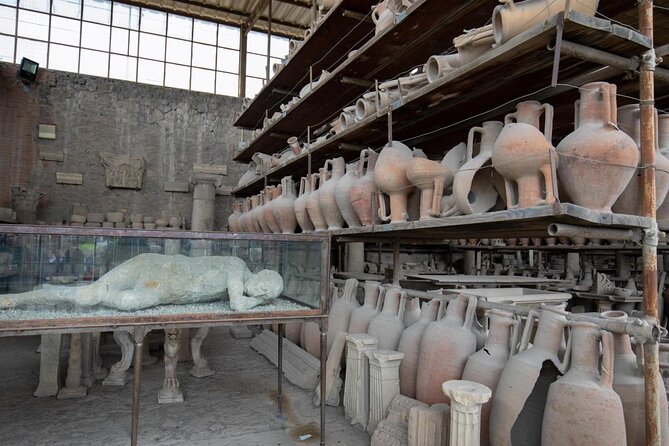
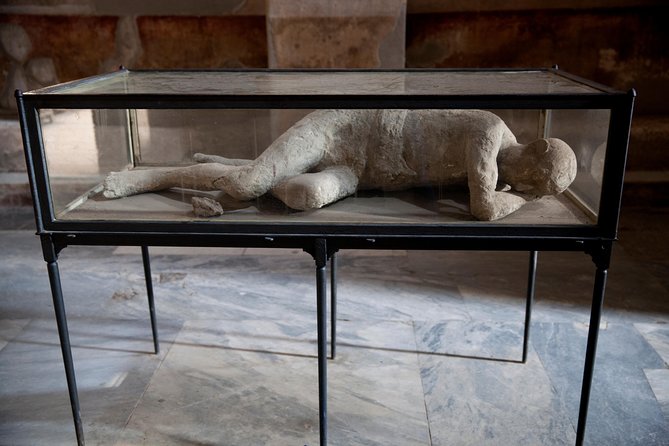
An archaeologist guide also helps with the difficult parts. The plaster casts of people caught in the eruption can be upsetting. A good guide provides context without turning the moment into spectacle, helping you understand what the casts reveal about the eruption and the people caught in it.
More Naples & Pompeii trips worth a second look
- Herculaneum: Skip-the-Line Guided Tour with Archaeologist
★ 4.8 · 3,439 reviews - Mount Vesuvius: Skip-the-Line Ticket and Smart Digital Guide
★ 4.2 · 2,780 reviews - From Naples: Pompeii Skip-the-Line Entry Ticket and Tour
★ 4.4 · 2,753 reviews
Entering Pompeii With a Pre-Reserved Ticket
The tour begins at Via Villa dei Misteri, 1, at the Pompeii archaeological site. The group meets outside, then enters with a pre-reserved admission ticket. Hotel pickup and drop-off are not included, so you must make your own way to the entrance.
This is the point where you need to pay attention. Several meeting areas and tour groups operate around Pompeii, and some directions can lead you toward a building near the train station rather than the proper entrance. Arrive early, check the address carefully, and look for the tour leader. A large, easy-to-see sign would help, but you should not rely on spotting it instantly.
Once the group is assembled, the reserved ticket saves you from waiting in the standard entry line. It does not make Pompeii empty. The archaeological park can still be crowded, especially at popular buildings and during busy periods, but skipping the ticket line is valuable when you have only part of a day.
You receive a headset when needed. That matters in a site where groups spread out along narrow streets and other tour parties may be nearby. You can keep your eyes on the ruins instead of standing shoulder to shoulder with the guide.
Pompeii’s Main Street and the Shape of Roman Life
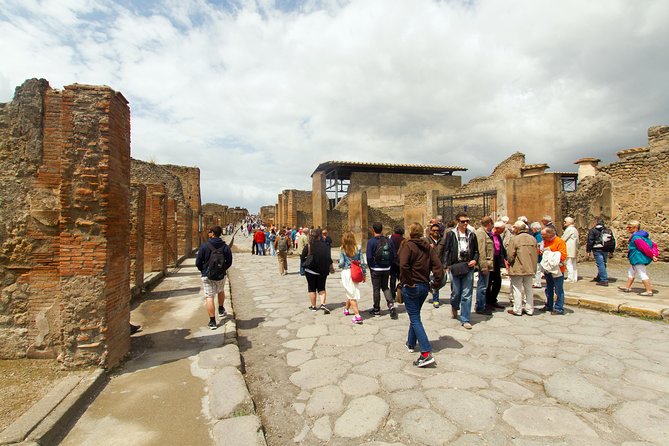
The main street gives you the clearest sense of Pompeii as a functioning town. Underfoot are ancient paving stones, and along the route you see doorways, shops, public buildings, and the marks of a city laid out for daily use.
The guide’s job here is to turn ruins into a working town. You learn how people moved through Pompeii, where business took place, and how public and private life overlapped. Even a plain wall becomes more interesting when you understand whether it belonged to a shop, a home, or a civic building.
This is also where comfortable shoes matter most. Pompeii is not a smooth modern plaza. The streets are uneven, and walking over ancient paving stones for several hours can be tiring. Sandals are a poor choice, particularly if you want to keep exploring after the guided portion.
The full route takes about three hours. That is long enough to cover a broad selection of the park without requiring you to spend an entire day with a guide. Some groups include a ten-minute break and another pause of about 20 minutes. These stops can be welcome in hot weather, but if you prefer constant movement, the pacing may feel slow.
The Bakery, Shops, and Ordinary Pompeians
The remains of a Roman bakery are among the most useful stops because they show everyday work rather than only official Roman life. You see the equipment and layout connected with bread production, giving you a more practical sense of how food moved through the town.
Pompeii is especially valuable because it preserves small details of ordinary activity. An ancient bakery, a shop area, a cemetery, and what is described as an ancient supermarket help you picture the people who lived here as workers, customers, families, and neighbors.
The guide adds the missing link between object and use. Without explanation, a row of stone features may seem abstract. With context, you begin to see how food was prepared, sold, and consumed.
The route can also include a brothel, depending on the group and what is appropriate for the ages present. This is not a sanitized version of Roman life. Pompeii presents public religion, commerce, entertainment, and intimate business side by side.
A different way to spend the day, same part of Italy:
- Naples: Naples Underground Entry Ticket and Guided Tour
★ 4.4 · 21,781 reviews - Pompeii: Entry Ticket and Guided Tour with an Archaeologist
★ 4.8 · 19,459 reviews - Pompeii: Entry Ticket with Optional Audio Guide
★ 4.2 · 12,360 reviews - Pompeii: Small Group Tour with an Archaeologist
★ 4.8 · 12,264 reviews
The Temple of Apollo and Roman Forum
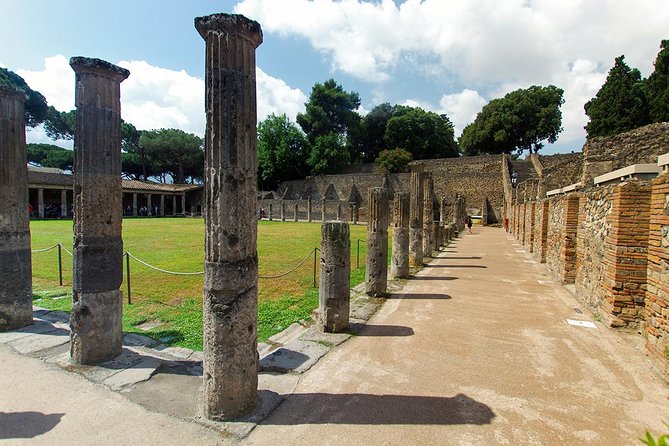
The Temple of Apollo offers a look at Pompeii’s religious world. The Roman Forum then brings you into the civic center, where public life, politics, religion, and commerce met.
These spaces are important, but they can be difficult to read without guidance. Large open areas often lose their meaning when only fragments remain. Your guide helps identify the buildings and explains how the forum functioned within the Roman town.
You also get a stronger sense of scale. Pompeii was not a small village frozen in ash. It had organized public spaces, religious institutions, commercial activity, and civic buildings. The tour connects those pieces so that the site feels like a town rather than a collection of archaeological stops.
The route is not always identical. Excavations and preservation work continue, and access to particular areas can change. The guide may adjust the path to reflect current conditions and new discoveries. That flexibility is useful, although it means no tour can promise every building on every date.
Roman Baths and Public Amenities
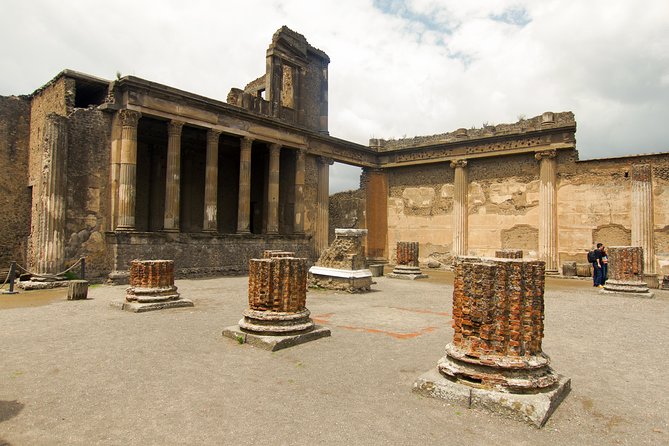
The Roman baths show how much public life extended beyond politics and religion. Baths were places for washing, exercise, social contact, and routine. The remains help explain the practical side of Roman urban living.
This stop is also a reminder that Pompeii should not be reduced to the eruption. The tragedy draws you here, but the town itself is the main subject. The baths, bakery, streets, forum, and shops show people living normal lives before the disaster interrupted them.
The guided stop usually includes time for photographs and questions. Do not expect a photo stop in the modern sightseeing sense, with a fixed viewpoint and lots of free time. You pause, look, listen, and take pictures while the group stays together.
The Plaster Casts and Pompeii’s Hardest Moment
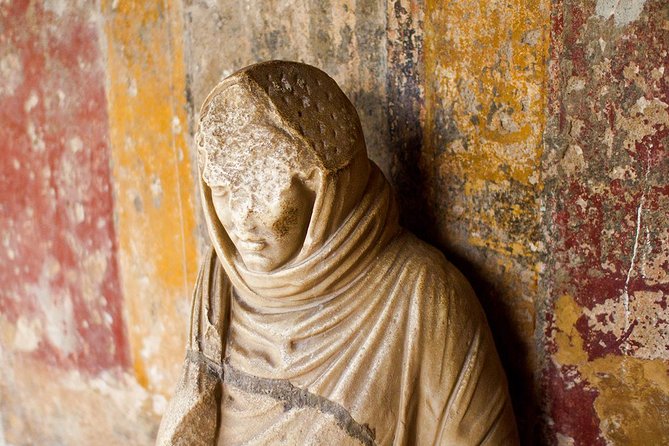
The plaster casts are the most emotionally difficult part of the visit. They preserve the positions of people caught during the eruption, making the disaster personal in a way that a ruined wall cannot.
You may find this section powerful, but it is not light entertainment. The casts can be upsetting, particularly for children or anyone sensitive to scenes connected with death. The tour description notes that the brothel is included only if age appropriate, and you should apply the same judgment to the casts.
A guide can help you understand what you are seeing and place the eruption in the story of Pompeii. That context makes the visit more meaningful, though it does not make the subject less painful. The best approach is to give yourself time to look quietly and move on if it feels too heavy.
Full Tour or Two-Hour Express Option?
The full experience lasts about three hours and is the better choice if this is your first visit. You cover a wider mix of public and private life, including the main street, Roman baths, bakery, Temple of Apollo, Forum, cemetery, and casts.
The three-hour length also gives you a useful orientation. Several guides have suggested places to continue after the tour, and the end point remains inside the archaeological park. You can keep exploring on your own instead of being sent straight back outside.
The Pompeii Express option lasts about two hours and follows a shorter route through the main highlights. It makes sense if you are fitting Pompeii between trains, another appointment, or a visit to a nearby site. The tradeoff is clear: you gain time but lose some of the broader picture.
I would choose the full route for a first visit unless your schedule or energy makes three hours unrealistic. Choose express if you already know you want only the major sights, or if the heat and walking distance are serious concerns.
Is $71.38 Good Value?
At $71.38 per person, this is not the cheapest way to enter Pompeii. You are paying for the reserved admission, an official guide, a small group, and roughly two to three hours of interpretation in English.
The value comes from avoiding a self-guided visit where you may spend much of your time wondering what you are looking at. Pompeii is large enough that poor planning can leave you tired without giving you a clear sense of the town. A good guide saves you time and adds meaning to details you could easily pass by.
The price makes less sense if you already have strong knowledge of Roman archaeology, plan to spend many hours reading independently, or prefer complete freedom to set your own pace. It also may not suit someone who dislikes group touring or pauses.
For a first visit, I consider the cost reasonable, particularly because the group is capped at 15 and you can continue inside the park after the guide finishes. The most important variable is the guide. Names such as Enzo, Ilaria, Francesca, Sonia, Vito, and Francesco come up in especially favorable feedback, but assignments can change.
Practical Advice for Heat, Water, and Walking
Wear walking shoes with a firm sole. Pompeii’s ancient streets are uneven, and the site can be hard on your feet. Bring a water bottle, sunglasses, and sun protection, and carry an umbrella if rain is possible.
Water matters because the tour includes pauses rather than regular café-style stops. You may be able to refill your bottle along the route, but do not begin the walk without water. Several hours outdoors can feel much longer in hot weather.
Use the bathroom before starting. The route can last close to three hours, and bathroom access may not come at the moment you want it. This is a small detail, but it can make the difference between a relaxed visit and an uncomfortable one.
You should be able to walk at a moderate pace without difficulty. The experience is not suited to anyone who needs a gentle, fully accessible route, and the site’s ancient surfaces can be difficult for people with limited mobility. Most people can take part, but the physical demand is real.
Who Should Choose This Pompeii Tour?
I would recommend it most strongly for a first-time visitor who wants the site explained in clear English. It is also a good fit if you have only half a day and want to see the major areas without spending hours planning a route.
Families should consider the length, heat, uneven streets, and plaster casts before booking. The brothel can be handled according to age, but Pompeii’s death casts are a separate and more serious concern.
Independent repeat visitors may prefer the express option or no guide at all. After an initial guided visit, you can return with a better map in your head and spend time in areas that interest you most.
The tour ends inside Pompeii, which is useful. You are not rushed out when the guided portion ends, and you can continue looking around if your ticket and site conditions allow. That extra freedom improves the value of the full tour.
Should You Book It?
Book this tour if you want Pompeii to make sense, not simply to collect photographs of ruins. The archaeologist guide, small group, pre-reserved entry, and three-hour route give a first visit structure and human detail.
Skip it if you need a very fast, fully independent visit, dislike walking in heat, or already know the site well. If meeting confusion worries you, double-check Via Villa dei Misteri, 1 and arrive early.
For most first-time visitors, I would choose the full three-hour option, wear serious walking shoes, bring water, and treat the guide as your interpreter of a complicated place. The eruption is the headline, but the bakery, baths, shops, forum, and streets are what make Pompeii feel like a real town.
FAQ
How long does the Complete Pompeii tour last?
The standard tour lasts about three hours. A Pompeii Express option is available for a shorter experience of about two hours.
Is admission to Pompeii included?
Yes. The tour includes a pre-reserved entrance ticket to the Pompeii archaeological site.
Is the tour conducted in English?
Yes. English is the listed language for the experience.
How large is the tour group?
The group has a maximum of 15 people.
Where does the tour begin?
The meeting point is Via Villa dei Misteri, 1, 80045 Pompei, Italy. You should meet at the entrance area of the archaeological site and check the directions carefully.
Where does the tour end?
The tour ends inside the Archaeological Park of Pompeii. Hotel pickup and drop-off are not included.
What should I bring?
Wear comfortable walking shoes and bring water, sunglasses, and sun protection. An umbrella is useful if rain is possible.
Can most people participate?
Most people can participate, but this is a walking tour. You should be able to walk at a moderate pace without difficulty, and the uneven streets may not suit anyone with limited mobility.
What happens if I need to cancel?
You can cancel up to 24 hours before the experience start time for a full refund. Cancellations or changes made less than 24 hours before the start time are not accepted for a refund.
Recently reviewed around Naples & Pompeii
- Pompeii Skip-the-line Tour with Archaeologist Guide★ 5.0 · 559 reviews
- Sharing Tour of Pompeii★ 5.0 · 487 reviews
- Skip the Line Guided Tour of Pompeii led by an Archaeologist★ 5.0 · 703 reviews
- Visit in Pompeii – Pompeii Private Tour with Ada★ 5.0 · 436 reviews
- Pompeii Private Tour with an Archaeologist and Skip The Line★ 5.0 · 391 reviews
- Private Day Tour to Vesuvius, Herculaneum & Pompeii with Pick Up★ 5.0 · 279 reviews
- Pompeii Guided Group Tour with Entry Ticket and Archaeologist★ 4.5 · 269 reviews
- Pompeii Private Tour with an Archaeologist and Skip The Line – 3 hours★ 5.0 · 564 reviews
Pompeii & Vesuvius Tours, compared.

Entry Ticket and Guided Tour with an Archaeologist
Read our review →




Pompeii Small Group Tour with an Archaeologist
Read our review →
Pompeii, Amalfi Coast and Positano Day Trip from Rome
Read our review →Browse the lists this tour appears in