
Review · POMPEII & VESUVIUS TOURS
Ercolano: Herculaneum Entry Ticket with Optional Audio Guide
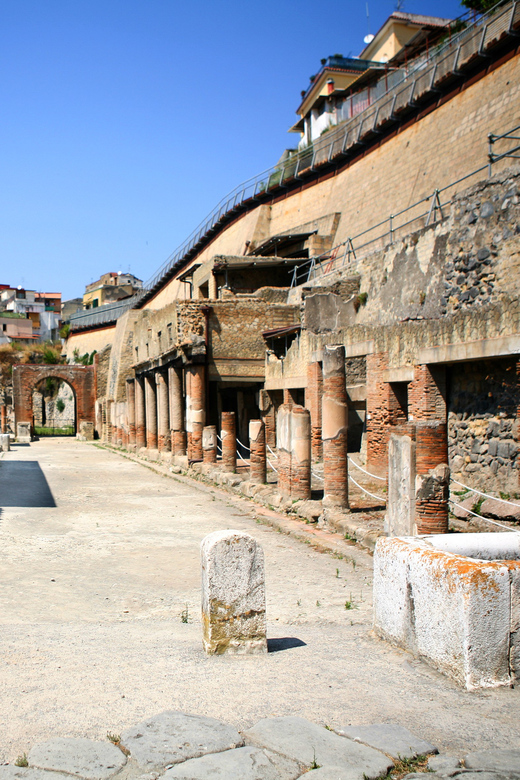
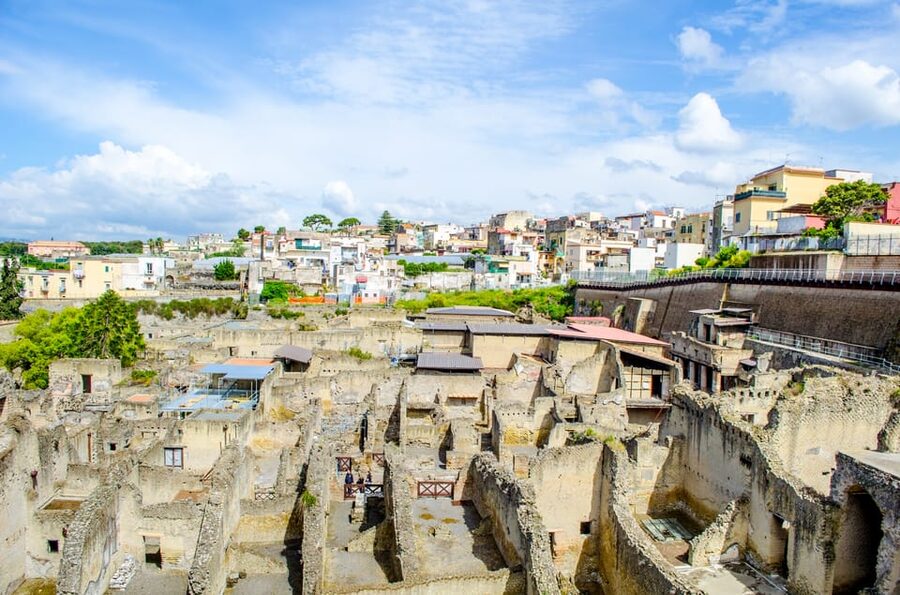
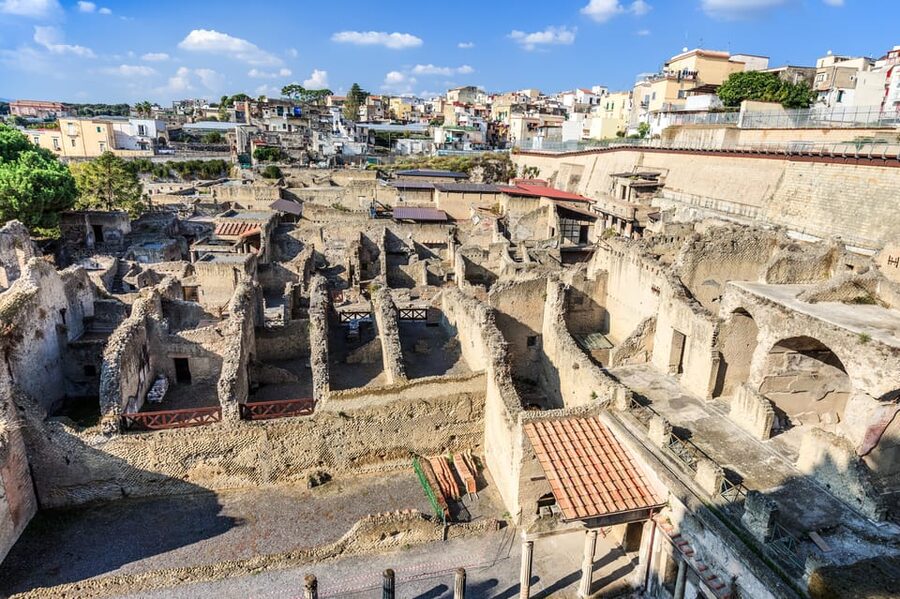
Herculaneum gives you one of Italy’s most powerful glimpses of Roman daily life. Unlike Pompeii, where much of the town is open sky and broken walls, Herculaneum still has roofs, wooden doors, beds, and household objects. You can walk into buildings and picture the people who used them almost 2,000 years ago.
I like the site for two clear reasons: it is compact enough to see well in about three hours, and it is often calmer than Pompeii. The intact interiors, public baths, shops, mosaics, and frescoes make the ancient town feel close and personal. The main drawback is the audio app, which some find hard to navigate, and the site has fewer information boards than you might want.
- Preserved Roman interiors: See roofs, doors, beds, frescoes, mosaics, and household objects in their original setting.
- A compact ancient town: Plan on about three hours for a satisfying visit, with the option to stay longer.
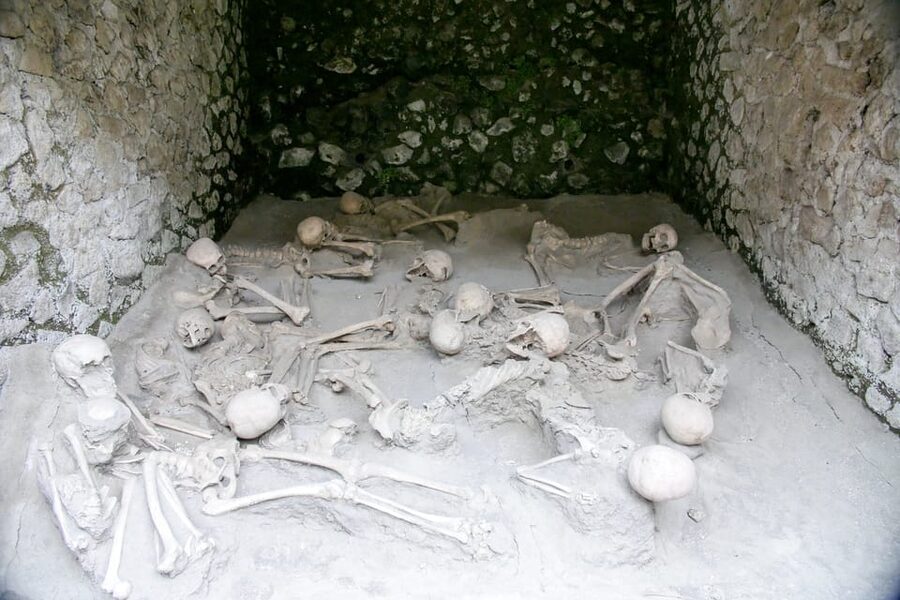
- The boathouse remains: The 300 skeletons near the old port create the site’s most haunting moment.
- Two audio choices: Use a smartphone app or select a physical audio guide device.
- Less overwhelming than Pompeii: Herculaneum is smaller, easier to cover, and still packed with Roman buildings.
- Seasonal opening hours: Summer visits run later, while winter admission ends much earlier.
In This Review
- Why Herculaneum Feels More Intimate Than Pompeii
- Entering the Archaeological Area in Ercolano
- Walking the Ancient Streets and Houses
- The Public Baths, Gymnasium, and Shops
- The Port and the 300 Skeletons
- Choosing the Smartphone App or Physical Audio Guide
- How Long to Stay and When to Go
- Herculaneum in Summer, Winter, and Rain
- Is the $21 Ticket Good Value?
- Who Should Book This Experience?
- Practical Details Before You Book
- Should You Book the Herculaneum Entry Ticket?
- FAQ
- Where is Herculaneum located?
- How long is the ticket valid?
- What does the entry ticket include?
- Is a guided tour included?
- Is an audio guide available?
- Which languages are available for the audio guide?
- Where do I redeem the mobile voucher?
- What are the summer opening hours?
- What are the winter opening hours?
Why Herculaneum Feels More Intimate Than Pompeii
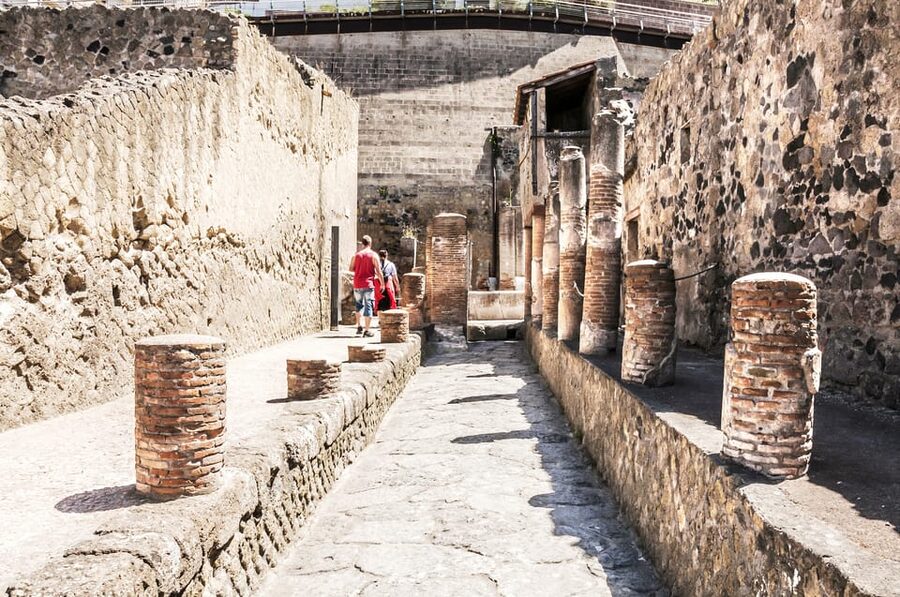
Herculaneum was buried by the eruption of Mount Vesuvius in 79 AD. Ash and volcanic material sealed the town, preserving details that usually vanish in ancient ruins. You are not simply looking at foundations. You can see rooms with ceilings, doorways, painted walls, and objects that help explain how people lived.
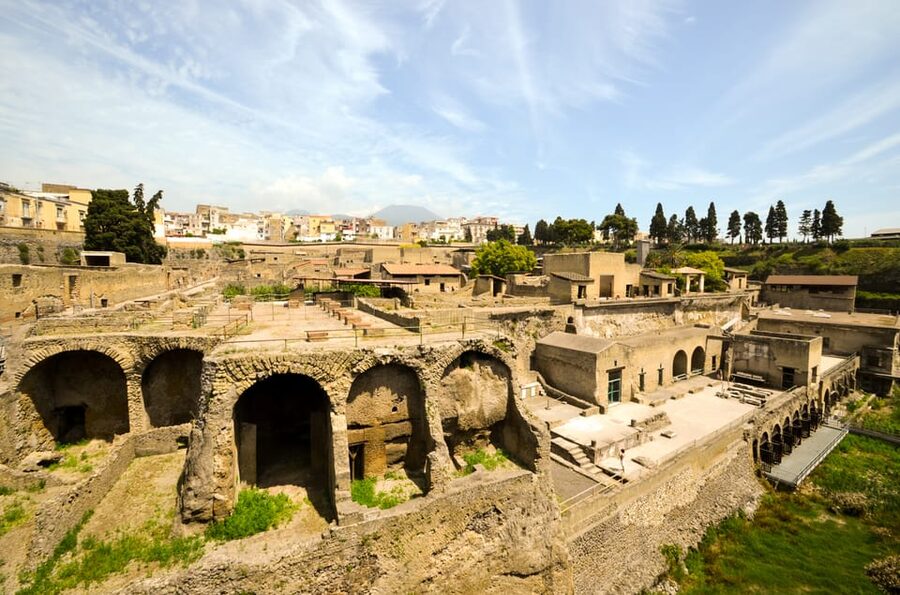
That difference matters. Pompeii is larger and more famous, but its size can make a visit feel like a long march through one ruined block after another. Herculaneum is smaller and easier to grasp. You can spend time looking at a shop, a bath, or a private home without wondering how many more miles of ruins remain.
I find the scale especially useful if you have only one day in the Naples area. Three hours gives you a solid visit, while a longer stay lets you slow down and study the artifacts. The town is compact, but it is not shallow. Each building adds another piece to Roman social life.
The setting is also difficult to forget. The town was destroyed suddenly, and the preserved remains near the port show the human cost. The 300 skeletons are not a casual photo stop. Give yourself time to pause there.
Entering the Archaeological Area in Ercolano

Your mobile voucher is redeemed at the online ticket desk on site. This is important because the ticket process is not always a quick scan-and-go experience. You may still need to wait while staff process the voucher, even when there is no long public queue.
The redemption point can be confusing at first. It is at the archaeological site, where people are already gathering for entry. Keep your phone ready, and allow a little extra time before your preferred starting hour. One visitor found the entrance more easily after using a map, so look for clear signs and ask staff if you are unsure.
The advertised price is $21 per person. That is reasonable if the booking gives you the flexibility and audio option you want, but check the current official admission price before paying. One visitor reported paying considerably more than the face value and receiving only plain entry because the audio office did not recognize the QR code. That is a useful warning: confirm exactly which audio product your booking includes.
The ticket is valid for one day, not for a fixed guided group. You can set your own pace after entering. Free cancellation is available up to 24 hours before the visit, and reserve-now-pay-later booking is offered, which helps if your Naples plans are still shifting.
More Naples & Pompeii trips worth a second look
- Pompeii: Entry Ticket with Optional Audio Guide
★ 4.2 · 12,360 reviews - Pompeii: Skip-the-Line Entrance Ticket with Audio Guide
★ 4.0 · 2,509 reviews - Pompeii: Skip-the-Line Entry Ticket with Audio Guide or Tour
★ 4.1 · 1,364 reviews
Walking the Ancient Streets and Houses
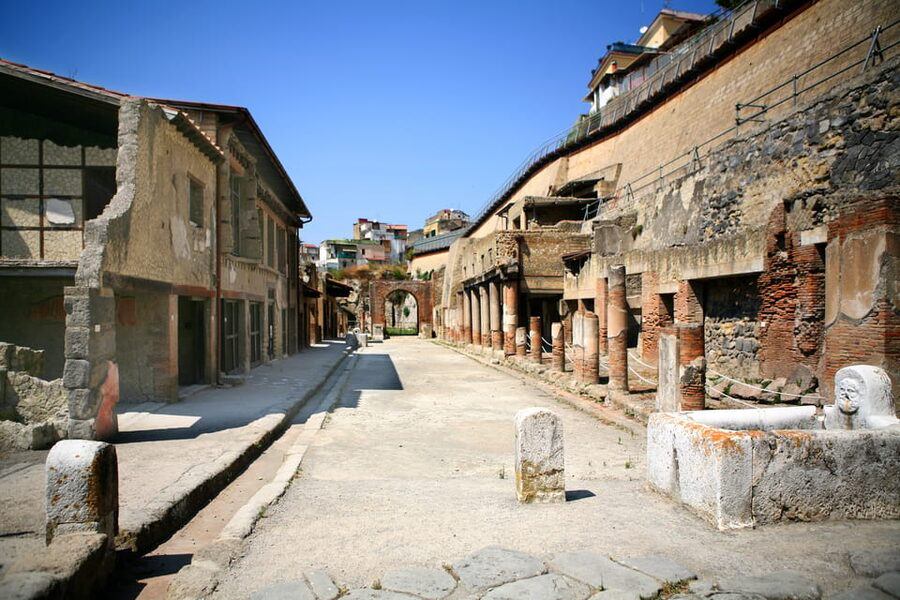
Once inside, follow the cobbled streets through the old town. The pleasure here comes from moving slowly. Instead of rushing from one famous monument to the next, look at how the buildings connect: shops open onto streets, homes include working spaces, and public buildings reveal the habits of the wider community.
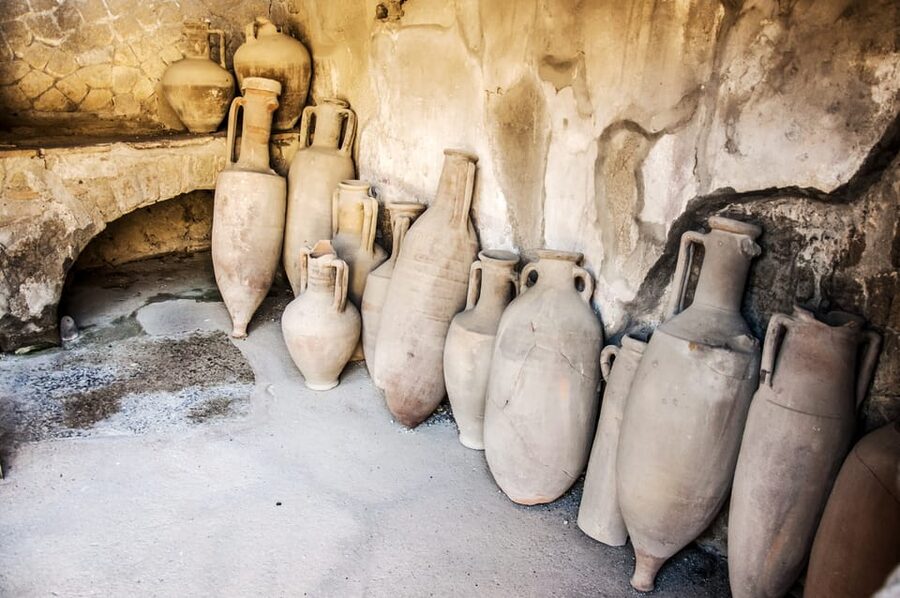
The preserved architecture is Herculaneum’s greatest strength. You might see original roof structures, doors, beds, and food remains. Frescoes and mosaics still hold their form, giving rooms color and purpose. Even when a building is partly damaged, the surviving details help you understand how it was used.
The private homes are particularly rewarding. You can enter rooms where people lived, worked, ate, and rested. Look up and around rather than focusing only on the floor. Wall paintings, decorative details, doorways, and room layouts often tell you more than a single display case.
The town also gives you a chance to consider social class. The remains include houses, shops, a public gymnasium, and public swimming baths. These places show that Roman life was not confined to grand villas. Daily routines took place across a network of commercial, domestic, and public spaces.
A small map can help you get your bearings, but do not expect every building to be explained in depth on a sign. Several areas have limited written information. If you want background for each room, the audio option or a guidebook becomes more useful.
The Public Baths, Gymnasium, and Shops

The public facilities are among the best stops for understanding ordinary routines. The baths were not just places to wash. They were part of social life, and their surviving rooms help you picture a regular rhythm of exercise, conversation, and bathing.
The public gymnasium adds another layer. It shows that the town had organized spaces beyond private homes and commercial streets. Even if you are not an expert in Roman architecture, these buildings make the site easier to read because you can compare public life with domestic life.
The shops are equally revealing. Their street-facing layout lets you imagine people buying goods, working, and meeting others as they moved through the town. Herculaneum works best when you focus on these ordinary details. The grand story is the eruption, but the small story is how a Roman town functioned before the disaster.
Take your time in each structure. A quick circuit may cover the site, but it can also turn the visit into a checklist. I would rather see fewer rooms carefully than hurry through every passage.
The Port and the 300 Skeletons
The remains near the old port are the most emotional part of the visit. About 300 skeletons were found in the area, showing people who did not escape the eruption. The scene makes the disaster immediate in a way that painted walls and broken streets cannot.
You should approach this area with respect. It is one of the reasons Herculaneum feels different from a standard ruin site. The archaeology is important, but the human presence is what stays with you.
This is also a good place to slow down before moving on. The rest of the town invites close looking at architecture and objects. Here, the focus shifts to the people caught in the eruption. It gives the visit a sober center.
A different way to spend the day, same part of Italy:
- Naples: Naples Underground Entry Ticket and Guided Tour
★ 4.4 · 21,781 reviews - Pompeii: Entry Ticket and Guided Tour with an Archaeologist
★ 4.8 · 19,459 reviews - Pompeii: Small Group Tour with an Archaeologist
★ 4.8 · 12,264 reviews - From Naples: Pompeii Ruins & Mount Vesuvius Day Tour
★ 4.3 · 11,459 reviews
Choosing the Smartphone App or Physical Audio Guide
The optional audio guide can add useful context, especially when signs are limited. The digital version is downloaded to your smartphone, with instructions sent in your booking confirmation. The stated language choices include English, French, Italian, and Spanish for the app. The broader audio-guide information also lists German, so check the exact option shown during booking.
Download the app and its content before arriving. Mobile coverage at the archaeological site may be weak, and the app can use a lot of data. Bring headphones, since the audio is designed for personal listening.
The quality of the app experience may depend on how comfortable you are with phone navigation. Some sections are difficult to match with the building in front of you, and the route tracking can be unreliable. You may find yourself searching for the right dialogue instead of studying the room.
The physical audio guide device is another option if offered with your booking. It avoids some smartphone battery and data worries, but make sure you collect it at the correct desk. A few visitors have had trouble when their QR codes were accepted for entry but not recognized by the audio office.
If you prefer a clear story, a human guide may suit you better, though this ticket does not include a guided tour. An audio guide can provide facts at your own pace. It cannot always point out the exact room detail you are standing beside.
How Long to Stay and When to Go
Three hours is a practical target for a first visit. That gives you time to walk the main streets, enter several houses, see the public buildings, and spend a quiet moment near the port. You can stay longer if you like close study, photography, or repeated stops in the larger houses.
The site is open from 9:30 AM to 7:30 PM from March 16 through October 14. Last admission is at 6:00 PM, and the archaeological area must be empty by 7:00 PM.
From October 15 through March 15, hours are 8:30 AM to 5:00 PM. Last admission is at 3:30 PM, and you must leave the site by 4:40 PM. Winter hours make an early start important.
Early morning and the off-season are good choices if you want quieter streets. February visits can be especially calm, while summer visits bring heat even though the site may still feel less crowded than Pompeii. In warm weather, bring an umbrella for shade. Some buildings and roofed streets offer relief, but you should not count on shade everywhere.
Wear comfortable shoes. The cobbled surfaces and walking distance make footwear more important than style. Dress suitably for an outdoor archaeological site, and carry water for a summer visit.
Herculaneum in Summer, Winter, and Rain
Summer provides long opening hours, but the heat can make close inspection tiring. Plan your most detailed looking for the morning or later afternoon, keeping in mind the 6:00 PM last admission. An umbrella can double as a useful sun shield.
Winter is quieter and often better for atmosphere. The shorter day limits flexibility, so check the closing time before setting out. You may have more room to pause in the houses, but you need to arrive early enough to avoid losing the final sections.
The site’s mix of open streets and sheltered interiors makes it possible to take breaks, but basic facilities are limited. The café service is described as basic, so do not plan your whole day around a full meal at the archaeological area.
Is the $21 Ticket Good Value?
At $21 per person, the ticket can be good value for a self-guided visit, especially if you want freedom rather than a fixed two-hour route. Herculaneum offers a large amount to see in a manageable area, and the preserved details are unusually strong.
The value is less clear if the booking price is much higher than the official admission cost or if the audio guide fails. Check what is included before paying. You are buying entry first, with the audio as an optional addition, not a personal guide.
The one-day validity is useful if your schedule changes during the day, but it does not mean you need to spend the whole day inside. Most people can see the key areas in around three hours. The chance to stay longer is valuable for anyone who reads every panel, studies Roman design, or wants a slower visit.
The separate mention of a 10 percent discount at the Hard Rock Shop on Via dei Brunelleschi is not part of the archaeological experience and is not included as a tour feature. I would treat it as an unrelated extra rather than a reason to book.
Who Should Book This Experience?
I would choose this ticket if you want to explore independently and you are comfortable making your own route. It suits history fans, architecture lovers, families with older children, and anyone who finds Pompeii too large to cover comfortably.
It is also a strong choice for a Naples trip when you want one ancient site without giving up an entire day. The compact layout lets you see a lot, yet the preserved houses reward a slower pace.
You may prefer a private or group guide if you want every building explained in order. The included audio app is not always easy to follow, and written signs are limited in some areas. If interpretation matters more to you than flexibility, budget for a separate guide instead.
Practical Details Before You Book
Use these small preparations to make the visit easier:
- Download the audio app and content before reaching the site.
- Bring headphones and a fully charged phone if using the digital option.
- Save the booking confirmation and mobile voucher where you can reach them quickly.
- Allow time at the on-site ticket desk for voucher redemption.
- Wear comfortable shoes for cobbled streets.
- Carry water and an umbrella in hot weather.
- Check seasonal opening hours before choosing your arrival time.
- Bring or obtain a map, since the audio app’s tracking and route layout can be difficult.
Should You Book the Herculaneum Entry Ticket?
Yes, if your priority is the archaeological site itself. Herculaneum is smaller than Pompeii but remarkably preserved, and the ability to enter ancient homes, see painted rooms, and examine everyday objects gives the visit real force.
Book the audio option only if you are prepared to download it in advance and manage it yourself. If you want smooth explanations and a clear route, choose a human guide instead. Also compare the $21 price with the official admission cost so the convenience does not become an unnecessary markup.
For most visitors to Naples and Campania, Herculaneum deserves a place on the plan. Give it about three hours, arrive early in busy months, and leave room in your schedule for the quiet, unsettling stop near the port.
FAQ
Where is Herculaneum located?
Herculaneum is in Ercolano, in Italy’s Campania region.
How long is the ticket valid?
The ticket is valid for one day.
What does the entry ticket include?
It includes admission to the Herculaneum archaeological site.
Is a guided tour included?
No. A guided tour is not included.
Is an audio guide available?
Yes. You can choose a digital audio guide app or, if selected, a physical audio guide device.
Which languages are available for the audio guide?
The digital app is listed in English, French, Italian, and Spanish. The wider activity information also lists German among the available audio-guide languages, so check the exact option when booking.
Where do I redeem the mobile voucher?
Show your mobile voucher at the online ticket desk on site.
What are the summer opening hours?
From March 16 to October 14, the site is open from 9:30 AM to 7:30 PM. Last admission is at 6:00 PM, and the archaeological area must be left by 7:00 PM.
What are the winter opening hours?
From October 15 to March 15, the site is open from 8:30 AM to 5:00 PM. Last admission is at 3:30 PM, and the archaeological area must be left by 4:40 PM.
Recently reviewed around Naples & Pompeii
- Pompeii Skip-the-line Tour with Archaeologist Guide★ 5.0 · 559 reviews
- Skip the Line Guided Tour of Pompeii led by an Archaeologist★ 5.0 · 703 reviews
- Visit in Pompeii – Pompeii Private Tour with Ada★ 5.0 · 436 reviews
- Sharing Tour of Pompeii★ 5.0 · 487 reviews
- Pompeii Private Tour with an Archaeologist and Skip The Line★ 5.0 · 391 reviews
- Private Day Tour to Vesuvius, Herculaneum & Pompeii with Pick Up★ 5.0 · 279 reviews
- Pompeii Vineyard Escape: Private Wine Tasting & Lunch★ 5.0 · 329 reviews
- Pompeii Guided Group Tour with Entry Ticket and Archaeologist★ 4.5 · 269 reviews
Pompeii & Vesuvius Tours, compared.

Entry Ticket and Guided Tour with an Archaeologist
Read our review →




Pompeii Small Group Tour with an Archaeologist
Read our review →
Pompeii, Amalfi Coast and Positano Day Trip from Rome
Read our review →Browse the lists this tour appears in