
Review · POMPEII & VESUVIUS TOURS
Pompeii: Skip-the-Line Entry Ticket with Audio Guide or Tour
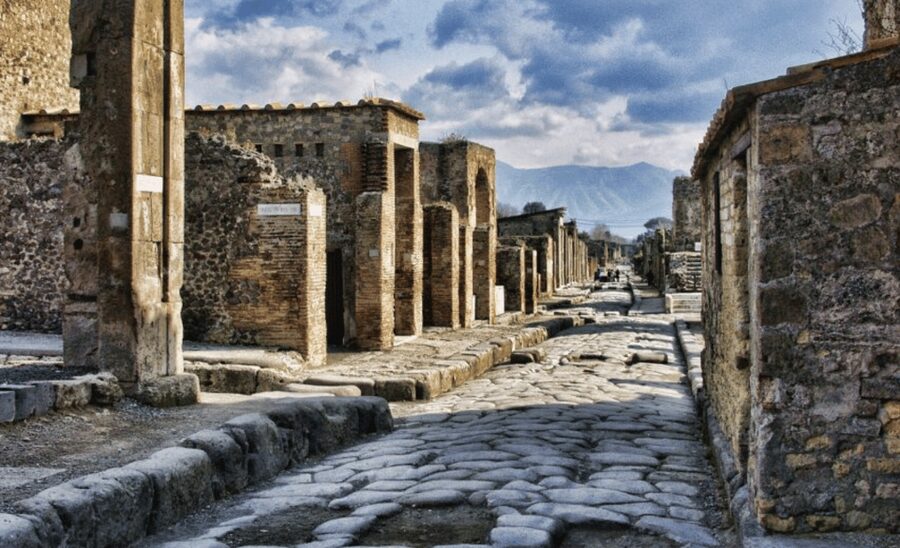
Pompeii is not a single monument you can admire in half an hour. It is a full Roman city, covering roughly 44 to 50 hectares, with streets, houses, shops, temples, theaters, fountains, and haunting plaster casts of people caught by the eruption of 79 C.E. This experience gets you past the ticket queue and gives you either a flexible audio guide or a live walk with a guide such as Grace, Maria, or Mario.
I like the easy ticket pickup beside the entrance and the freedom to keep exploring after a two-hour guided visit. I also like the short audio entries, which let you set your own pace instead of following a fixed route. The main caution is the app: its GPS and automatic playback can be unreliable, and the audio guide works best when you have a charged phone, headphones, and a paper or downloaded map.
In This Review
- Key points to know before booking
- What the $37 price really buys you
- Collecting your ticket at Piazza Esedra
- Choosing between the live guide and the audio guide
- Walking through the Forum with Vesuvius behind you
- Houses, mosaics, and the private side of Pompeii
- Theaters, aqueducts, fountains, and city streets
- The plaster casts and the eruption of 79 C.E.
- How long should you plan for Pompeii?
- What the audio guide does well, and where it falls short
- Who should book this Pompeii experience?
- Final verdict: is the $37 ticket worth it?
- FAQ
- Where do I collect the Pompeii ticket?
- Does the ticket skip the ticket line?
- Is a live guide included?
- What languages are available for the audio guide?
- Do I need my own phone and headphones?
- Can I download the audio guide before arriving?
- How long does the experience last?
- Are the suburban villas included?
- Can I cancel the booking?
Key points to know before booking
- Fast entry from Piazza Esedra: Exchange your voucher at the Vox City point in front of Hotel Vittoria, close to the excavations entrance.
- Two ways to see Pompeii: Pick a self-guided audio experience or a live tour in English, Spanish, or Italian.
- Your phone does the work: Bring headphones, a charged smartphone, and download the audio guide before arrival.
- The site is much larger than expected: Two hours covers the major sights, but you can spend four to six hours if you want a fuller visit.
- The guided option helps with crowds: A live guide can choose a sensible route through busy areas and explain what you are seeing.
- Suburban villas are excluded: Villa of the Mysteries, Villa of Diomedes, and Villa Regina are not part of this ticket.
What the $37 price really buys you
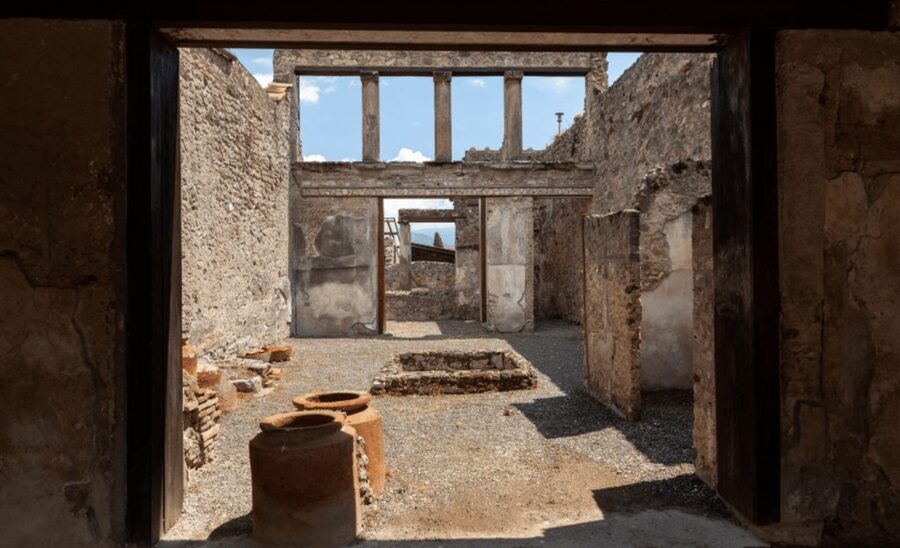
At $37 per person, this is not simply an admission ticket. You are paying for the convenience of a prearranged entry, voucher assistance at the gate, and either a phone-based audio guide or a live tour, depending on the option selected.
That extra cost can make sense on a busy day. Pompeii draws large crowds, and the ticket office line can eat into the best part of your visit. The fast-track entry has been especially useful for people arriving during crowded periods, with several visitors getting through within minutes of collecting their tickets.
The value is less clear on a quiet winter day. Pompeii is open daily, and on some low-season dates you might find little or no ticket line. If the entrance is empty, the main benefit becomes the guide rather than the queue bypass.
The live tour is the better value if Pompeii is a major reason for your visit. A guide can point out details you might walk past, explain how the streets and buildings fitted together, and help you avoid wasting time in a huge archaeological area. The audio option costs less effort and offers more independence, but it is not as complete or polished as a good human guide.
One useful bonus is that the ticket is for the archaeological site, not just the two-hour presentation. After the guided portion, you can continue walking around Pompeii, subject to the site’s opening hours. That matters because two hours is enough for a strong introduction, but rarely enough for the whole city.
More Naples & Pompeii trips worth a second look
- Herculaneum: Skip-the-Line Guided Tour with Archaeologist
★ 4.8 · 3,439 reviews - Mount Vesuvius: Skip-the-Line Ticket and Smart Digital Guide
★ 4.2 · 2,780 reviews - From Naples: Pompeii Skip-the-Line Entry Ticket and Tour
★ 4.4 · 2,753 reviews
Collecting your ticket at Piazza Esedra
The meeting point is the Vox City information point in Piazza Esedra, in front of Hotel Vittoria. It is near the excavation entrance, and the location is generally easy to find. You show your booking voucher, and staff exchange it for the official Pompeii entry ticket.
Allow a little extra time. The instructions ask you to arrive about five minutes early for the live tour, but I would arrive sooner if you are unfamiliar with the square. Staff have also helped with the audio app, which can be useful if the download is not obvious.
The pickup is simple, but it is still one extra step compared with a ticket that scans directly from your phone. Keep your voucher open before reaching the booth, and make sure your phone has enough battery. If you select the audio option, scan the QR code and download the guide before entering if possible.
The entrance used for the archaeological site and the meeting point are close together, but do not assume every audio device or separate guide service begins at exactly the same place. This experience includes a phone-based guide, not a traditional rental device or headset.
Choosing between the live guide and the audio guide

The live tour is offered in English, Spanish, or Italian. It departs at the booked time, so arriving late can create a problem. The group follows a planned route, and the guide can adjust the walk when certain streets or buildings are crowded.
This option suits you if Pompeii feels confusing, if you want a clear two-hour overview, or if you prefer asking questions as you go. A guide named Grace has been singled out for warm delivery, sharp humor, and excellent English. Maria has been praised for keeping the information flowing, and Mario has also received strong approval. Another guide was described as having 45 years of experience at Pompeii, a useful reminder that the quality of the person leading the walk can shape the entire visit.
The live guide also helps you understand scale. It is easy to mistake Pompeii for a collection of ruins, but you are walking through the remains of an entire city. A good guide connects the streets, homes, public buildings, water system, and religious spaces into one picture.
The audio guide gives you more control. You can pause, skip a building, linger over a mosaic, or move quickly through a section that interests you less. The digital map includes many points of interest, and the entries are generally short enough for families and younger visitors.
The weakness is navigation. The guide is not always a fixed itinerary, and it may not tell you which sights are the essential ones. Some names do not match the signs at the site, while the GPS position and automatic playback can fail. You may need to open the map, find your location, and manually select each stop.
I would choose the audio option only if you are comfortable managing an app. Download it before arrival, carry a portable battery if you have one, and bring a separate map or take a photograph of the site map. The audio guide is much more useful when you already know where you are going.
Walking through the Forum with Vesuvius behind you
The Forum is the natural anchor for a Pompeii visit. This broad civic space once formed the center of public life, and Mount Vesuvius rises behind it. The view makes the disaster feel close, even though nearly two thousand years separate you from the eruption.
Take a moment here before following the audio commentary. Look at the surrounding columns and temples, then use the guide to understand how this open area related to the rest of the city. A live guide can provide a stronger sense of purpose and sequence, while the app gives you individual descriptions of nearby structures.
The temples of Venus, Apollo, and Jupiter are among the major religious sights included in the visit. They are important not only as ruins, but also as clues to the beliefs and civic order of Roman Pompeii.
The Forum can be exposed to sun, wind, or rain. There is little shade across the broad open areas, so water and weather protection matter. A sunny winter morning can be wonderfully quiet, while a summer afternoon may feel tiring long before you have reached the far side of the site.
A different way to spend the day, same part of Italy:
- Naples: Naples Underground Entry Ticket and Guided Tour
★ 4.4 · 21,781 reviews - Pompeii: Entry Ticket and Guided Tour with an Archaeologist
★ 4.8 · 19,459 reviews - Pompeii: Entry Ticket with Optional Audio Guide
★ 4.2 · 12,360 reviews - Pompeii: Small Group Tour with an Archaeologist
★ 4.8 · 12,264 reviews
Houses, mosaics, and the private side of Pompeii
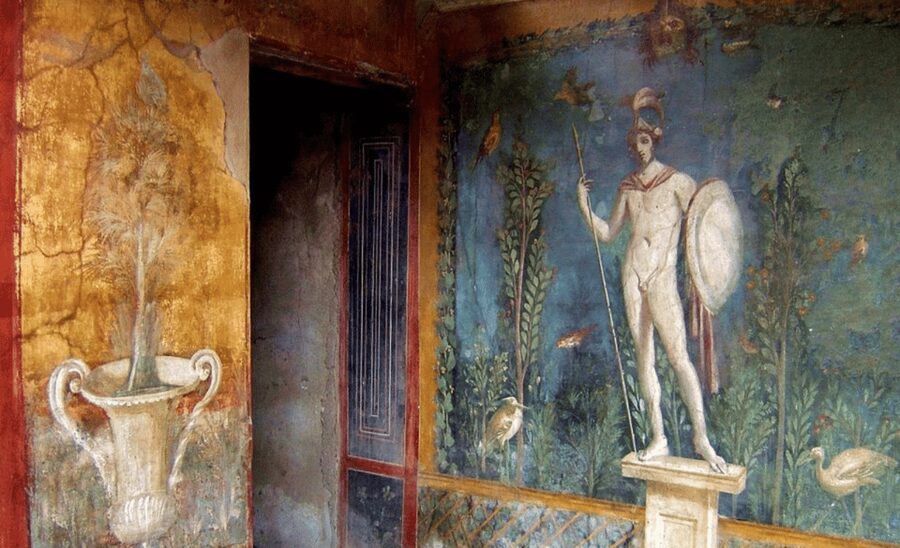
Pompeii becomes most vivid inside its homes. The House of the Faun is one of the major residences to look for, with its large scale and opulent decoration. You can picture courtyards, reception spaces, wall painting, and patterned floors rather than treating the building as a pile of stones.
The public baths reveal another side of daily life. Intricate mosaics and surviving architectural details show how much care went into places built for ordinary social routines. Your guide gives you short explanations of individual rooms and structures, but the live option is more helpful when you want to understand how the parts worked together.
Look out for the house of Sirico, where the inscription Salve lucru, meaning welcome, profit, offers a small glimpse into the commercial mind of its owner. Wine jars marked Vesuvinum play on the names Vesuvius and vinum, or wine. Details like these make Pompeii feel inhabited rather than frozen.
The audio guide is at its best with such specific stops. You can stand in front of a building, hear a concise explanation, and then continue without waiting for a group. Its limitation is that it may give you only a short description, with less background about the wider society and the eruption than a strong art historian can provide.
Theaters, aqueducts, fountains, and city streets
Pompeii’s theaters help you understand the city as a place of entertainment as well as work and worship. A theater stop can be a welcome change from the open Forum, and the remains offer a sense of the scale of public gatherings.
As you walk, watch for the practical infrastructure: aqueduct remains, fountains, paving stones, and street layouts. These details are easy to skip because they lack the drama of a temple or painted villa, but they explain how the city functioned.
This is where a map becomes essential. The site is big enough to make wandering enjoyable, but also easy to underestimate. The audio app can show your position and identify individual locations, yet it does not always provide a clear route through the most important sights.
If you have only two hours, decide in advance that you will not see everything. Aim for the Forum, major temples, one or two important houses, the baths, a theater, and the plaster casts. With four hours, you can slow down and add side streets and less famous buildings.
The plaster casts and the eruption of 79 C.E.
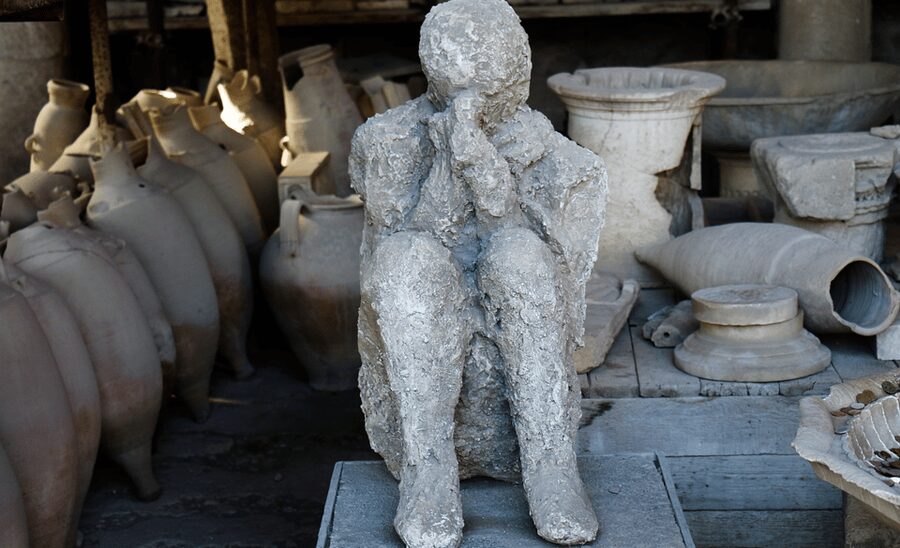
The plaster casts are among Pompeii’s most difficult sights. They preserve the shape of people caught beneath volcanic material, leaving a physical record of the final moments of the eruption.
They are powerful because they are human, but they can also be upsetting. Give yourself time to look quietly, and do not treat them as just another photo stop. The audio commentary can provide context, while a live guide may explain the event with more care and answer questions.
Pompeii’s preservation is unusual because the eruption destroyed lives while protecting traces of ordinary life. Wine containers, household spaces, painted walls, shops, religious buildings, and public streets all survived in forms that let you imagine a Roman city at work.
You will also see the volcano from within the ruins. That view links the ordinary details of Pompeii with the force that ended the city’s life. It is one reason the site can feel more immediate than a museum display.
How long should you plan for Pompeii?
The scheduled experience lasts two hours, but the archaeological area deserves more time. A focused visit can fit into two hours, especially with a live guide who keeps the route moving. If you use the audio guide, you can also stop after the main sights or continue for several more hours.
A four-hour visit is a good target for most people who want more than a quick introduction. Six hours is possible for visitors who enjoy archaeology and do not mind a great deal of walking. The site is large, and even an efficient route can become tiring.
Build in time for the weather. Rain can make the uneven ancient streets unpleasant, while strong sun can drain your energy. Bring water, comfortable shoes, headphones, and a fully charged phone. A battery pack is sensible because the audio app may contain dozens of points of interest and can use both screen time and location services.
What the audio guide does well, and where it falls short

The audio guide offers commentary in English, French, Spanish, German, and Italian. The live tour, by contrast, is available in English, Spanish, or Italian.
The app can display a map, written material, and descriptions for many points around Pompeii. Its short entries work well when you want small pieces of information without stopping for a long lecture. You can also choose your own route, which is useful if one house is closed or a particular area is crowded.
Do not rely on automatic playback. It may start based on your location, but this function has not always worked properly. You may have to select the next point manually, and the app may not clearly mark which entries you have already heard.
The map is the bigger issue. The guide can identify a building yet still leave you unsure how to reach the next major sight. Take a site map at the entrance, photograph it, or prepare a short list of must-see locations before you go.
Who should book this Pompeii experience?
Choose the live tour if you want context, a planned route, and help with the site’s scale. It is also the safer choice if Pompeii is a once-in-a-lifetime visit and you do not want to spend your limited time looking at the app.
Choose the audio ticket if you value independence, want to stop for photographs, or are visiting with people who walk at different speeds. Families may like the brief entries, while independent visitors can skip sections without holding up a group.
This experience is less suitable if you need a fully reliable automatic audio system or do not have a smartphone and headphones. The entry ticket remains useful, but the guide portion depends on your own equipment and a working download.
The ticket does not include the suburban villas, including the Villa of the Mysteries, Villa of Diomedes, and Villa Regina. If those are your priority, check the ticket details carefully before booking.
Final verdict: is the $37 ticket worth it?
I would book this for a busy day, especially with the live guide. The nearby pickup point, quick entry, and expert-led route remove much of the friction from visiting a very large site. The strongest value comes from combining the fast entry with a good guide, then staying inside to see more on your own.
The audio version is a reasonable choice for independent visitors, but I would not buy it expecting a perfect GPS tour. Download it early, bring a map, and treat it as a collection of useful descriptions rather than a complete route.
At $37, the decision comes down to time and priorities. Pay for the live option if you want Pompeii explained. Choose the audio option if flexibility matters most. If the site is quiet and you already have a good guidebook, the ticket premium may be harder to justify, but the fast-track entry still offers peace of mind.
FAQ
Where do I collect the Pompeii ticket?
You exchange your voucher at the Vox City information point in Piazza Esedra, in front of Hotel Vittoria. The point is close to the archaeological site entrance.
Does the ticket skip the ticket line?
Yes. The ticket provides skip-the-line entry for the ticket queue. You still need to exchange the voucher for the official entry ticket before going inside.
Is a live guide included?
A live guide is included only if you select the guided tour option. Guided tours are available in English, Spanish, or Italian.
What languages are available for the audio guide?
The audio guide is available in English, French, Spanish, German, and Italian.
Do I need my own phone and headphones?
Yes. You need a charged smartphone and headphones. The audio guide is downloaded to your phone rather than supplied as a separate device.
Can I download the audio guide before arriving?
Yes. You should scan the QR code on your voucher and download the guide before arrival if possible. A stable internet connection makes this easier.
How long does the experience last?
The booked activity lasts two hours. Visitors commonly spend two to four hours inside Pompeii, and some remain longer to explore after the guided portion.
Are the suburban villas included?
No. The ticket does not include the Villa of the Mysteries, Villa of Diomedes, or Villa Regina.
Can I cancel the booking?
Yes. You can cancel up to 24 hours in advance for a full refund. The reserve-now, pay-later option allows you to book without paying immediately.
More Audio Tours in Naples & Pompeii
- Pompeii: Skip-the-Line Entrance Ticket with Audio Guide
★ 4.0 · 2,509 reviews - Herculaneum: Skip-the-Line Entry Ticket with Audio Guide
★ 4.3 · 870 reviews - Naples: National Archaeological Museum Ticket & Audio App
★ 4.4 · 617 reviews - Ercolano: Herculaneum Entry Ticket with Optional Audio Guide
★ 4.1 · 581 reviews
Recently reviewed around Naples & Pompeii
- Pompeii Skip-the-line Tour with Archaeologist Guide★ 5.0 · 559 reviews
- Sharing Tour of Pompeii★ 5.0 · 487 reviews
- Skip the Line Guided Tour of Pompeii led by an Archaeologist★ 5.0 · 703 reviews
- Visit in Pompeii – Pompeii Private Tour with Ada★ 5.0 · 436 reviews
- Private Day Tour to Vesuvius, Herculaneum & Pompeii with Pick Up★ 5.0 · 279 reviews
- Pompeii Private Tour with an Archaeologist and Skip The Line★ 5.0 · 391 reviews
- Pompeii Vineyard Escape: Private Wine Tasting & Lunch★ 5.0 · 329 reviews
- Pompeii Guided Group Tour with Entry Ticket and Archaeologist★ 4.5 · 269 reviews
Pompeii & Vesuvius Tours, compared.

Entry Ticket and Guided Tour with an Archaeologist
Read our review →




Pompeii Small Group Tour with an Archaeologist
Read our review →
Pompeii, Amalfi Coast and Positano Day Trip from Rome
Read our review →Browse the lists this tour appears in