
Review · POMPEII & VESUVIUS TOURS
Naples: Pompeii Self Guided Audio Tour
Pompeii is much easier to understand when someone explains what you are seeing. This smartphone audio guide covers more than 60 points, from the amphitheater and House of the Vettii to the brothel, baths, taverns, frescoes, and mosaics. It also explains curious details, such as Roman breadmaking and the use of urine in wool processing.
I like the interactive map, which helps you find the main sights, and the short audio clips, which let you keep moving instead of standing still for long lectures. At $4.70, the guide is also a sensible buy if you want basic interpretation without paying the higher price of an audio guide at the entrance.
The catch is that this is an app, not a person walking beside you. You must download and activate it correctly before entering, and the map can send you back to a wider view after each stop. Bring a charged phone and prepare the files on Wi-Fi.
In This Review
- Key points to know before you go
- What this Pompeii audio guide actually gives you
- The amphitheater and Pompeii’s public life
- House of the Vettii and the best-preserved decoration
- The lupanare and the less polished side of Roman life
- Roman baths, taverns, and everyday routines
- How the geolocated map works in real use
- Getting the app ready before entering Pompeii
- Price, timing, and the value of going self-guided
- Who will get the most from this Pompeii visit
- The main strengths and limits at a glance
- Should you book this Pompeii audio guide?
- FAQ
- Is the Pompeii entrance ticket included?
- Is there a meeting point?
- How long is the audio guide valid?
- How many points of interest are included?
- Which languages are available?
- Do I need internet access inside Pompeii?
- How do I activate the guide?
- Can I use the audio guide again?
- Can I cancel for a refund?
- Is the activity wheelchair accessible?
Key points to know before you go
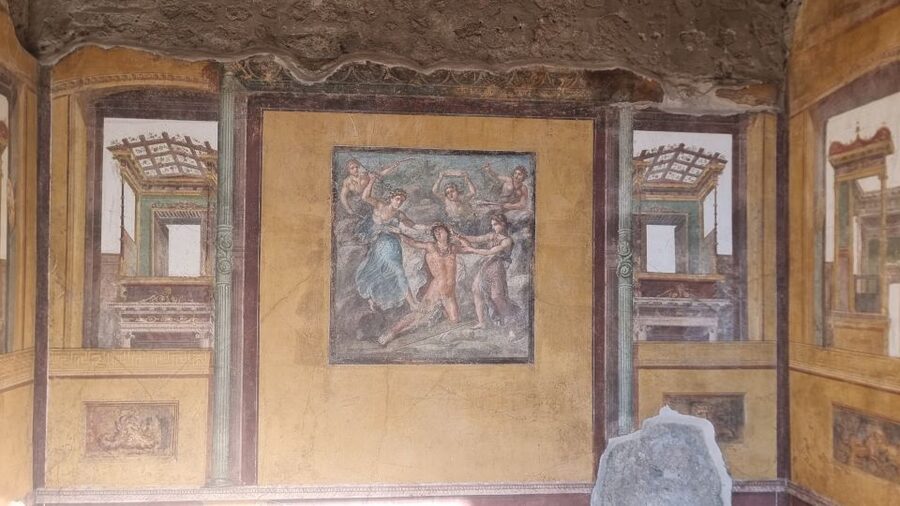
- More than 60 marked stops: Follow descriptions of major houses, public buildings, paintings, mosaics, and everyday Roman life.
- Four hours from activation: You can begin when you choose during the ruins’ open hours, but the timer starts with your first activation.
- Works offline after download: Save every audio file, photo, and text section before arriving because the signal inside Pompeii may be poor.
- Five language choices: Use the guide in English, Italian, French, German, or Spanish.
- A reusable purchase: The audio guide remains yours for future visits, according to the supplied activity details.
- Very low price: At $4.70, it costs less than the audio guide price described at the ticket office, though your Pompeii admission is separate.
What this Pompeii audio guide actually gives you
Pompeii can feel confusing at first. You enter a huge archaeological site filled with streets, walls, columns, open courtyards, and rooms without modern signs explaining every detail. The ITGUIDES app gives you a way to turn that pile of ancient remains into a planned visit.
The guide combines audio, photographs, written descriptions, and a map. Each point of interest is geolocated, so you can select a sight and use the map to work out where it is. The map also marks places you have already visited, which is useful at a site where it is easy to lose track of what you have seen.
This is not a fixed walking route with a guide telling everyone to follow the same path. You choose the order. You can listen to a few stops near the entrance, skip a building that is closed, pause for photographs, or return to a favorite house later.
The material is also available in hypertext form. When a description refers to a god, hero, architectural term, or technical subject, you can tap the word for more information. That feature is helpful if you want a little more context without searching the web every few minutes.
The audio is designed for independent sightseeing. The clips are generally short enough to fit naturally into a walk, and the descriptions cover both major monuments and small details of Roman daily life. You will hear about public entertainment, domestic decoration, food, baths, taverns, and trade practices, not just emperors and volcanic ash.
More Naples & Pompeii trips worth a second look
- Pompeii: Entry Ticket with Optional Audio Guide
★ 4.2 · 12,360 reviews - Pompeii: Skip-the-Line Entrance Ticket with Audio Guide
★ 4.0 · 2,509 reviews - Pompeii: Skip-the-Line Entry Ticket with Audio Guide or Tour
★ 4.1 · 1,364 reviews
The amphitheater and Pompeii’s public life
The amphitheater is one of the clearest places to begin. It gives you a sense of the scale of Pompeii as a working Roman town, rather than treating the site as a collection of isolated houses.
The audio explains what happened here and helps you look at the structure with purpose. Instead of simply seeing stone seating and a large oval space, you can think about how public entertainment fitted into daily life and how the building served the city.
The guide also points you toward other public areas and explains features that are easy to miss when you are exploring alone. The value here is not only the facts. It is the reminder to stop, look around, and connect one building to the wider life of the town.
The amphitheater may be crowded at times, and restoration work can affect access to parts of Pompeii. Since conditions change, use the app’s map as a guide rather than assuming every marked stop will be open on your visit.
House of the Vettii and the best-preserved decoration
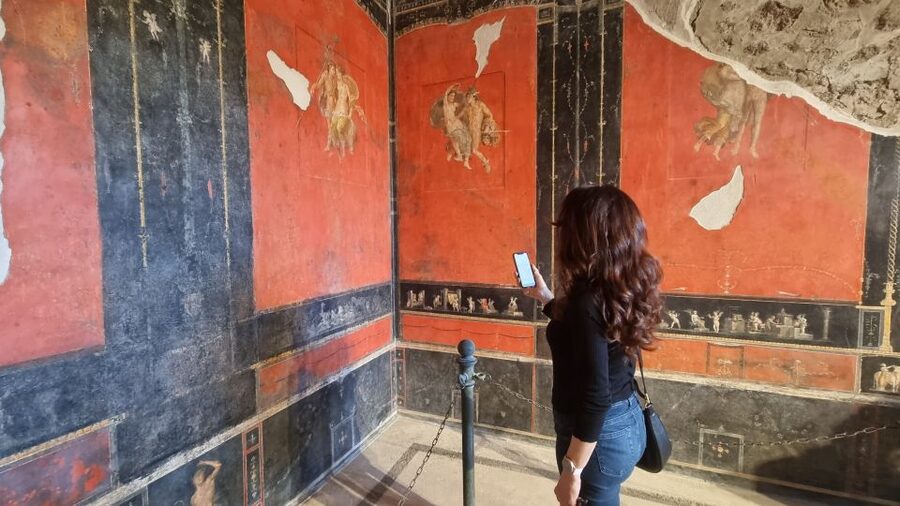
The House of the Vettii is one of the important domestic stops included in the guide. Pompeii’s houses can look plain from the outside, but their courtyards, wall paintings, mosaics, and room layouts reveal how much daily life depended on decoration and design.
At this house, the audio helps you read the rooms instead of rushing through them. Look for the relationship between the courtyard, living spaces, wall paintings, and household display. The guide also points you toward notable frescoes and mosaics elsewhere in the ruins.
This is where the photographs in the app can help. If a room is busy or partly closed, a reference image and written explanation can give you a clearer idea of what deserves attention. You should still check the actual site conditions, since restoration may limit access.
The app’s map is especially useful for domestic buildings. Pompeii has many houses with similar-looking entrances, and it is easy to walk past an important one. Marked points reduce that problem and help you find the buildings with the strongest decoration.
The lupanare and the less polished side of Roman life

The lupanare, or brothel, is among the most talked-about stops in Pompeii. The guide treats it as part of the town’s social and commercial life, alongside taverns, shops, houses, and public buildings.
You will hear about the building and the clues that help historians interpret its purpose. This stop is useful because it moves beyond the grander parts of Pompeii and shows the more ordinary, sometimes uncomfortable, side of ancient urban life.
The audio also explores what Romans ate in taverns, how bread was made, and how urine was used in wool processing. These details may sound odd today, but they are exactly the kind of information that makes an archaeological site easier to picture. You begin to understand work, food, hygiene, and trade as parts of one connected town.
If you are visiting with children, decide in advance how much detail you want to include at the lupanare. The activity information identifies it clearly, but it does not provide a separate age recommendation.
A different way to spend the day, same part of Italy:
- Naples: Naples Underground Entry Ticket and Guided Tour
★ 4.4 · 21,781 reviews - Pompeii: Entry Ticket and Guided Tour with an Archaeologist
★ 4.8 · 19,459 reviews - Pompeii: Small Group Tour with an Archaeologist
★ 4.8 · 12,264 reviews - From Naples: Pompeii Ruins & Mount Vesuvius Day Tour
★ 4.3 · 11,459 reviews
Roman baths, taverns, and everyday routines
The baths are another strong part of the guide. Ruined bathing complexes can be difficult to interpret without help, since the original heating system and sequence of rooms are not obvious from the surviving walls.
The audio explains how the baths worked and gives you a reason to look at floors, walls, rooms, and technical features. It turns a building that might otherwise seem like a set of empty chambers into a place with a clear routine.
The food and tavern sections add useful balance. Pompeii is often presented through disaster and fine wall paintings, but people also bought bread, ate outside the home, worked with textiles, and used practical systems that feel surprisingly familiar or strange.
I would pay attention to these smaller subjects if you have already seen major Roman monuments elsewhere in Italy. They give Pompeii its own character and help you picture a town where business, worship, entertainment, cooking, and bathing took place close together.
How the geolocated map works in real use
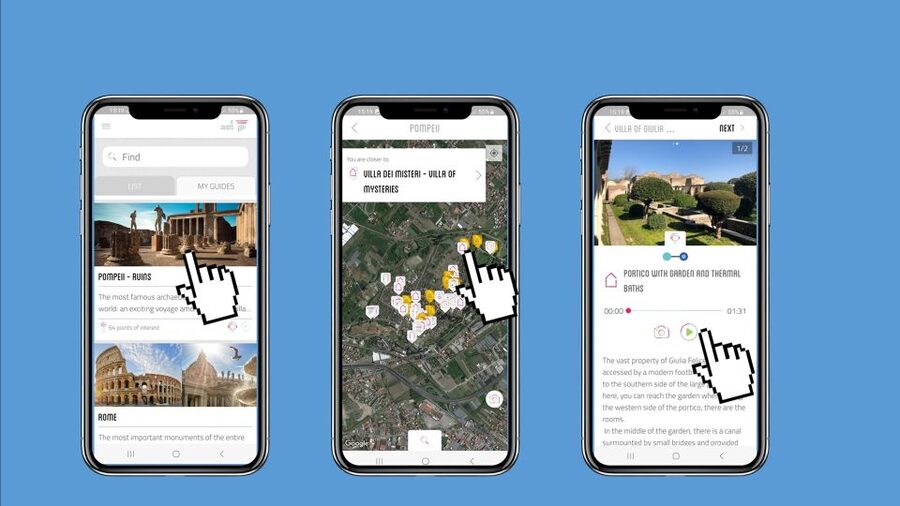
The map is one of the most useful parts of this purchase, but it is not a full replacement for a human guide. It shows the locations of the audio stops and helps you plan your movement between them.
A check mark indicates places you have listened to. This is handy if you want to cover as much as possible within four hours. One technical limitation is that a point with more than one audio clip may not receive its check mark until every part has been handled, so the marking system can occasionally be confusing.
The map does not always provide a clear live dot showing your exact position. You may need to compare the streets and nearby buildings with the map, much as you would with a paper plan. If the app returns you to a zoomed-out map after an audio clip, you may also need to zoom in again before finding your next stop.
That sounds minor, but it matters in a large site. I suggest choosing a few nearby points at a time instead of constantly searching for the next stop. The app is most helpful when you use it as a planning tool, not when you expect it to guide every footstep automatically.
Getting the app ready before entering Pompeii
This is the part to handle before you reach the ruins. After purchase, download the free ITGUIDES app, open the menu, and use the contact page to send your app user ID and GetYourGuide order number. The guide is then unlocked for you.
The instructions and redemption steps are included with your voucher. Activation support is available through the contact details in the app, including WhatsApp assistance. One user specifically praised quick help from Vincenzo during installation, but you should still allow time to complete the process yourself.
Download the complete guide on reliable Wi-Fi or with a strong mobile connection. The archaeological site may not provide a dependable signal, and an online-only plan could leave you unable to play the clips when you need them.
A simple preparation list will prevent most trouble:
- Install the app before the day of your visit.
- Redeem the guide before entering the ruins.
- Download all audio, maps, photos, and text locally.
- Bring headphones if you do not want to hold your phone up.
- Charge your phone fully.
- Start the four-hour period when you are ready to use the guide.
The app can also restart if you leave it to take a photograph, depending on your phone and how it handles background applications. If you plan to take many pictures, be prepared to reopen the guide and return to your stop.
Price, timing, and the value of going self-guided

The price is $4.70 per person, and that is the main reason this experience makes sense. The fee is low enough to add interpretation to your Pompeii visit without committing to a costly private tour or an on-site audio rental.
The comparison with the ticket-office audioguide is especially favorable because the activity states that you save more than 50 percent. The guide is also described as yours to reuse on future visits, which improves the value if you return to Pompeii.
Remember that the Pompeii entrance ticket is not included. You must buy admission separately, and this experience has no meeting point. It is an autonomous activity that can begin at any entrance or location you choose, within the site’s opening hours.
Four hours is enough for a focused visit using the marked stops, but it is not an unlimited day. If you listen to every clip, stop for photographs, and pause for food or rest, you may need to choose priorities. The map’s completed markers can help you keep track of your progress.
Free cancellation is available up to 24 hours before the activity for a full refund, and reserve-now-pay-later booking is offered. The product itself is valid for four hours from first activation, so do not activate it the night before unless you want the clock to begin.
Who will get the most from this Pompeii visit

This guide suits you if you like to move at your own speed. You can spend longer in a favorite house, skip a packed building, or pause the audio while taking pictures.
It is also a good fit if you want more than bare signs but do not need a live archaeologist. The material covers major sights and everyday topics, while the hypertext sections let you decide how much extra reading you want.
Families may appreciate the short clips and flexible pace, though adults should decide which subjects fit their group. Independent visitors who have already seen Pompeii and want a second look may also find the reusable guide useful.
I would hesitate to choose it if you want a clear, continuous route with a person answering questions as you go. App navigation takes some attention, and the lack of a precise location dot can make the map feel old-fashioned. If that sounds frustrating, a live guided tour would be the better format.
The activity is listed as wheelchair accessible, but the supplied details do not explain which routes or buildings may be affected by the ancient surfaces and restoration work. If access needs are important to you, ask the provider for current route information before booking.
The main strengths and limits at a glance
The strongest feature is the amount of material for the price. You receive more than 60 stops in five languages, with audio, photos, text, and a map rather than a handful of generic facts.
The clearest practical advantage is freedom. You are not tied to a meeting time or group pace, and you can listen again to a clip. The guide remains available for future visits, according to the activity details.
The main weakness is the app handling. Returning from an audio clip to the map may take extra taps, the map may zoom out, and the exact current-location marker is not always available. None of these problems ruins the visit, but they can slow you down.
Technical preparation matters more than it would with a paper guide. Download everything early, keep the app open when possible, and do not rely on the site’s mobile connection.
Should you book this Pompeii audio guide?
Book it if you want a cheap, flexible way to add context to Pompeii and are comfortable using your own phone. At $4.70, the guide offers strong value, especially if you may return or use other ITGUIDES products for sites in Italy.
Skip it if you want a human guide, instant answers, or a perfectly smooth navigation system. The content appears to be the stronger part of the experience, while the app requires a little patience.
For most independent visitors, I would make the purchase, download the files at home, and use the map to build a sensible four-hour visit. Pompeii rewards curiosity, and this guide gives you plenty of useful questions to ask as you walk through its streets.
FAQ
Is the Pompeii entrance ticket included?
No. The Pompeii archaeological site entrance ticket is not included in the price of the audio guide.
Is there a meeting point?
No. This is a self-guided activity with no meeting point. You can begin where and when you choose during the ruins’ open hours.
How long is the audio guide valid?
The guide is valid for four hours from the first activation.
How many points of interest are included?
The guide includes more than 60 geolocated points of interest with audio, photos, and written information.
Which languages are available?
The guide is available in Italian, English, French, German, and Spanish.
Do I need internet access inside Pompeii?
You should download all guide content before entering. Mobile service may be poor inside the archaeological site.
How do I activate the guide?
Download the ITGUIDES app, open its menu, use the contact page to send your app user ID and GetYourGuide order number, and follow the unlocking instructions in your voucher.
Can I use the audio guide again?
Yes. The activity states that the audio guide remains yours and can be reused on future visits.
Can I cancel for a refund?
Yes. You can cancel up to 24 hours in advance for a full refund.
Is the activity wheelchair accessible?
Yes. The activity is listed as wheelchair accessible, though the supplied information does not give detailed route conditions for every building or area.
Recently reviewed around Naples & Pompeii
- Pompeii Skip-the-line Tour with Archaeologist Guide★ 5.0 · 559 reviews
- Sharing Tour of Pompeii★ 5.0 · 487 reviews
- Skip the Line Guided Tour of Pompeii led by an Archaeologist★ 5.0 · 703 reviews
- Visit in Pompeii – Pompeii Private Tour with Ada★ 5.0 · 436 reviews
- Pompeii Private Tour with an Archaeologist and Skip The Line★ 5.0 · 391 reviews
- Private Day Tour to Vesuvius, Herculaneum & Pompeii with Pick Up★ 5.0 · 279 reviews
- Pompeii Vineyard Escape: Private Wine Tasting & Lunch★ 5.0 · 329 reviews
- Pompeii Guided Group Tour with Entry Ticket and Archaeologist★ 4.5 · 269 reviews
Pompeii & Vesuvius Tours, compared.

Entry Ticket and Guided Tour with an Archaeologist
Read our review →




Pompeii Small Group Tour with an Archaeologist
Read our review →
Pompeii, Amalfi Coast and Positano Day Trip from Rome
Read our review →Browse the lists this tour appears in