
Review · POMPEII & VESUVIUS TOURS
Pompeii: Afternoon to Sunset Guided Tour with Ticket
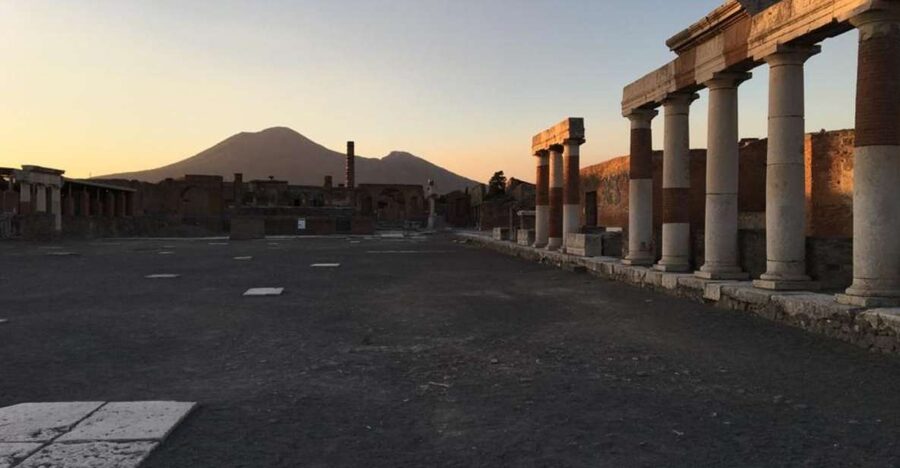
Pompeii is easiest to understand when someone helps you read its streets, walls, shops, and homes. This 2.5-hour afternoon tour takes you from the Forum and Basilica to the baths, theater, bakery, and residential blocks, then leaves you with sunset light over the ruins. I like the timing, and I like that the guide focuses your visit inside a huge archaeological site.
I also like the human scale of the experience. Guides such as Francesco, often called Frankie, Angelo, Anna, and Sasa are praised for clear stories, humor, patience, and care with the group’s pace. The main drawback is simple: you will see highlights, not all of Pompeii, and the uneven ancient streets can be hard for anyone with mobility, heart, or respiratory concerns.
In This Review
- Key points to know before booking
- Why the afternoon slot works so well
- Meeting at Ristorante Bar Sgambati
- Entering Pompeii with a skip-the-line ticket
- The Forum and Basilica: Pompeii’s public heart
- The thermal baths and the practical side of Roman life
- Bakeries, houses, and Pompeii’s ordinary neighborhoods
- The theater and the final view
- What the guide adds to the experience
- Walking effort, weather, and who should skip it
- Is $58 a fair price?
- Who should book this Pompeii tour?
- Should you book it?
- FAQ
- How long does the Pompeii tour last?
- What time does the tour start?
- What does the ticket include?
- Is transportation included?
- Where do I meet the guide?
- What languages are available?
- Can I explore Pompeii after the guided tour?
- Is the tour suitable for visitors with mobility or health concerns?
Key points to know before booking
- Sunset timing: Afternoon visits tend to be cooler, quieter, and easier on your stamina than the middle of the day.
- A guide who gives Pompeii a human voice: Expect stories about Roman homes, work, civic life, engineering, and the eruption, not just names and dates.
- Focused route through a vast site: The tour covers major civic buildings, baths, theater, shops, bakeries, and housing blocks in two and a half hours.
- Small or private groups: Smaller groups make it easier to ask questions and keep a comfortable walking pace.
- Time after the tour: You can continue exploring on your own, including areas not covered by the guided route.
- Easy meeting point: Meet at Ristorante Bar Sgambati and look for the red Enjoy Pompeii sign. Transportation is not included.
Why the afternoon slot works so well
Pompeii can be a demanding place. The site is large, the streets are often rough underfoot, and much of the route is open to the sun. A start around mid-afternoon, when available, gives you a better chance of avoiding the worst heat and the thickest daytime crowds.
The late light also changes the mood. Walls, columns, and paving stones pick up warmer color as the day fades. You are not promised a dramatic sunset view from every stop, but the closing part of the visit is designed to let you enjoy Pompeii in a calmer atmosphere.
I would choose this time slot for a warm-season visit, especially if you are sensitive to heat. One summer tour began at 3:30 p.m., and the timing was praised for softer sun and thinner crowds. The same advantage appeared in spring and autumn visits, when the site felt less hurried.
The tradeoff is that a short afternoon tour cannot cover every open building. Pompeii is too large for that. You need to decide if you prefer a guided selection of major places or a full day of independent wandering.
More Pompei Campania trips worth a second look
- Winner 2025 Florence Sunset Food & Wine Tour by Eating Europe
★ 5.0 · 5,015 reviews - Catania: Mount Etna Morning or Sunset Day Trip with Tasting
★ 4.8 · 4,028 reviews - Catania: Sunset Jeep Tour of Mount Etna and Lava Flow Caves
★ 4.8 · 2,113 reviews
Meeting at Ristorante Bar Sgambati
The tour begins at Ristorante Bar Sgambati. Look for the red Enjoy Pompeii sign. This is a useful detail because the meeting point is not simply described as the archaeological entrance, and one past booking note found the directions a little unclear.
Give yourself enough time to locate the restaurant and the sign. Keep your phone available in case you need to check the meeting instructions, and bring an ID card. A copy is accepted.
Transportation is not part of the experience. You make your own way to Pompeii, which is useful if you are already staying nearby or arriving by train. It also means you must plan your return independently. If you have a train to catch, allow extra time after the tour rather than cutting the visit close to departure.
Entering Pompeii with a skip-the-line ticket
The ticket includes skip-the-line entry through a separate entrance. That can save useful time, particularly when the main entrance has a queue. It does not turn Pompeii into a quick attraction. Once inside, you still have a large area to cross and plenty of stops to absorb.
This is where an archaeologist guide earns the fee. At Pompeii, a wall can look like a wall, a doorway like a doorway, and a worn stone like a random bit of pavement. With explanation, those same objects begin to show how the city worked.
The guide leads the walking route rather than handing you a map and sending you off. That matters because it keeps the visit moving and helps you reach important areas within the limited time. It also prevents the common problem of spending too long at the first few buildings and missing major sections later.
Groups may be private or small. A group of five felt especially intimate on one visit, while another group numbered about ten. Group size can vary, but the small-group option is worth considering if you want more room for questions or need a gentler pace.
The Forum and Basilica: Pompeii’s public heart
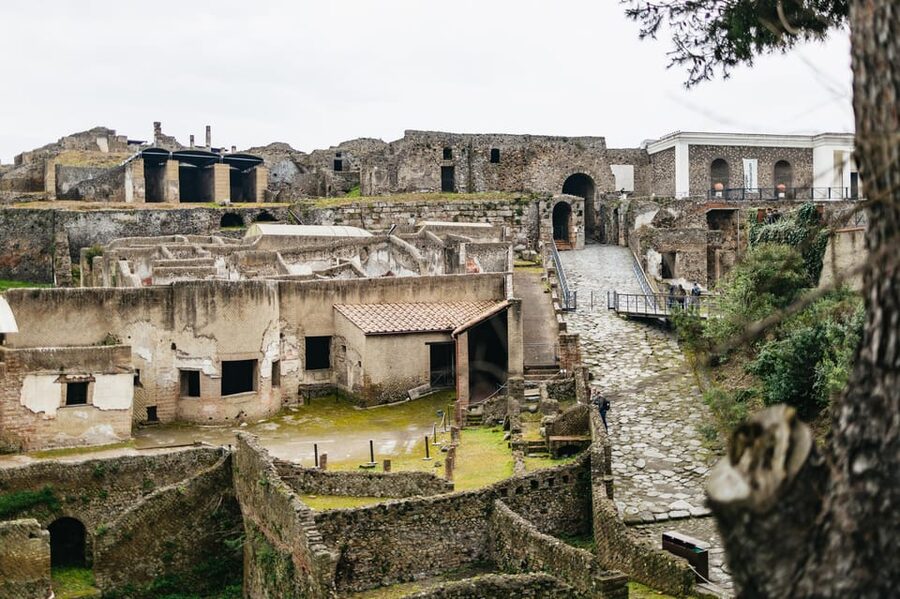
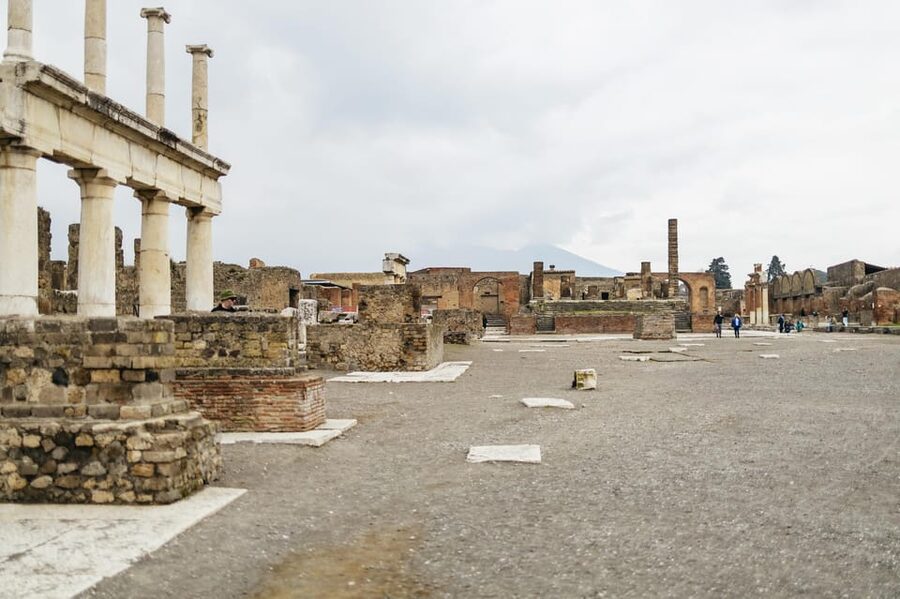
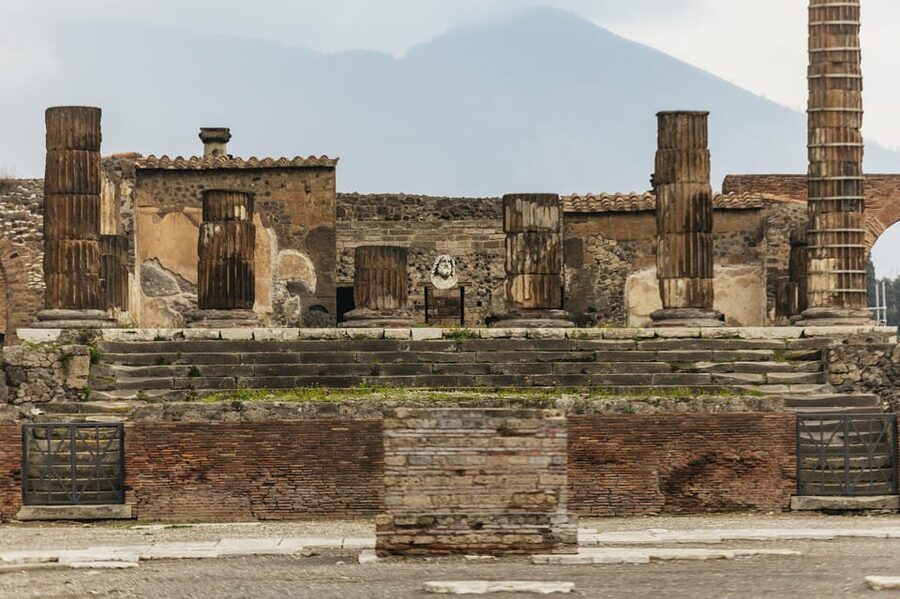
The Forum is one of the essential stops. This was the civic center of Pompeii, a place where public, political, religious, and commercial activity came together. Your guide uses the open space and surrounding buildings to explain how Roman public life was organized.
The nearby Basilica gives you another view of civic Pompeii. It was an important public building, and its scale helps you picture the city as more than a collection of private houses. Look closely at the surviving columns, walls, and floor plan while the guide explains how Roman architecture shaped daily business and government.
This is also where the size of the site begins to sink in. You are not looking at one isolated monument. You are walking through a functioning city, with public buildings connected to streets, shops, homes, and workspaces.
A good guide keeps the history tied to what you can actually see. Francesco and Frankie were often praised for explaining Roman architecture, engineering, art, and culture in a way that remained lively. That balance is important at the Forum, where a long lecture could easily blur into a list of dates.
A different way to spend the day, same part of Italy:
- Pompeii: Entry Ticket and Guided Tour with an Archaeologist
★ 4.8 · 19,459 reviews - Pompeii: Small Group Tour with an Archaeologist
★ 4.8 · 12,264 reviews - Pompeii: Skip-the-Line Entrance Ticket with Audio Guide
★ 4.0 · 2,509 reviews - Naples: Pompeii and Mt. Vesuvius with Lunch and Wine Tasting
★ 4.5 · 2,454 reviews
The thermal baths and the practical side of Roman life
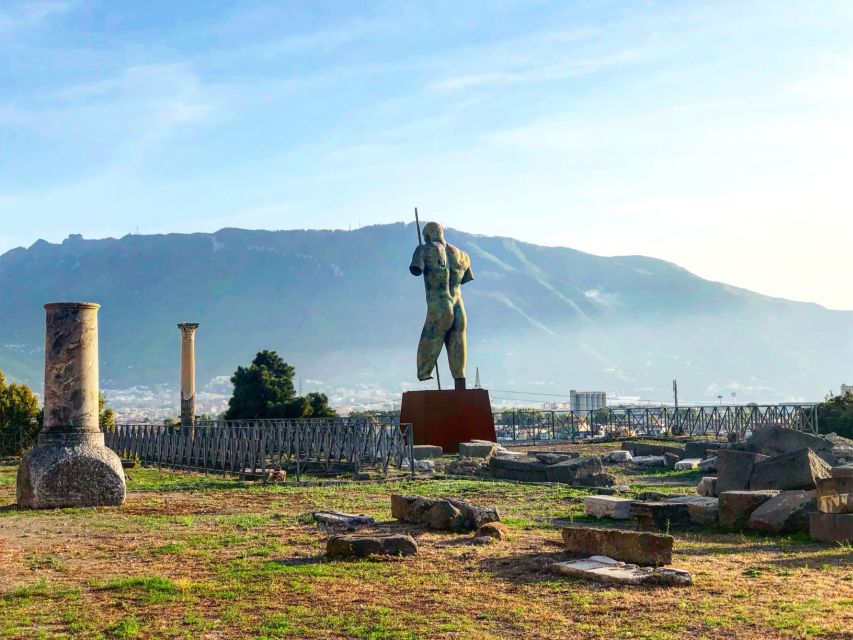
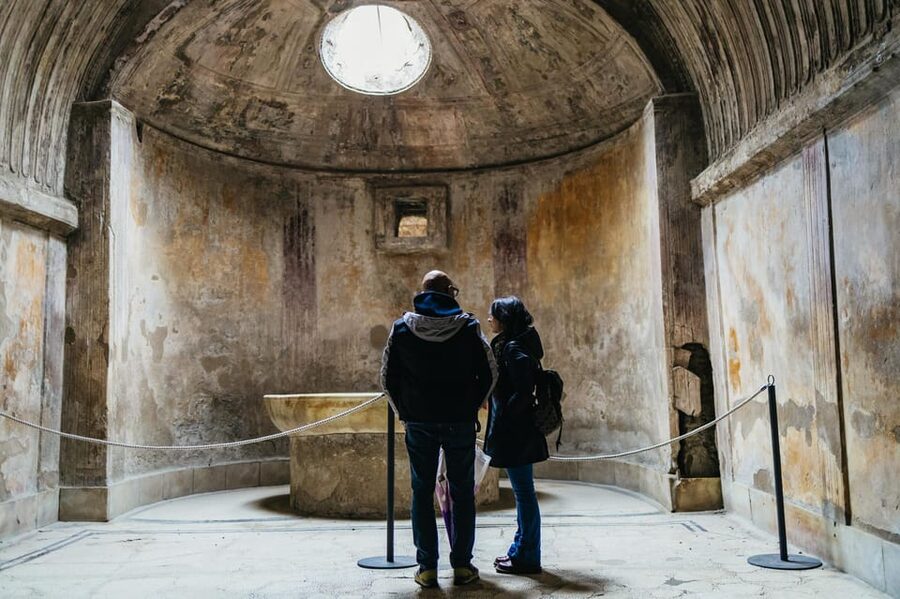
The thermal baths show how much public bathing mattered in Roman society. They were not simply places to wash. They were part of the daily rhythm of the city and a useful window into Roman engineering, social habits, and public design.
The tour also includes the new Antiquarium, where available as part of the route. The exact amount of time at each stop depends on the guide and the group, but these sites help build a broad picture of Pompeii before the eruption.
I value this part of the tour because it moves beyond the most famous disaster images. Pompeii was a living town first. Baths, civic buildings, shops, houses, and bakeries tell you how people spent ordinary days, which makes the later eruption easier to understand.
The open-air setting can still be hot, even late in the day. Guides have been praised for finding shade during explanations and for pointing out uneven surfaces. Bring a sun hat, drink enough water, and wear shoes suited to old stone streets.
Bakeries, houses, and Pompeii’s ordinary neighborhoods
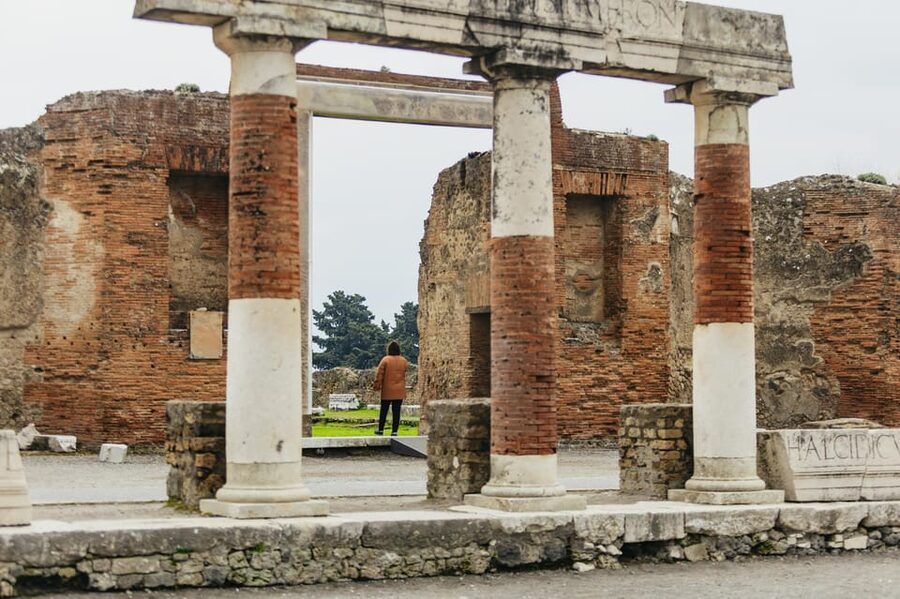
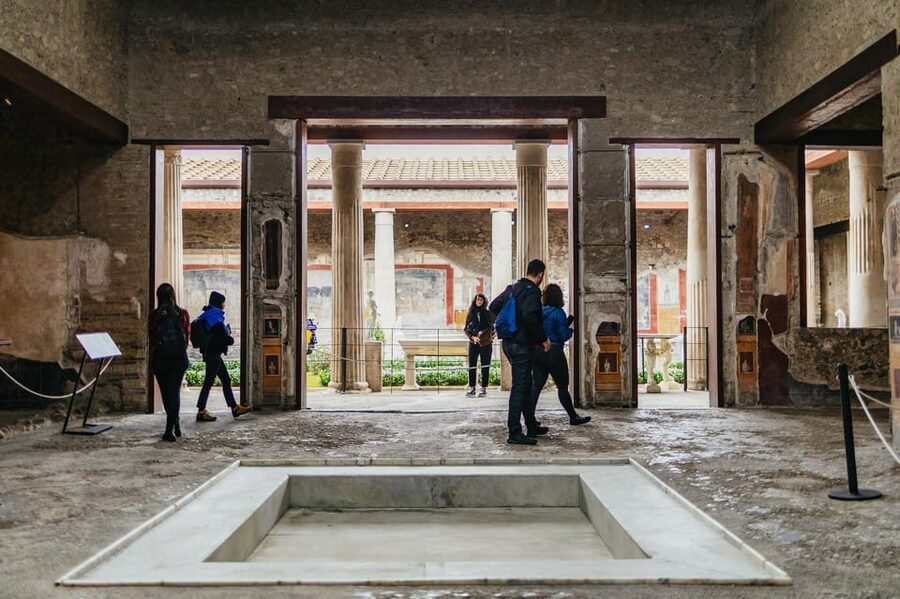
The most memorable details may come from the less grand areas. The route includes commercial and residential neighborhoods, with a bakery and typical housing blocks. These places show work, food, storage, family life, and the practical layout of an ancient town.
A bakery is more revealing than another large column. It connects the city to flour, ovens, labor, customers, and the basic business of feeding a population. Housing blocks do something similar. They show how people occupied space and how private life sat close to shops and public streets.
This is where the archaeologist’s stories matter most. A guide can point out details that you might pass without notice and explain what they suggest about the people who lived there. Anna, who is an archaeologist and has lived in Pompeii all her life, was praised for answering questions and connecting the site to local knowledge.
Do not expect every house or neighborhood to be open during every visit. The tour description promises key areas, not full access to every building. Preservation work, closures, and the guide’s route can affect what you see, so treat the itinerary as a well-chosen sample rather than a complete survey.
The theater and the final view
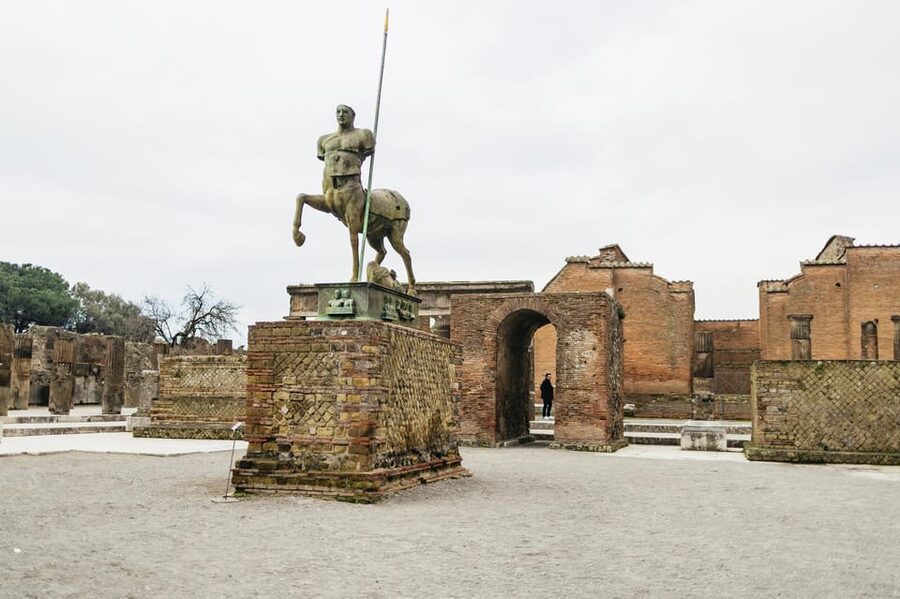
The theater is another major stop and gives the tour a change of pace. It brings performance, public entertainment, and crowd life into the picture. After the broad spaces of the Forum and the practical detail of homes and shops, the theater helps show how Pompeii’s residents spent leisure time.
The guide’s account of the eruption ties the route together. You learn what happened in 79 AD and how the event affected Pompeii and the wider society around it. The strongest guides do not leave the eruption as a single dramatic ending. They connect it to the city that existed before the disaster.
The final stretch is meant to be peaceful. As the sun lowers, the ruins become less exposed and the atmosphere grows quieter. You can let the scale of the site register without rushing from one explanation to the next.
After the guided portion, you may have time to explore independently. Use it to revisit a favorite area, seek out the Arena, or follow the guide’s suggestions. One useful tip is not to assume every famous place is included in the core route. The Arena, in particular, was singled out as an area worth seeing after the tour.
What the guide adds to the experience
Pompeii is one of those places where a guide changes the visit from visual sightseeing to historical understanding. An audio guide can tell you facts, but a live guide can respond when you ask why a building was arranged a certain way or what a feature might have meant.
The strongest pattern in the guide feedback is not one single personality. It is a shared mix of clear information, humor, patience, and care. Francesco and Frankie are praised repeatedly for bringing the city to life, keeping the group engaged, answering questions, and finding shade. Angelo is noted for passion and strong archaeological knowledge. Anna is praised for her local connection, while Sasa handled a group ranging from children to people in their seventies with a good mix of history and culture.
Guide assignments can change, so you should not book on the assumption that one named person is guaranteed. Still, the repeated praise for several guides suggests that Enjoy Pompeii has built the tour around live interpretation rather than a fixed script.
The smaller group format also matters. You can ask more questions, hear the explanation without a large crowd around you, and adjust your pace when needed. If you are traveling with children or teenagers, this format may help. The guides have been praised for taking younger visitors seriously and keeping them involved.
Walking effort, weather, and who should skip it
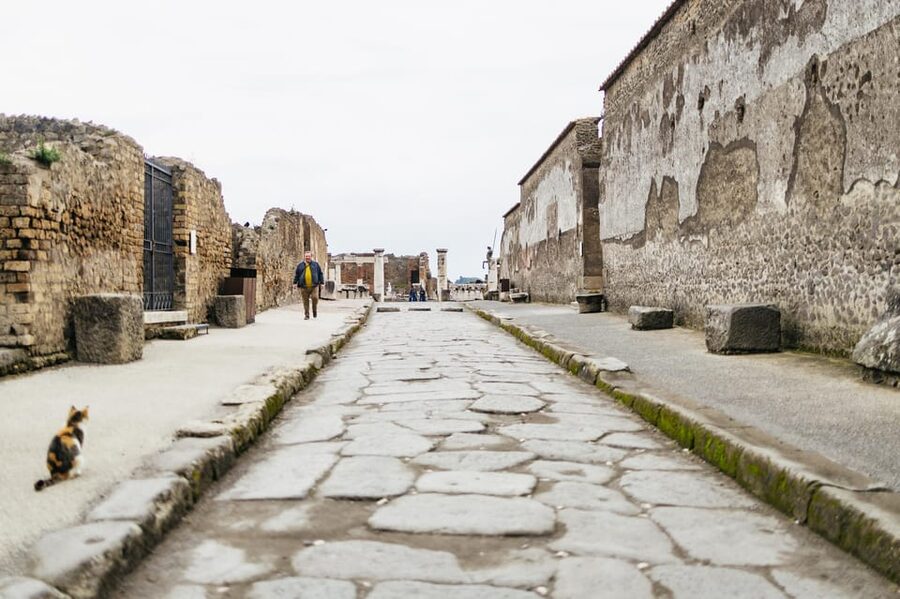
The route lasts 2.5 hours and involves walking through ancient streets. The distance may feel manageable to an active visitor, but the rough and uneven surfaces, heat, and lack of shade in some areas can add up.
The activity is not suitable for people with mobility impairments, heart problems, or respiratory issues. It is also not recommended for people over 95. Those limits are worth taking seriously rather than treating them as routine fine print.
For everyone else, preparation is basic but important:
- Wear comfortable walking shoes.
- Bring a sun hat.
- Carry your ID card or an accepted copy.
- Plan for sun exposure, even in the afternoon.
- Leave enough time after the tour if you need to catch a train.
The late start helps with heat, but it does not remove the physical demands of Pompeii. I would choose this tour for people who can walk steadily for two and a half hours and who prefer a structured route to wandering without context.
Is $58 a fair price?
At $58 per person, the price includes the Pompeii entry ticket and an archaeologist guide. It does not include transportation, food, or a private transfer.
I consider the cost reasonable if you want the site explained as you walk. A ticket gets you through the gate, but Pompeii’s size can make it hard to choose a route or understand what you are seeing. The guided structure helps you spend limited time on the Forum, Basilica, baths, theater, homes, bakery, and neighborhood streets without wasting the first hour finding your bearings.
The value is strongest for a first visit, a short stay, or anyone who wants the main story in one focused session. It is less compelling if you already know Pompeii well and would rather spend a full day choosing your own corners.
You also get flexibility through free cancellation up to 24 hours before the start time and a reserve-now, pay-later option. Those policies do not change the quality of the visit, but they make the booking easier to fit into a shifting Campania schedule.
Who should book this Pompeii tour?
Book it if you want the major sights, clear historical context, and a cooler late-day visit. It suits first-time visitors, couples, families with older children, and anyone who would rather ask a real person questions than follow an audio track.
It is also a good choice if Pompeii is one part of a larger Italy trip. You can reach the site on your own, take the focused tour, then continue exploring if time allows. That is often more sensible than squeezing Pompeii into a rushed combination excursion with several other destinations.
I would choose a private or small group if you care about conversation, photography pauses, or a more personal pace. If your main goal is to see every open street and building, book more time at Pompeii and treat this tour as an introduction rather than the whole visit.
Should you book it?
Yes, if you want Pompeii to make sense rather than simply look impressive. The afternoon-to-sunset schedule, skip-the-line entry, and focused route offer good value, while the guides add the human stories that turn ruins into a city.
Skip it if you need a fully accessible route, dislike guided pacing, or have only a narrow window before transport. Otherwise, this is a practical way to see Pompeii’s essential civic, commercial, residential, and entertainment sites without spending the hottest part of the day on the stones.
FAQ
How long does the Pompeii tour last?
The guided walking tour lasts 2.5 hours.
What time does the tour start?
Starting times vary. Check availability for the date you want to visit. Afternoon departures, including a reported 3:30 p.m. start, are available on some dates.
What does the ticket include?
The price includes skip-the-line entry to Pompeii through a separate entrance and an archaeologist guide.
Is transportation included?
No. Transportation to and from Pompeii is not included.
Where do I meet the guide?
Meet at Ristorante Bar Sgambati. Look for the red Enjoy Pompeii sign.
What languages are available?
The live tour is available in English, Italian, and French.
Can I explore Pompeii after the guided tour?
Yes. You may stay after the guided portion to explore further on your own, subject to the site’s access rules and opening arrangements.
Is the tour suitable for visitors with mobility or health concerns?
The activity is not suitable for people with mobility impairments, heart problems, or respiratory issues. It is also not suitable for people over 95.
Recently reviewed around Pompei Campania
- Pompeii 3hours Villa of Mysteries tour with an Archaeologist★ 4.8 · 486 reviews
- Pompeii: Small-Group Tour of Pompeii and Herculaneum★ 4.8 · 867 reviews
- Pompeii: Skip-the-Line Entry & Audioguide★ 3.8 · 225 reviews
- Pompeii: Skip-the-line-Ticket and Guided Tour★ 4.6 · 1,152 reviews
- Pompeii: Guided Tour with Skip-the-Line Entry★ 4.9 · 812 reviews
- Pompeii: Tour with Archaeologist Guide & Skip-the-Line Entry★ 4.5 · 478 reviews
- Pompeii: Skip-the-Line Entry Ticket with Digital Guide App★ 4.1 · 770 reviews
- Pompeii: Day Tour of Pompeii and Vesuvius with Bus Transfer★ 4.2 · 250 reviews
Pompeii & Vesuvius Tours, compared.

Entry Ticket and Guided Tour with an Archaeologist
Read our review →




Pompeii Small Group Tour with an Archaeologist
Read our review →
Pompeii, Amalfi Coast and Positano Day Trip from Rome
Read our review →Browse the lists this tour appears in