
Review · POMPEII & VESUVIUS TOURS
Pompeii: Skip-the-line-Ticket and Guided Tour
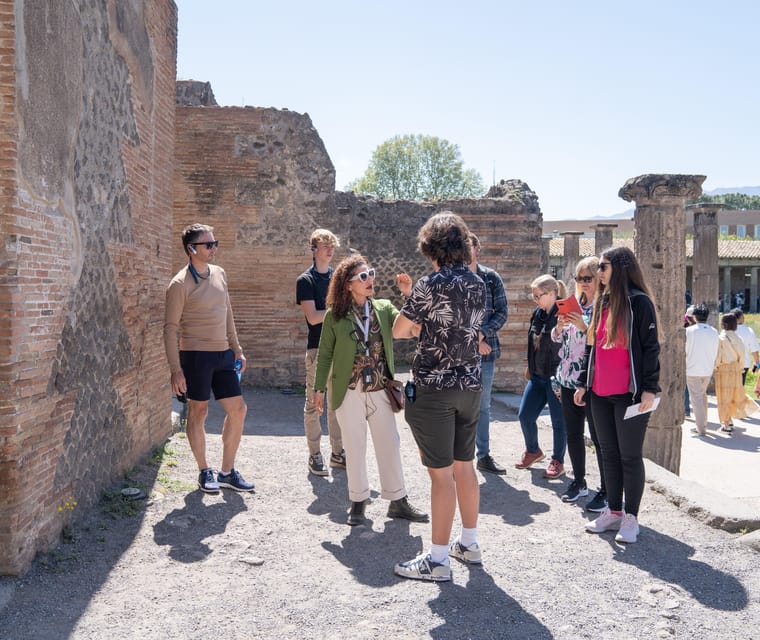
Pompeii comes alive when someone explains what you are seeing. Without a guide, the city can look like a vast field of weathered stone. With one, a bakery becomes evidence of daily work, a bathhouse reveals Roman routines, and a faded fresco gives you a glimpse of a long-vanished home. This two-hour guided visit covers the essential sights with an archaeologist guide.
I like the reserved entrance, which cuts out the ticket-line worry, and I like the way the route mixes grand public places with small details of ordinary life. The view of Mount Vesuvius beyond the ruins adds a powerful sense of place. You also receive a headset, city map, and help at the nearby tourist office.
The main limitation is time. Pompeii is enormous, and two hours gives you a useful introduction, not a full visit. The tour can also feel less personal in a larger group, so I would choose the semiprivate option, capped at 12 people, if your budget allows.
In This Review
- Key points to know before booking
- Why Pompeii works best with a guide
- Meeting at Piazza Esedra and entering through Porta Marina
- Following Pompeii’s main streets to the forum
- Baths, temples, and the routine of Roman life
- A bakery, theater, and brothel reveal Pompeii’s private side
- Frescoes, mosaics, and art preserved by ash
- The guide and group size shape the experience
- Is two hours enough for Pompeii?
- What $64 buys you
- Who should book this Pompeii tour?
- Final verdict: book it for context, not total coverage
- FAQ
- Where does the Pompeii tour meet?
- How long does the guided tour last?
- Is the Pompeii entrance ticket included?
- Which languages are available?
- Is Villa dei Misteri included?
- What should I bring?
- Can I bring a dog?
- Is the tour suitable for wheelchair users?
Key points to know before booking
- Porta Marina Superiore begins the story: You enter by one of Pompeii’s seven ancient gates, then follow the streets toward the forum.
- The route covers daily life as well as famous ruins: Expect baths, temples, a bakery, theater, brothel, frescoes, mosaics, and the forum.
- Archaeologist guides make the difference: Guides such as Diana, Ester, Roberta, and Marcela have been praised for clear explanations, humor, and strong command of the subject.
- Two hours is an overview: You see the principal areas, but you will need extra time on your own for a fuller visit.
- The semiprivate group is worth considering: A maximum of 12 people makes it easier to hear the guide and ask questions.
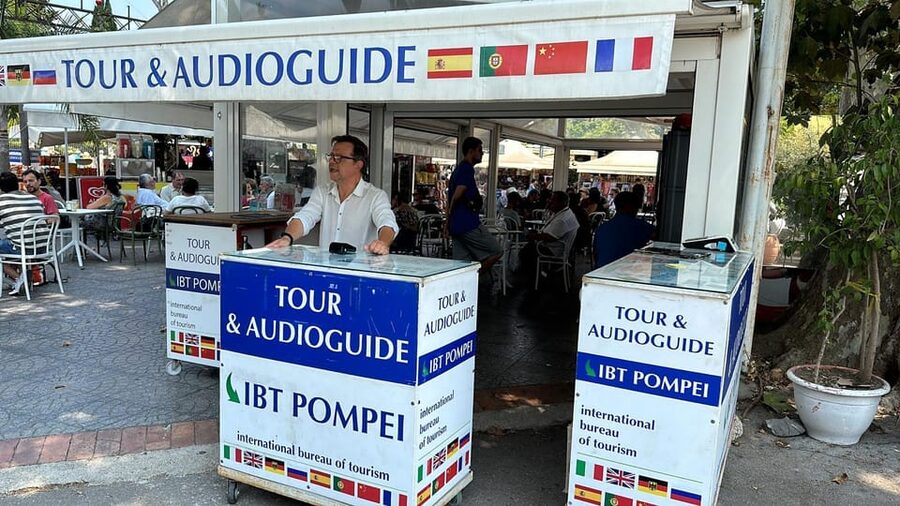
- The meeting point needs careful attention: Report to the IBT Center/Touristation office next to Chalet Donna Lucia, not directly at the archaeological entrance.
Why Pompeii works best with a guide
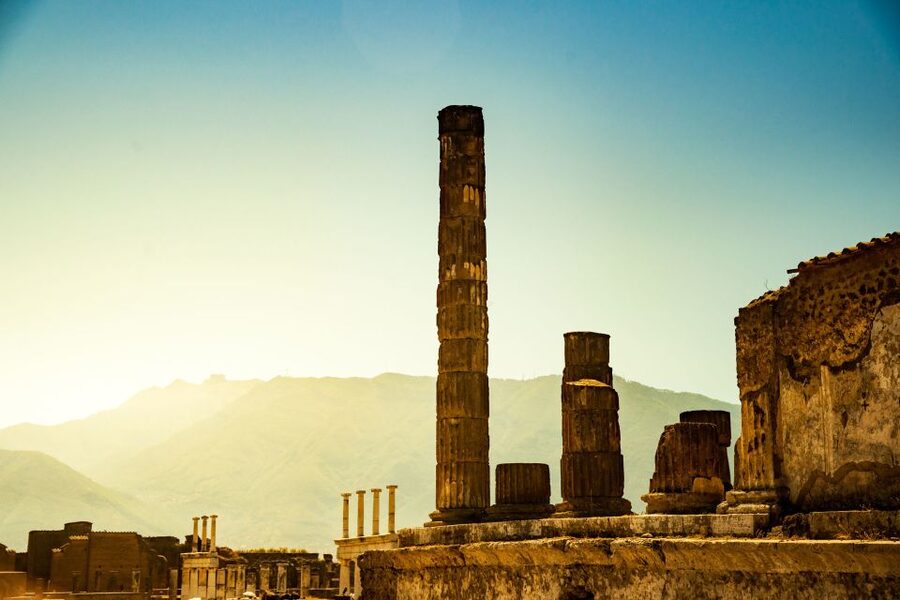
Pompeii is not a single monument. It is a whole Roman city, with streets, homes, shops, temples, public buildings, and theaters spread across a large archaeological area. That scale is exciting, but it can also make a self-guided visit feel scattered.
I find the guide most useful when the tour moves from ruins to human routines. A street is just a street until you learn how it fit into the city. A building with a counter becomes a bakery or food shop. A bath complex tells you how Romans spent time together. A painted wall shows that Pompeii was not a gray stone town, but a place filled with color, decoration, and personal taste.
The best guides on this route explain the people as well as the buildings. Marcela, for example, was praised for making Roman lifestyles easy to understand. Other guides, including Valentina, Laura, Paul, Liliana, and Annorita, have been singled out for patience, humor, clear delivery, and the ability to answer questions.
That human focus is the real reason to book. As one experienced visitor put it, without a guide you can end up looking at old stones without understanding how Pompeii operated. I agree. You can see more on your own, but you may understand less.
More Pompei Campania trips worth a second look
- Pompeii: Skip-the-Line Entrance Ticket with Audio Guide
★ 4.0 · 2,509 reviews - Pompeii: Guided Tour with Skip-the-Line Entry
★ 4.9 · 812 reviews - Pompeii: Skip-the-Line Entry Ticket with Digital Guide App
★ 4.1 · 770 reviews
Meeting at Piazza Esedra and entering through Porta Marina
The tour starts at Piazza Esedra, 11, at the IBT Center/Touristation office next to Chalet Donna Lucia. This is an important detail. The meeting point is not simply the main archaeological gate, and it can be confusing if you arrive from the station or drive in from another direction.
Give yourself time to find the office. One person found the location tricky because it was away from the train station, while another arriving by rental car was met, directed to parking, and shown to the guide. The safest approach is to use the stated office as your target rather than heading straight to the entrance.
From there, the tour proceeds into Pompeii through Porta Marina Superiore, one of the city’s seven gates. Starting at a gate is more meaningful than it may sound. You begin with the way people entered the city, then move along the old streets toward the forum and the public center.
The reserved ticket is included in the $64 price. It does not mean every part of the archaeological area is instantly empty, but it does remove the need to wait in the standard ticket line. For a major site, that can protect a good portion of your limited sightseeing time.
You need an ID card or passport. Large bags, oversize luggage, umbrellas, and smoking are not allowed. Small dogs are permitted inside if kept on a leash, and they must be carried inside buildings.
Following Pompeii’s main streets to the forum
The main streets provide the backbone of the visit. Pompeii is easier to understand when you follow its street plan and see how homes and public buildings gathered around shared routes.
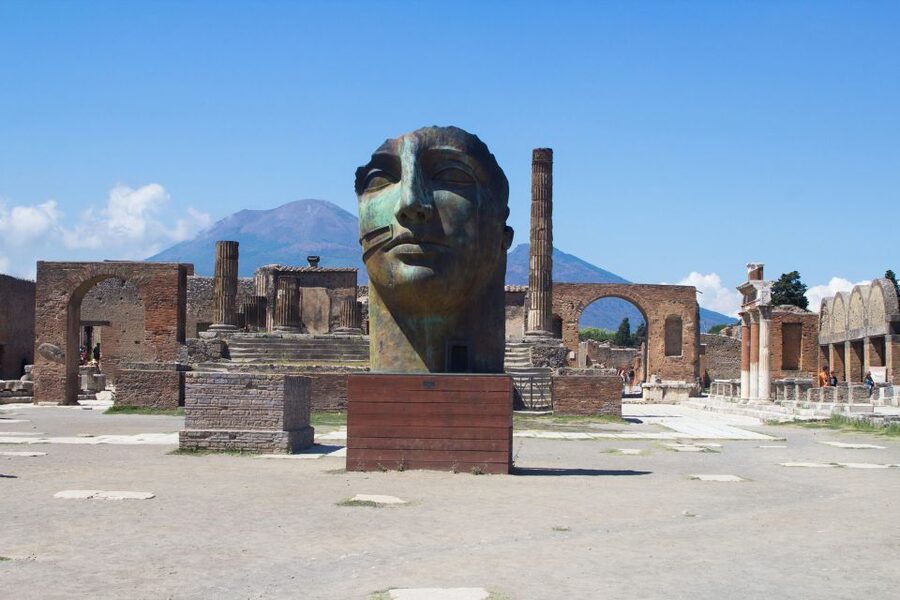
Your guide points out the forum, the heart of ancient Pompeii. This is the place where public, religious, and civic life came together. The forum also gives you one of the strongest views toward Mount Vesuvius, the volcano whose eruption covered the city in volcanic ash.
That view is not just a photo stop. It links the ruined city to the event that preserved it. Vesuvius rises beyond the remains, making it easy to understand why Pompeii feels so unusual. You are not simply visiting an old Roman settlement. You are seeing a city interrupted and protected by the same eruption.
The forum area can also be one of the busiest parts of a visit. A strong guide helps by keeping the group together and explaining what matters before moving on. Ester was praised for taking the group to the key sites while avoiding some of the busiest spots, a useful skill in a place where narrow streets and large groups can slow the pace.
Baths, temples, and the routine of Roman life
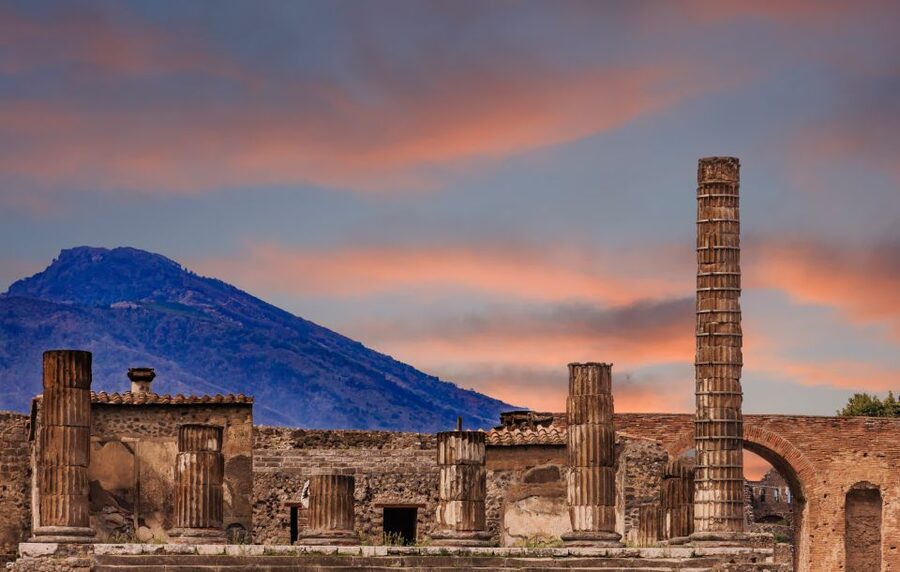
The tour includes Pompeii’s baths and temples. These buildings show two different sides of city life: practical social routines and religious practice.
The baths were more than places to wash. They were part of the public rhythm of Roman life, and the guide can help you picture how people used the rooms and moved through the complex. This is where an archaeologist guide adds value, because the remains alone do not always make the original function clear.
The temples bring a different mood. Their surviving structures help explain the role of religion in public life and how sacred buildings fit into the city’s central spaces. You will not just hear dates and names. The aim is to connect the buildings to the people who used them.
I especially like this section for families and first-time visitors. Children may not remember every architectural term, but they tend to grasp the idea of a city with public baths, religious centers, food businesses, entertainment, and private homes. Several guides have been praised for humor and for making difficult material easy to remember.
A different way to spend the day, same part of Italy:
- Pompeii: Entry Ticket and Guided Tour with an Archaeologist
★ 4.8 · 19,459 reviews - Pompeii: Small Group Tour with an Archaeologist
★ 4.8 · 12,264 reviews - Naples: Pompeii and Mt. Vesuvius with Lunch and Wine Tasting
★ 4.5 · 2,454 reviews - Pompeii: Small-Group Tour of Pompeii and Herculaneum
★ 4.8 · 867 reviews
A bakery, theater, and brothel reveal Pompeii’s private side
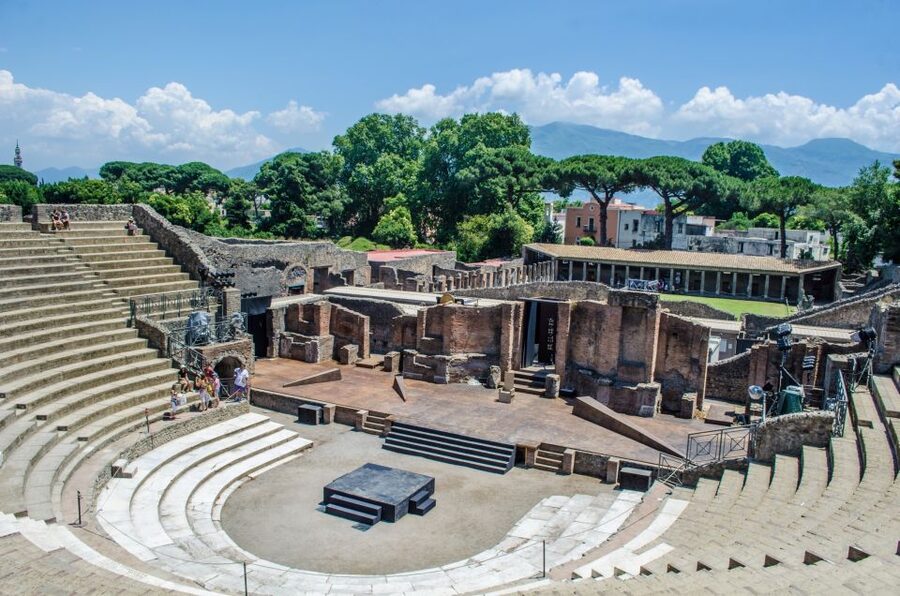
Pompeii becomes most vivid when the tour moves beyond temples and formal public spaces. The route includes a bakery, the great theater, and a brothel, giving you a broad picture of what people did during an ordinary day.
The bakery is a small but telling stop. It points to work, food production, and the practical systems needed to feed a city. Instead of seeing Pompeii only as a place of grand columns, you see evidence of labor and commerce.
The great theater shifts the focus to entertainment. It shows that public life included performance and shared leisure, not only politics and worship. The guide’s explanations help you see these structures as working parts of a city rather than empty shells.
The brothel is one of Pompeii’s most recognizable attractions, but it is best understood in context. A guide can explain what the building reveals about Roman social life without reducing the stop to a quick joke or sensational detail. This is one reason the tour works well for curious adults who want more than a list of famous ruins.
The route’s variety is a strength. In a short visit, you move from civic space to religion, hygiene, food, entertainment, and sexuality. That range helps you understand Pompeii as a lived-in city.
Frescoes, mosaics, and art preserved by ash
Pompeii’s decoration is one of its great rewards. The tour brings you close to preserved frescoes, artwork, and mosaics, many still showing the care that went into private and public interiors.
The volcanic ash did terrible damage, but it also sealed parts of the city and protected objects and surfaces from centuries of ordinary change. Your guide gives these surviving details a setting. A mosaic is not simply a pretty floor. A fresco is not just a patch of color. Together, they tell you about taste, status, beliefs, and the way Romans decorated their surroundings.
Some areas may be closed or changed as conservation work continues, so the exact collection of interiors can vary. The route is designed around the main buildings and visible features, but it should not be treated as a promise that every room in Pompeii will be open.
Villa dei Misteri is specifically not included. If that site is a priority, you need to plan for it separately. The two-hour tour remains focused on the central archaeological area and its key buildings.
The guide and group size shape the experience

The guide is the heart of this tour. The archaeologist guides have received repeated praise for clear explanations, humor, patience, and the ability to connect architecture with everyday life.
Several people ended up in very small groups, including one group of six that became a private-feeling experience and another tour with only three participants. That will depend on the departure and booking mix, so do not assume you will always receive a private tour.
The standard group can be larger. One person found the group a little big for seeing and hearing everything, even though the guide worked hard to keep everyone together. The headset helps, particularly in open spaces or when other groups are nearby, but a headset cannot fix every problem if the group spreads out.
The semiprivate option has a maximum of 12 participants. I would choose it for older children, anyone who wants to ask questions, or anyone who finds it difficult to follow a guide in a crowd. It is also the better pick if the tour is a major part of your Pompeii visit rather than a quick stop between Naples and Sorrento.
English, Italian, French, and Spanish tours are available. English delivery has generally been strong, though one person found an accent difficult to understand. If you are sensitive to accents or depend on hearing every word, stand near the guide and use the headset from the start.
Is two hours enough for Pompeii?
Two hours is enough to form a clear picture of Pompeii. You can enter with a guide, see the major public spaces, learn how the city functioned, and finish with a sensible list of places to explore on your own.
It is not enough to see everything. Pompeii covers a large area, and the route has to keep moving. One person felt the tour covered the main streets and buildings well but noted that the site offers far more than can fit into two hours.
That is not necessarily a flaw. A short guided introduction can be a smart choice if Pompeii is part of a larger day. It works especially well when you are traveling between Naples and Sorrento. One group stored luggage at Pompei Scavi station, took the tour, and continued its journey. The tour does not provide hotel pickup or drop-off, so you arrange transport and luggage storage yourself.
After the guided portion, you may have time to explore further, depending on your start time and the site’s opening conditions. The guide can point out additional areas worth seeing. There is also a cafeteria inside the ruins near the exit, where one person found good sandwiches, though food and drinks are not part of the tour price.
What $64 buys you
At $64 per person, this is not the cheapest way to enter Pompeii. You are paying for the archaeological-area ticket, reserved entry, a two-hour guide, headset, city map, Wi-Fi, and assistance at the tourist office.
The value depends on how you use the visit. If you already know Pompeii well and prefer to wander alone, the guide may not be worth the added cost. If this is your first visit, the interpretation can change the entire experience. You see fewer areas than you might cover independently, but you gain a structure and context that are hard to create on your own.
I think the price is easier to justify when the group is small and the guide is strong. It feels less attractive if you receive a larger group, have trouble hearing, or want a long unhurried day inside the ruins. Children are charged the full price according to one booking experience, so families should calculate the total carefully.
The ticket is non-refundable. Check the departure time before paying, and do not assume the train schedule will line up neatly with the tour. A missed start can create a long wait for the next available departure and may involve an extra charge.
Who should book this Pompeii tour?
I would recommend it to a first-time visitor who wants the essential story without spending a full day studying a map. It is also a good fit for families, couples, and people combining Pompeii with transport between Naples and Sorrento.
Choose the semiprivate version if you want a better chance to hear every explanation. Choose a guided tour in your strongest language, and arrive early enough to find the Piazza Esedra office without rushing.
I would skip this option if you use a wheelchair or have serious mobility limitations. The experience is not suitable for wheelchair users or people with mobility impairments, and Pompeii’s uneven archaeological streets can make walking demanding.
Final verdict: book it for context, not total coverage
Book this tour if you want Pompeii to make sense. The archaeologist guide, reserved entry, headset, and well-chosen route give you a useful introduction to the forum, streets, baths, temples, bakery, theater, brothel, art, and Mount Vesuvius views.
Do not book it expecting to see every corner. Two hours is a brisk overview, and the $64 price is a little high if you only want a ticket. For a first visit, though, I would pay for the explanation, especially with the semiprivate group of up to 12. Pompeii rewards curiosity, and a good guide turns the ruins into a city again.
FAQ
Where does the Pompeii tour meet?
Meet at the IBT Center/Touristation office next to Chalet Donna Lucia at Piazza Esedra, 11. The office is away from the main archaeological entrance and train station, so allow time to find it.
How long does the guided tour last?
The guided tour lasts two hours. It covers the main archaeological area and key buildings, but it does not include every part of Pompeii.
Is the Pompeii entrance ticket included?
Yes. The Pompeii archaeological-area ticket with reserved, skip-the-ticket-line entry is included.
Which languages are available?
The live guide is available in English, Italian, French, and Spanish.
Is Villa dei Misteri included?
No. Entrance to Villa dei Misteri is not included in this activity.
What should I bring?
Bring a passport or ID card. Identification is required for all participants.
Can I bring a dog?
Small dogs are permitted inside the archaeological area if they stay on a leash. They must be carried when you enter buildings.
Is the tour suitable for wheelchair users?
No. The activity is not suitable for wheelchair users or people with mobility impairments. Free admission is available for disabled visitors with certified disabilities.
Recently reviewed around Pompei Campania
- Pompeii 3hours Villa of Mysteries tour with an Archaeologist★ 4.8 · 486 reviews
- Pompeii: Small-Group Tour of Pompeii and Herculaneum★ 4.8 · 867 reviews
- Pompeii: Skip-the-Line Entry & Audioguide★ 3.8 · 225 reviews
- Pompeii: Guided Tour with Skip-the-Line Entry★ 4.9 · 812 reviews
- Pompeii: Tour with Archaeologist Guide & Skip-the-Line Entry★ 4.5 · 478 reviews
- Pompeii: Afternoon to Sunset Guided Tour with Ticket★ 4.9 · 484 reviews
- Pompeii: Skip-the-Line Entry Ticket with Digital Guide App★ 4.1 · 770 reviews
- Pompeii: Day Tour of Pompeii and Vesuvius with Bus Transfer★ 4.2 · 250 reviews
Pompeii & Vesuvius Tours, compared.

Entry Ticket and Guided Tour with an Archaeologist
Read our review →




Pompeii Small Group Tour with an Archaeologist
Read our review →
Pompeii, Amalfi Coast and Positano Day Trip from Rome
Read our review →Browse the lists this tour appears in