
Review · POMPEII & VESUVIUS TOURS
Pompeii: Skip-the-Line Entry & Audioguide
Pompeii is not a neat collection of ruins behind glass. It is a full Roman city, with streets, bakeries, homes, baths, theaters, and public fountains spread across a large archaeological park. Walking through it with Mount Vesuvius in view gives the visit a powerful sense of place.
I like the freedom to set your own pace, and I like having the audioguide and paper map to give structure to a site that can otherwise feel confusing. The main catch is value: at $53 per person, you may pay more than the on-site entry price, especially if you only want basic admission and an audio device.
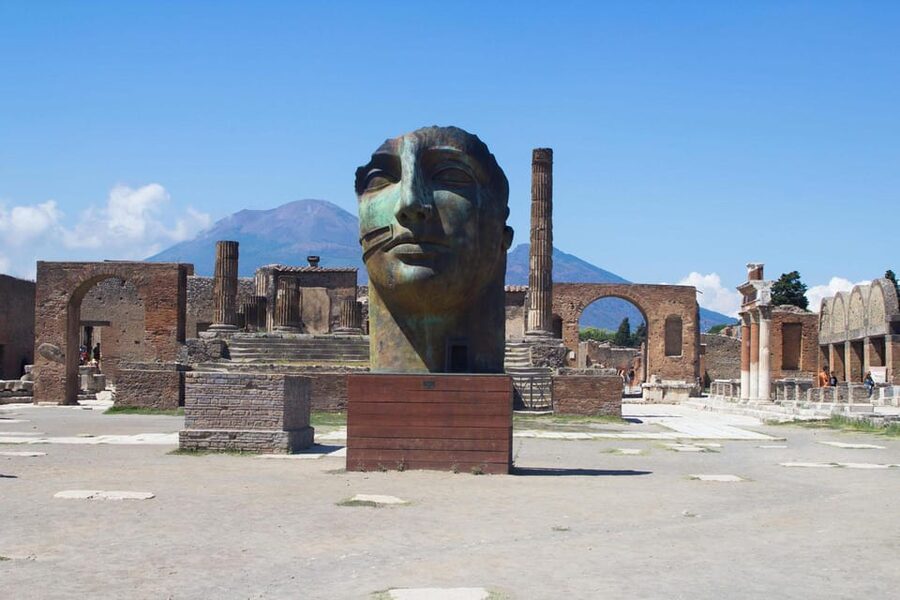
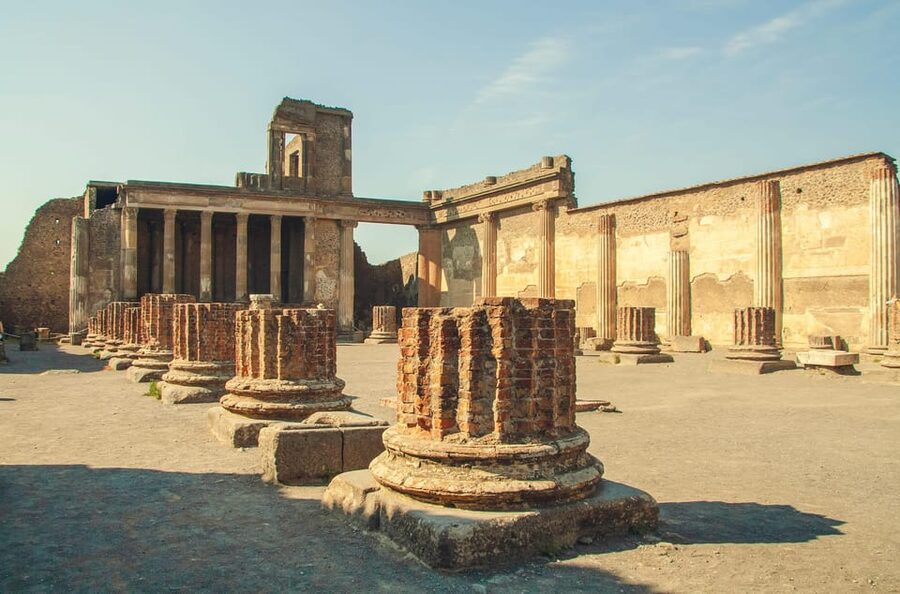
- The forum comes first: See Pompeii’s civic center with columns, doorways, and Vesuvius behind it.
- Eight audioguide languages: Choose Italian, English, French, Spanish, German, Portuguese, Chinese, or Japanese.
- A flexible visit: The stated duration ranges from two hours to a full day, so you can keep moving or linger.
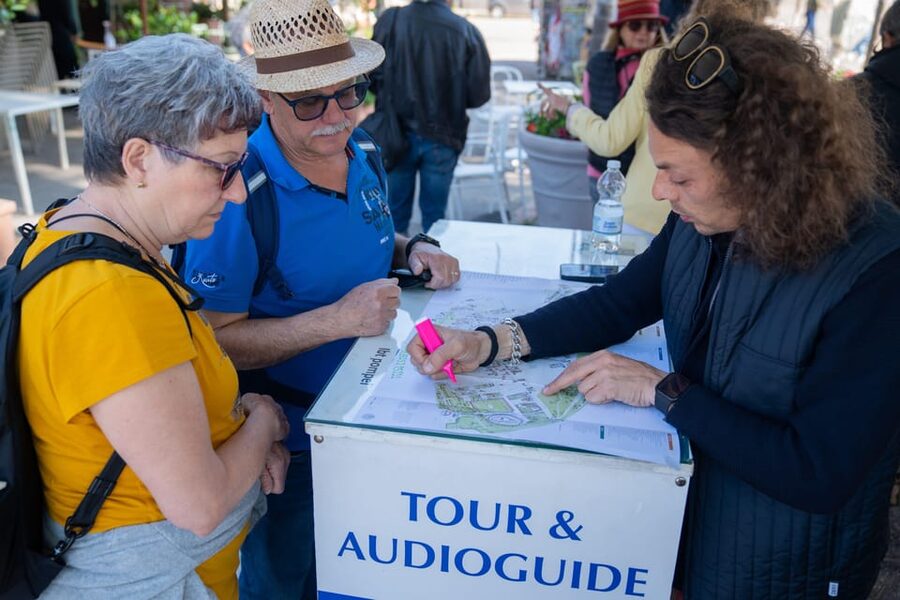
- Useful city map included: The paper map helps you plan among streets, houses, shops, baths, and theaters.
- Easy meeting point: Collect your access near the IBT Center, also called Touristation, beside Chalet Donna Lucia.
- Check the real price: The convenience of advance arrangements may not justify the added cost for every visitor.
In This Review
- Pompeii’s Forum and the First View of Vesuvius
- Ancient Streets, Fountains, and Aqueduct Remains
- Roman Homes, Shops, and Faded Frescoes
- Baths, Aqueducts, and Public Life
- Amphitheater and Theaters
- How Much the $53 Price Buys You
- Finding the Meeting Point and Starting Smoothly
- Who Will Get the Most From This Visit
- Should You Book Pompeii With the Audioguide?
- FAQ
- What does the Pompeii experience include?
- How much does the experience cost?
- How long does the visit last?
- Where is the meeting point?
- Is the ticket refundable?
- Which languages are available for the audioguide?
- Is a guided tour included?
- Is Villa dei Misteri included?
- What should I bring?
- Can I bring a dog?
Pompeii’s Forum and the First View of Vesuvius
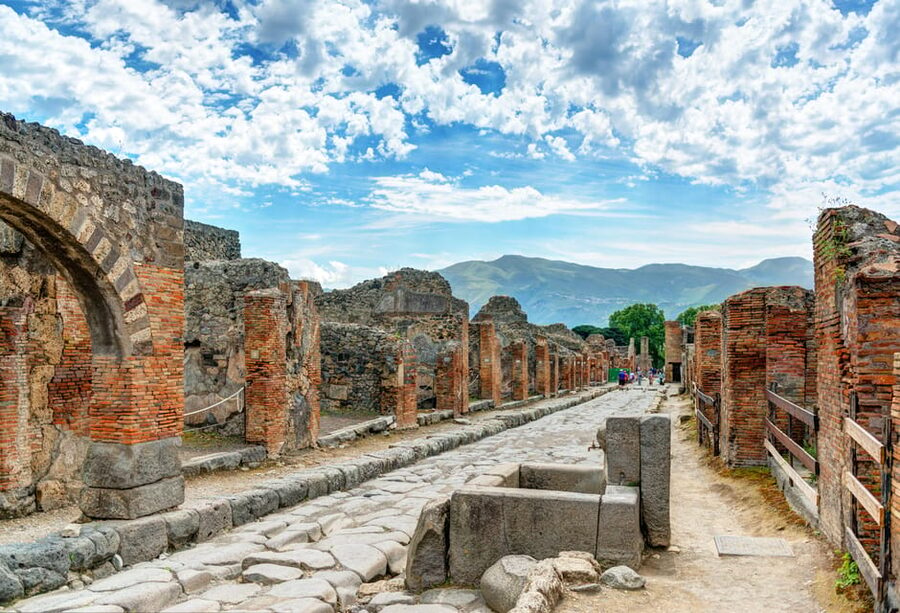
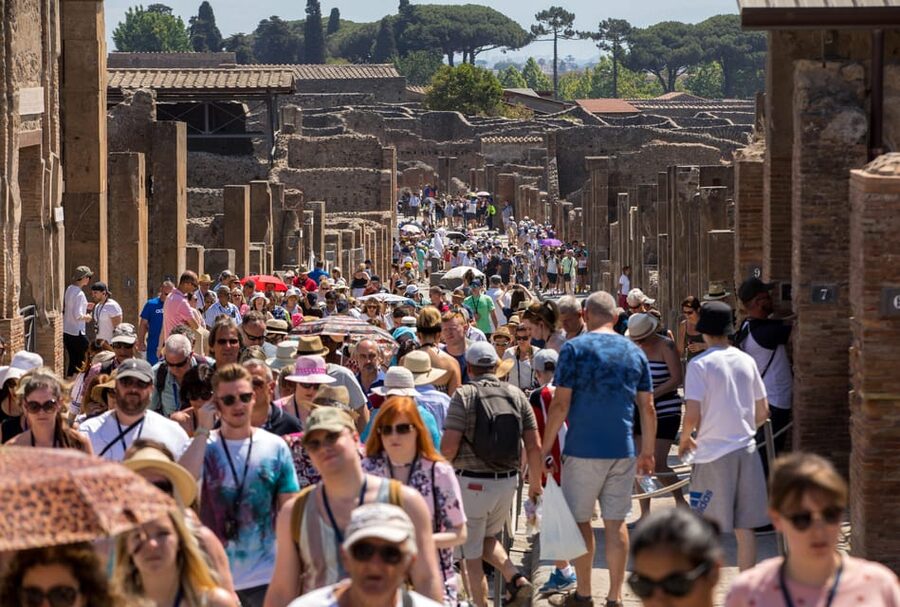
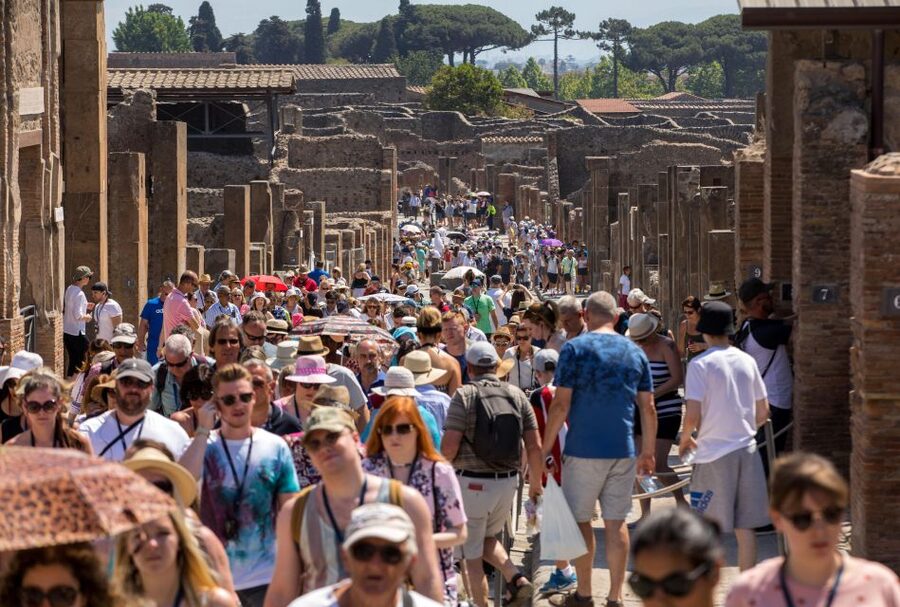
After collecting your entry arrangements at the IBT Center, you enter Pompeii’s archaeological park and begin with the remains of the ancient city. The skip-the-ticket-line feature is meant to save you from waiting at the ticket counter, though it does not mean the site will be quiet or free of all queues.
The forum is the natural place to get your bearings. This broad civic center once formed the heart of public life, and its surviving columns, doorways, and surrounding buildings help you picture how the city was organized. With Vesuvius rising behind the ruins, the setting explains the disaster before the audioguide says a word.
I like beginning here because Pompeii can feel sprawling. The forum gives you a central reference point, while the paper map helps you understand where the residential streets, public buildings, and performance spaces sit in relation to one another.
The audioguide adds background as you move. English is included, along with seven other languages, and a guided tour is available if you choose that version when booking. One introduction by Daniel was specifically praised for being clear, so if your option includes a guide, pay attention during the opening orientation. It may save you time later.
Ancient Streets, Fountains, and Aqueduct Remains
Pompeii becomes most interesting when you leave the forum and walk the streets. The stone roads, surviving walls, doorways, and public features show that this was a working city, not simply a grand ceremonial center.
You can look for the remains of the aqueduct and fountains that helped supply water. These details may seem modest beside a theater or amphitheater, but they reveal how ordinary life functioned. The city needed systems for drinking, washing, and public use, and these remnants make Pompeii feel practical and lived-in.
The audio commentary is useful here because many structures are not self-explanatory. A wall may look like a pile of ancient masonry until you learn whether it belonged to a house, shop, bath complex, or public building. I recommend listening in short sections rather than playing every track at once. That way, you can study the site instead of walking with your eyes fixed on the device.
The flexible duration matters. Two hours gives you a brisk look at the major areas, while a longer visit lets you pause at houses, public buildings, and performance spaces. The stated duration can extend to a full day, but your energy and the scale of the park will determine how much you actually want to see.
Wear practical shoes and bring a valid passport or identity card. Both are important here: Pompeii requires plenty of walking, and identification is required for all participants. Large bags and luggage are not allowed, so pack lightly.
More Pompei Campania trips worth a second look
- Pompeii: Skip-the-Line Entrance Ticket with Audio Guide
★ 4.0 · 2,509 reviews - Pompeii: Skip-the-line-Ticket and Guided Tour
★ 4.6 · 1,152 reviews - Pompeii: Guided Tour with Skip-the-Line Entry
★ 4.9 · 812 reviews
Roman Homes, Shops, and Faded Frescoes
The private houses and businesses provide some of the clearest clues about daily life. You will pass through rooms, courtyards, entrances, and commercial spaces where the surviving layout can be more revealing than a single famous object.
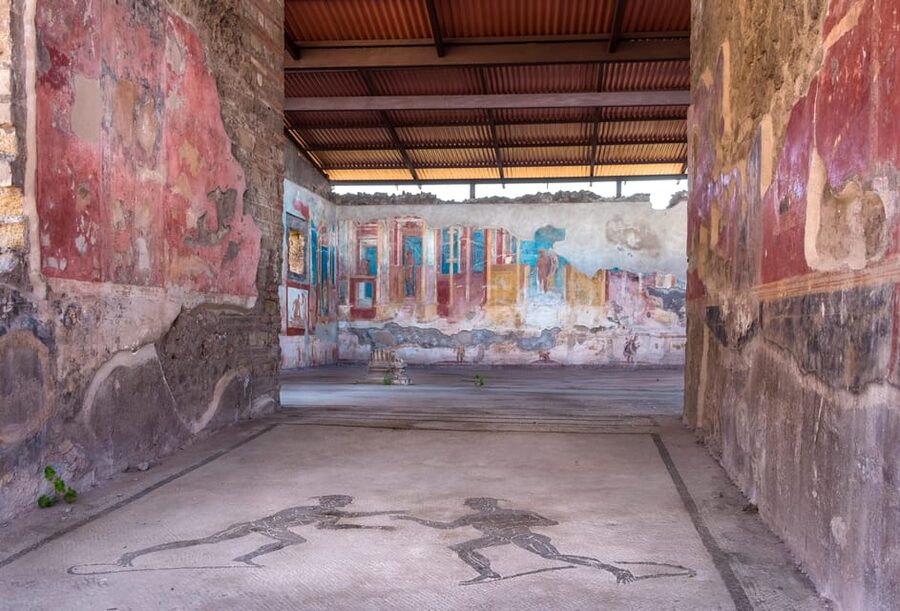
Look closely at the walls. Some colorful frescoes remain, though many are faded or incomplete. Their condition is part of the experience. Pompeii is not a polished recreation of Roman life, and you should expect missing sections, worn surfaces, and exposed masonry alongside the more striking painted details.
The businesses are especially helpful for understanding how the streets worked. Their entrances opened toward public roads, while homes could extend farther inward. With the audioguide explaining what you are seeing, the contrast between private rooms and commercial areas becomes easier to follow.
Do not rush from one famous building to the next. Pompeii’s value often lies in small features: a doorway, a fountain, a household wall painting, or the arrangement of rooms around a central space. The map lets you mark your route and return to an area if you have time.
Access to the Villa dei Misteri is not included. This is an important limitation because the villa is one of the better-known parts of the Pompeii area. If it is a priority for you, check the ticket conditions carefully before paying. Do not assume that skip-the-line admission to the main archaeological park covers it.
Baths, Aqueducts, and Public Life
The public baths show another side of Pompeii. They were not just places to wash. They were social and civic spaces, and their surviving rooms help you see how much public life took place outside the home.
You will also encounter statues, fountains, and remains connected to the city’s water supply. These features help connect the large public buildings with daily routines. The city was not only about temples and political gatherings. It depended on water, commerce, housing, and shared facilities.
This is where an audioguide earns its keep. Pompeii offers a lot to see, but the ruins do not always tell their own story. Audio explanations can point out the use of a room, the function of a building, or the meaning of a feature that you might otherwise walk past.
Still, the quality of the visit depends on how you use the device. The included audioguide is not the same as having a guide beside you who can answer questions or adjust the pace. If you want a more personal explanation, select the guided-tour option rather than relying only on recorded commentary.
Amphitheater and Theaters
The amphitheater is one of the major sights on the route. Its scale gives you a sense of the crowds that once gathered for public entertainment, even when the surrounding streets are quiet.
The dramatic theater and theater area offer a different mood. Their curved seating and stage spaces show how Roman performance worked, while the remains make it easier to imagine spectators arriving and settling into place. The audioguide can supply the context that the stone structure alone cannot.
These buildings also help break up the walking route. Pompeii covers a large area, and moving between residential streets, civic spaces, and theaters keeps the visit varied. If you have only two hours, prioritize the forum, a selection of homes and shops, and at least one theater area. If you have much longer, you can give each section more time.
The full-day option sounds attractive, but do not treat it as a requirement. A focused half-day may suit you better if you are also visiting other Campania sights. The listed duration is flexible, not a promise that you must remain inside for an entire day.
A different way to spend the day, same part of Italy:
- Pompeii: Entry Ticket and Guided Tour with an Archaeologist
★ 4.8 · 19,459 reviews - Pompeii: Small Group Tour with an Archaeologist
★ 4.8 · 12,264 reviews - Naples: Pompeii and Mt. Vesuvius with Lunch and Wine Tasting
★ 4.5 · 2,454 reviews - Pompeii: Small-Group Tour of Pompeii and Herculaneum
★ 4.8 · 867 reviews
How Much the $53 Price Buys You
The stated price is $53 per person. It covers skip-the-line entry to Pompeii Archaeological Park, the audioguide, and a paper city map. A guided tour is included only when you select that option.
The value depends on what you need. If you arrive at a busy time, want the convenience of an arranged entry, and appreciate having audio commentary ready to use, the package may save effort. The map is also useful because the park is large and the route is not a quick loop.
The price becomes harder to justify if your main goal is admission alone. One booking record described receiving an access ticket valued at 18 euros while paying 40 euros per person, raising questions about how much of the price went toward the audio service and booking convenience. Another account compared a much higher payment with a lower local price that reportedly included audioguides.
I cannot confirm the exact on-site price for your date from the information provided, so check the current official rates before booking. That single comparison can tell you if skip-the-line access and advance support are worth the difference.
There was also concern about being asked to leave a passport as a deposit for the audio device. If this applies to your pickup, ask how identification is stored and when it will be returned before handing it over. You should bring ID because it is required, but you should also feel comfortable with the deposit process.
Finding the Meeting Point and Starting Smoothly
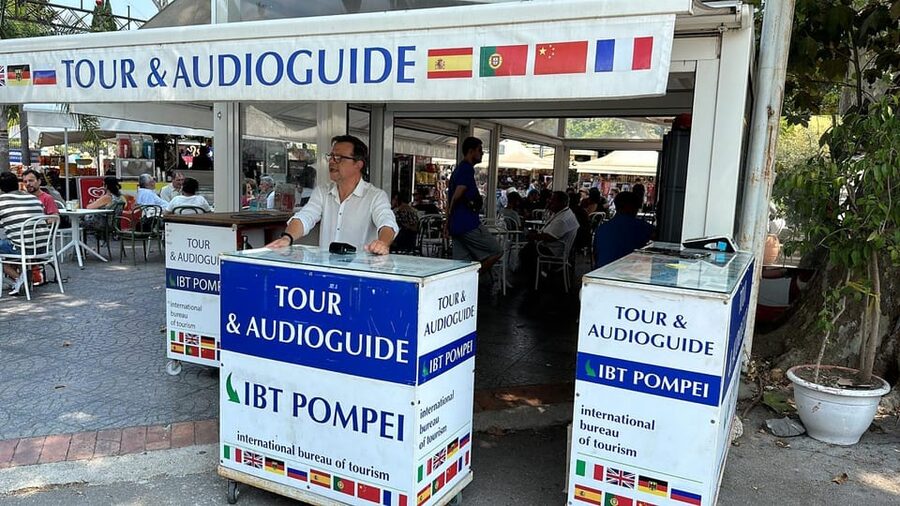
The meeting point is the IBT Center, also called Touristation, beside Chalet Donna Lucia. The location is described as easy to find, though the exact meeting instructions were not clear to everyone. Give yourself time to locate the center rather than walking straight to an archaeological entrance and expecting to collect everything there.
Bring your passport or ID card for every participant. Do not bring large bags, luggage, smoking materials, alcohol, or drugs. Pets are generally not allowed, although small dogs can enter if kept on a leash and carried inside buildings.
Free admission is available for disabled visitors with a certified disability. The provided information does not explain the route conditions or the process for claiming that admission, so confirm the details before arrival.
The activity is non-refundable. That makes checking the date, start time, meeting point, and selected option especially important. Starting times vary, and the duration can range from two hours to one day.
Who Will Get the Most From This Visit
This experience suits you if you want independent sightseeing with more support than a bare admission ticket provides. The audio commentary gives you a framework, while the open-ended format lets you stop for photos, skip a room, or spend extra time at a house or theater.
It also works well for people who do not want to commit to a long guided group tour. You can listen when useful and explore quietly when you prefer. Families and mixed-interest groups may appreciate that freedom, though the amount of walking can make the visit tiring.
You may want a different arrangement if you prefer a historian-led visit with questions and conversation. In that case, choose the guided option if available, and confirm what it includes. You should also compare prices directly before booking if you are comfortable arranging entry yourself.
The language range is a real advantage. English, Italian, French, Spanish, German, Portuguese, Chinese, and Japanese are listed, so you can follow the explanations in a language that suits you.
Should You Book Pompeii With the Audioguide?
Book this experience if you value a ready-made audio explanation, a map, and the chance to avoid the ticket counter. The forum, streets, homes, fountains, baths, amphitheater, and theaters give you enough material for a focused two-hour visit or a much longer exploration.
Pause before booking if price is your main concern. The $53 cost may be fair for convenience at a busy time, but the added amount can be significant compared with local admission. Check the current official rate, confirm whether Villa dei Misteri is included, and ask about any passport deposit.
For the best balance, arrive with ID, light luggage, comfortable shoes, and a plan built around the forum, homes, public buildings, and theaters. If Daniel is giving the introduction, use that opening to learn how the map and audio system work. Pompeii rewards curiosity, but a little planning keeps the ruins from becoming an exhausting maze.
FAQ
What does the Pompeii experience include?
It includes skip-the-line entry to Pompeii Archaeological Park, an audioguide, and a paper city map. A guided tour is included only if you select that option.
How much does the experience cost?
The stated price is $53 per person. Check the current rate before booking because local prices and package costs may vary.
How long does the visit last?
The listed duration ranges from two hours to one day. Starting times depend on availability.
Where is the meeting point?
Go to the IBT Center, also called Touristation, next to Chalet Donna Lucia.
Is the ticket refundable?
No. The activity is non-refundable.
Which languages are available for the audioguide?
The audioguide is listed in Italian, English, French, Spanish, German, Portuguese, Chinese, and Japanese.
Is a guided tour included?
A guided tour is included only with the option that specifically offers it. The standard package includes the audioguide.
Is Villa dei Misteri included?
No. Entrance to Villa dei Misteri is not included.
What should I bring?
Bring a passport or identity card. Identification is required for all participants.
Can I bring a dog?
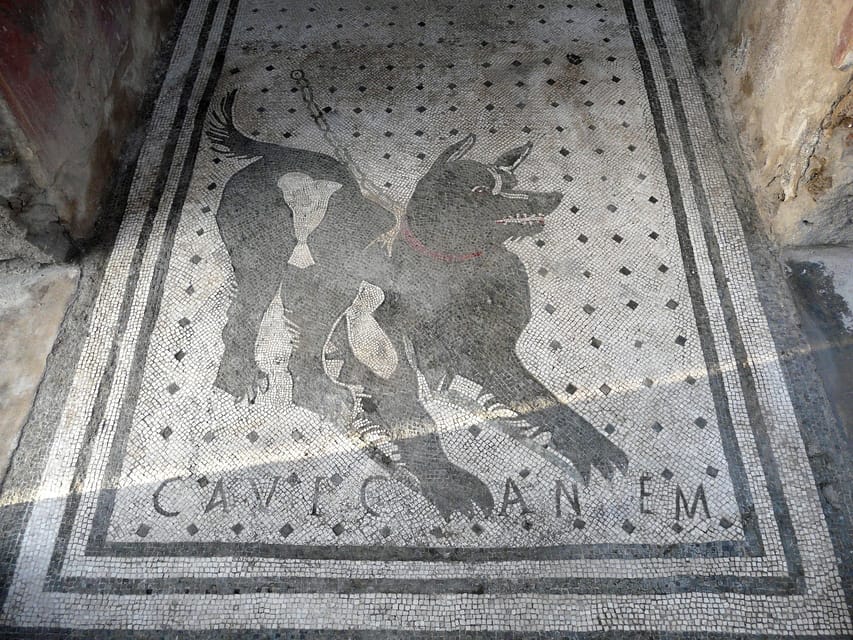
Small dogs are permitted in the archaeological area if kept on a leash. They must be carried inside buildings. Pets are otherwise listed as not allowed.
Recently reviewed around Pompei Campania
- Pompeii 3hours Villa of Mysteries tour with an Archaeologist★ 4.8 · 486 reviews
- Pompeii: Small-Group Tour of Pompeii and Herculaneum★ 4.8 · 867 reviews
- Pompeii: Skip-the-line-Ticket and Guided Tour★ 4.6 · 1,152 reviews
- Pompeii: Guided Tour with Skip-the-Line Entry★ 4.9 · 812 reviews
- Pompeii: Tour with Archaeologist Guide & Skip-the-Line Entry★ 4.5 · 478 reviews
- Pompeii: Afternoon to Sunset Guided Tour with Ticket★ 4.9 · 484 reviews
- Pompeii: Skip-the-Line Entry Ticket with Digital Guide App★ 4.1 · 770 reviews
- Pompeii: Day Tour of Pompeii and Vesuvius with Bus Transfer★ 4.2 · 250 reviews
Pompeii & Vesuvius Tours, compared.

Entry Ticket and Guided Tour with an Archaeologist
Read our review →




Pompeii Small Group Tour with an Archaeologist
Read our review →
Pompeii, Amalfi Coast and Positano Day Trip from Rome
Read our review →Browse the lists this tour appears in