
Review · POMPEII & VESUVIUS TOURS
Herculaneum: Skip-the-Line Entry Ticket with Audio Guide
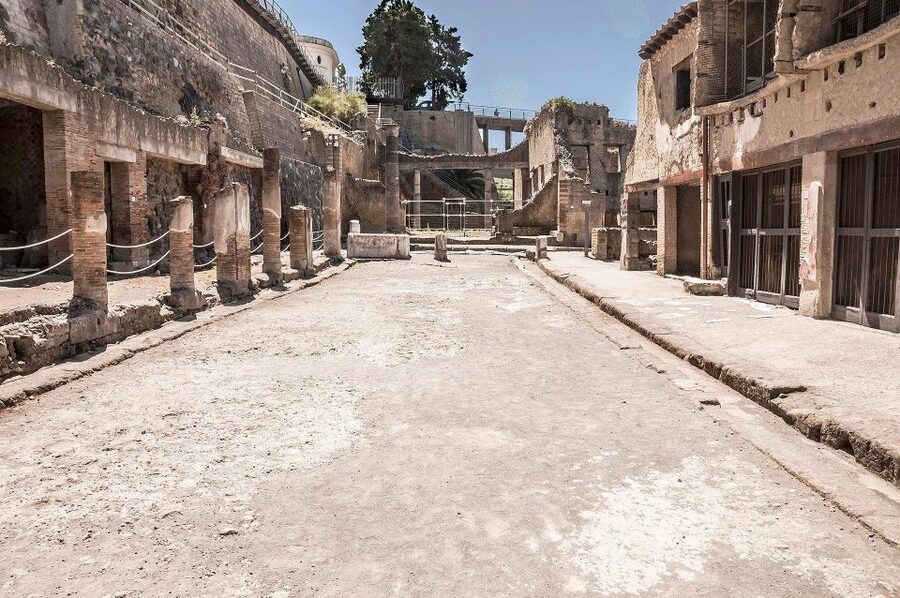
Herculaneum is the Roman town where small details survived: painted walls, wooden doors, furniture, mosaics, and even parts of upper floors. The town is smaller than Pompeii, but that compact size lets you focus on how people actually lived rather than rushing across a huge archaeological site. The boathouses near the end are especially moving, with the remains of people who waited for help from the sea.
I like the freedom of the self-guided audio tour, since you can stop for a closer look, skip a house, or change direction without waiting for a group. I also like the included map, which helps you find the market, fountains, temples, villas, and theatre. The main drawback is that the audio numbers do not always match the site numbers clearly, and some people had to visit several desks to collect the ticket and audio device.
In This Review
- Key points to know before you go
- Why Herculaneum feels different from Pompeii
- Arriving at the Herculaneum Archaeological Park
- Getting your bearings with the map and audio device
- The villas show Roman life in close detail
- The market, fountains, temples, and theatre
- The boathouses and the human cost of the eruption
- The museum and objects near the entrance or exit
- How much time should you allow?
- Best timing and useful planning tips
- Is the skip-the-line ticket worth $15?
- Who should book this Herculaneum experience?
- Should you book it?
- FAQ
- Is the Herculaneum entry ticket included?
- How long does the experience last?
- Which languages are available for the audio guide?
- Where do I meet for the activity?
- Do I need identification?
- What should I wear?
- Can I explore in any order?
- Is there a live guide?
- Is food available at the site?
- Can I cancel the booking?
Key points to know before you go
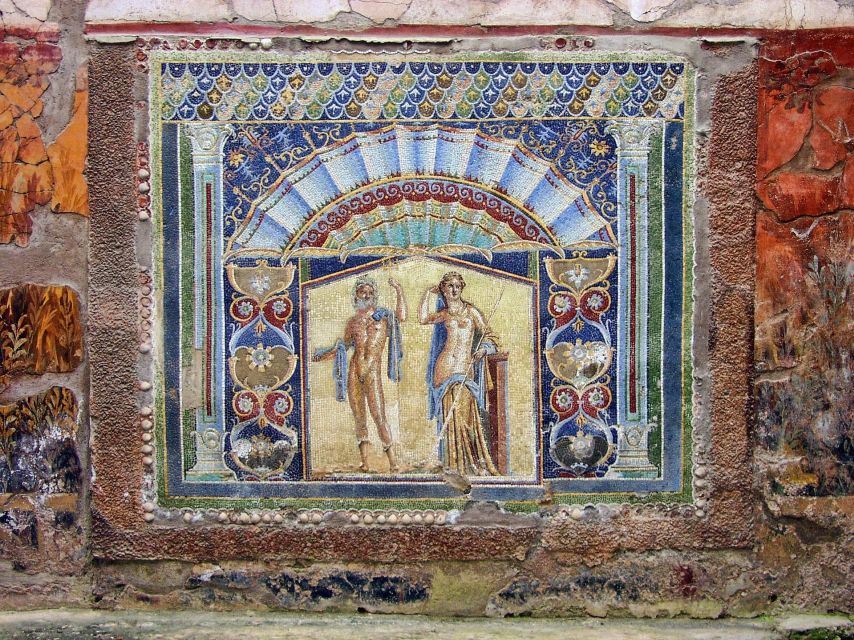
- Wood, frescoes, and mosaics survived: Herculaneum offers an unusually close look at Roman homes and decoration.
- The site is compact but not quick: Plan on two to four hours, with time to sit, listen, and study the buildings.
- The boathouses are the most solemn stop: The remains here show the human cost of the eruption in 79 AD.
- Audio guide directions can be imperfect: Use the map and follow the cues in the order that suits you.
- A ticket may be an optional extra: Confirm that your selected booking includes park admission, not only the audio guide.
- Go early for a calmer visit: Crowds tend to build later, and the stone paths are easier before the hottest part of the day.
Why Herculaneum feels different from Pompeii
Herculaneum was buried by the eruption of Mount Vesuvius in 79 AD, but the material covering it helped preserve objects that are often missing from Roman ruins. At Pompeii, you get scale and long streets. At Herculaneum, you get closer to the texture of daily life.
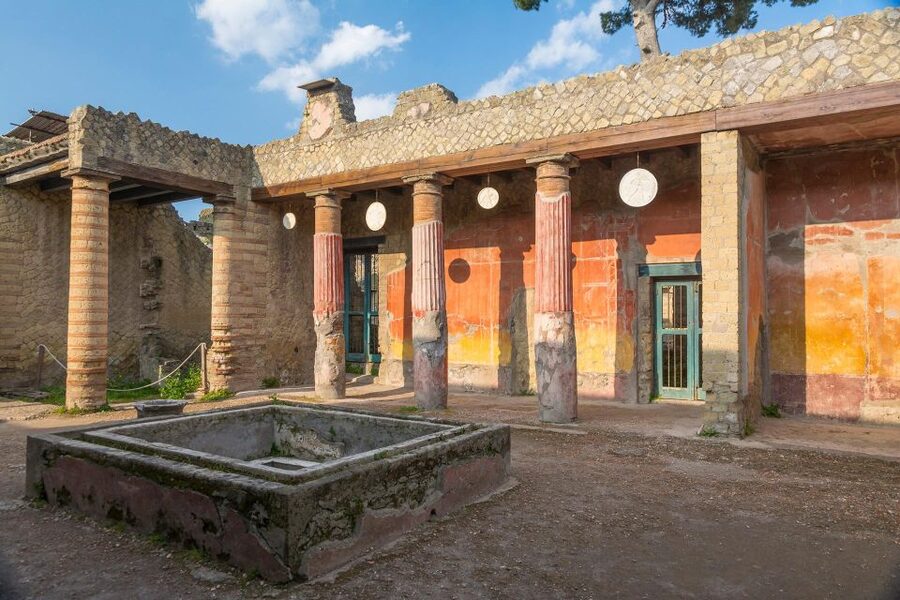
You can look into homes and see painted rooms, patterned floors, storage areas, fountains, and carved decoration. In some places, original wooden elements remain. That makes the visit feel less like a collection of walls and more like walking through a town whose residents left only moments ago.
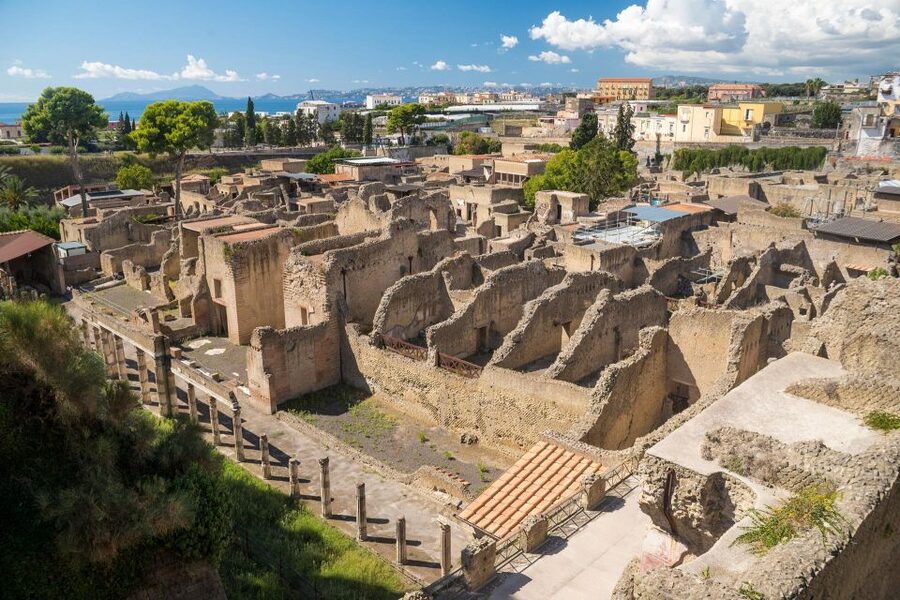
The site is also easier to manage than Pompeii. You can see a great deal in two or three hours, though four hours gives you time to use the audio guide properly and visit the museum area. If you have already been to Pompeii, Herculaneum adds another view of Roman society rather than simply repeating the same experience.
More Naples & Pompeii trips worth a second look
- Herculaneum: Skip-the-Line Guided Tour with Archaeologist
★ 4.8 · 3,439 reviews - Mount Vesuvius: Skip-the-Line Ticket and Smart Digital Guide
★ 4.2 · 2,780 reviews - From Naples: Pompeii Skip-the-Line Entry Ticket and Tour
★ 4.4 · 2,753 reviews
Arriving at the Herculaneum Archaeological Park
You show your ticket at the Herculaneum ticket office. The skip-the-line benefit can be useful during a busy period, but do not assume it will always mean walking straight through. At quieter times, there may be little or no queue, and the process can involve more than one stop.
The practical sequence can be confusing. You may need to collect the audio guide from a small office, provide a passport, identity card, or accepted form of identification as security, and then deal with the entry ticket separately. Some people found themselves moving between three service desks. Ask staff clearly where to collect the audio device and where to enter before joining a line.
The ticket wording deserves attention when you book. The experience is offered with the Herculaneum entry ticket selected as an extra in the option described as audio guide without ticket. At around $15 per person, it can be good value if admission is included in your choice, but the price is less attractive if you discover at the gate that you bought only the audio guide and must pay park admission separately.
Getting your bearings with the map and audio device
The audio guide is available in English, French, German, Italian, and Spanish. It gives background on the buildings, Roman life, the eruption, and the objects on display. The explanations are detailed enough to turn bare walls into homes, shops, temples, and public spaces.
The device and map are useful, but the numbering system is not always easy. Some numbered cues do not line up perfectly with the numbers on the buildings, and the physical route does not always follow the order of the audio tracks. The guide may also jump ahead or send you to a nearby building before you have fully understood where you are.
My advice is simple: do not treat the audio numbers as a fixed route. First use the map to work out your position, then choose the nearby cue. If a number seems wrong, move on and return to it later. You are not required to follow the stops in sequence.
The audio can be held to your ear, and one version of the device works with headphones or earbuds. Bluetooth use may not be available in every setup, so bring your preferred headphones only if you are comfortable using them without relying on a wireless connection. A few people found the sound too quiet, so pay attention before leaving the collection desk.
The villas show Roman life in close detail
The houses are the heart of the visit. Herculaneum does not merely show foundations. You can see rooms with decorated walls, mosaics underfoot, doorways, cupboards, and traces of the way each space was used.
The contrast between wealthy homes and slave quarters is one of the most useful parts of the audio commentary. Lavish rooms reveal how rich Romans entertained and displayed status. More modest spaces show how servants and enslaved people lived within the same household system. That contrast gives the site social meaning instead of leaving you with pretty decoration alone.
Look carefully at the frescoes. Some colors remain surprisingly strong, and painted scenes of gods and mythological figures appear in several buildings. The mosaics and wall patterns reward a slow pace. It is easy to walk past a doorway, glance inside, and miss the small details that make Herculaneum so memorable.
The original wooden doors and beams are another reason to avoid rushing. Stone walls are common at ancient sites. Wood is not. These surviving pieces help you picture the town as a working community with rooms that were closed, furnished, repaired, and used every day.
A different way to spend the day, same part of Italy:
- Naples: Naples Underground Entry Ticket and Guided Tour
★ 4.4 · 21,781 reviews - Pompeii: Entry Ticket and Guided Tour with an Archaeologist
★ 4.8 · 19,459 reviews - Pompeii: Entry Ticket with Optional Audio Guide
★ 4.2 · 12,360 reviews - Pompeii: Small Group Tour with an Archaeologist
★ 4.8 · 12,264 reviews
The market, fountains, temples, and theatre
The ancient market offers a practical look at public life. Listen to the audio guide here for an explanation of how people bought goods and used shared spaces. It is a good place to pause and imagine the town as more than a set of private villas.
Public fountains show the everyday systems behind Roman life. They also help you understand how the streets functioned before modern plumbing and private bathrooms. The map makes these features easier to locate, especially when you are exploring in your own order.
At the temples, look for depictions of ancient gods and consider how religion appeared in public spaces and household decoration. The audio guide supplies the context, but you will get more from it if you stand in front of the feature being discussed rather than listening while walking.
The theatre is another worthwhile stop, although access and open areas can vary. Some parts of the site may be closed when you visit. That is one reason I would not build your whole schedule around seeing every single marked building.
The boathouses and the human cost of the eruption
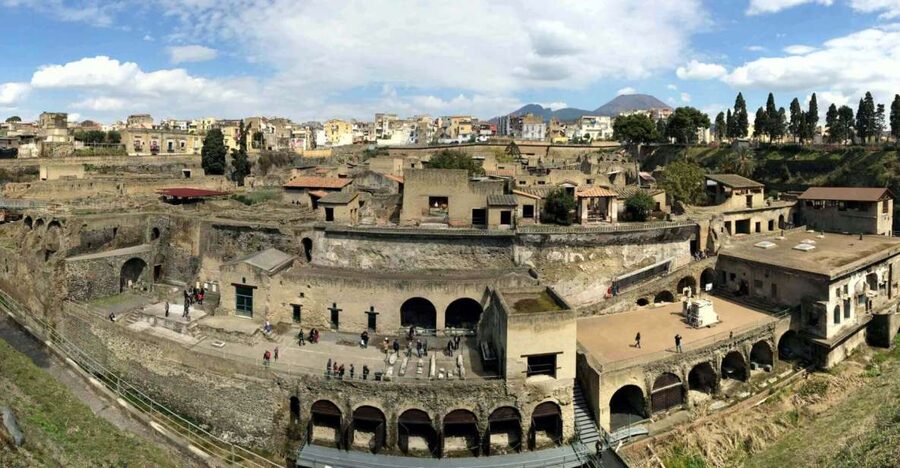
The route toward the sea and the boathouses changes the mood. This is the area where around 300 people died while hoping to escape or be rescued. The remains make the eruption personal in a way that painted walls cannot.
Give yourself time here. The audio guide explains what happened, but the setting also calls for quiet attention. Some visitors choose to finish their visit at this point because it is the most poignant section. Others prefer to see it earlier and then take more time with the houses. Both approaches work.
The display connected with the boat adds another physical link to the disaster. It is easier to understand the desperation of that final wait when you can see objects and remains connected with the attempt to reach safety.
The museum and objects near the entrance or exit
Allow time for the museum, often visited near the entrance or exit. It contains artifacts, furniture, and other objects recovered from the town. These pieces fill in the rooms you have just seen.
A decorated wall tells you about style. A preserved object tells you how the room functioned. Together, the ruins and museum displays make Roman life easier to picture. If you have only two hours, do not rush past this section. It adds useful context and can be one of the strongest parts of the visit.
The location of the museum in your route may depend on how the park is operating that day. Keep it in your plan rather than assuming it is just a quick add-on.
How much time should you allow?
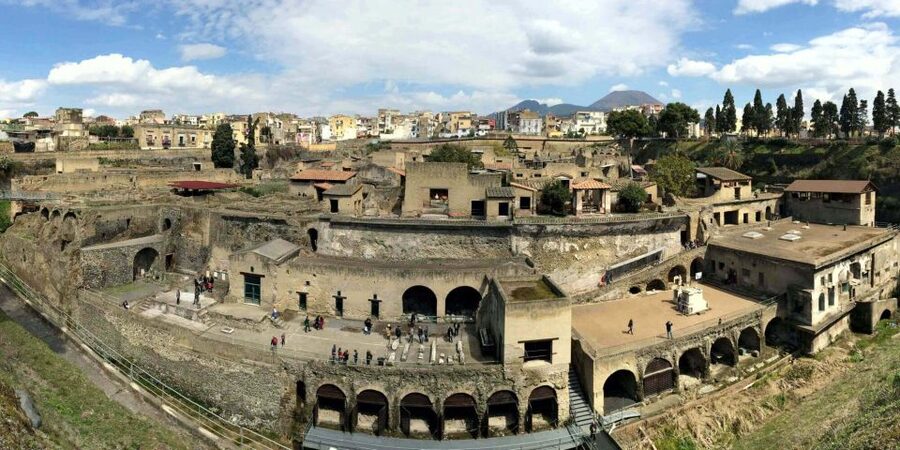
Two hours is the minimum I would suggest if you want more than a quick walk. You can cover the main streets and several houses in that time, but the audio commentary will make the visit longer.
Three hours is a sensible target for most people. It gives you time to see major homes, the market, public fountains, temples, the boathouses, and the museum without racing. Four hours suits anyone who likes to listen to nearly every explanation, examine mosaics, or stop for rest.
The terrain is made up of cobblestones, uneven surfaces, and some steep steps. Comfortable shoes are essential. There are places to sit, which helps on a hot day, but you should still plan for a fair amount of walking and limited shade in some areas.
A small café and snack stop are available, and packed lunches can be enjoyed in suitable places. Toilets have not impressed everyone, so use facilities when convenient rather than waiting until the last moment.
Best timing and useful planning tips
Opening time is a strong choice. The site is often calmer then, and you can study the first houses without a crowd pressing behind you. By later morning or midday, the park can become busier.
If you are staying nearby, Herculaneum works well as a first-day activity. The park is also reachable by EAV train from Naples, with the station about a 12-minute walk from the site according to the practical information provided by visitors. From Pompeii, the train can be a straightforward option as well.
Bring your passport or identity card because identification may be held while you use the audio device. Bring comfortable shoes, water, and headphones if you prefer using your own. Before entering, check that you received the map, since it may be provided on paper or through the device depending on the arrangement.
Do not worry if you arrive earlier than your booked time. Entry has sometimes been allowed ahead of schedule, though this is not something to count on during a crowded period.
Is the skip-the-line ticket worth $15?
The value depends on two things: the crowd level and what your selected option includes. Herculaneum is often quieter than Pompeii, so a skip-the-line ticket may save little time on a calm weekday morning. During busy periods, avoiding a long wait can matter, especially if you are fitting the site around a train, flight, or another attraction.
The audio guide adds real value for independent visitors. A bare entry ticket leaves you to interpret an enormous amount of Roman architecture on your own. Here, the commentary explains the houses, artwork, religious images, public spaces, and eruption, while the map lets you choose your own route.
The weak point is the handover process. If you must collect an audio device, leave identification, and then collect or validate an entry ticket, the phrase skip-the-line may feel less clear than expected. Read the booking option carefully and ask staff where to go first.
You can sometimes upgrade to a guided tour. Guides named in the supplied information include Tony and Fabio, and the guided option may suit you if you want a clear route and live explanations. Fabio was praised for a steady pace and for stopping in shaded areas on a hot day. The upgrade costs extra, so the audio option remains the better deal for independent visitors.
Who should book this Herculaneum experience?
I would choose this for anyone interested in Roman homes, art, archaeology, or the story of the Vesuvius eruption. It also suits families who want the freedom to move at different speeds, provided everyone is comfortable with cobbled paths and steps.
It is a particularly good partner to Pompeii. Pompeii gives you a huge town to explore. Herculaneum gives you better-preserved domestic details in a smaller area. If you have only time for one, your choice depends on priorities, but you should not assume the smaller site has less to offer.
You may prefer a live guide if you want help identifying each building or dislike managing an app and map. The audio guide is best for visitors who want to pause, take photographs, wander off route, or spend extra time in one house.
Should you book it?
Book this experience if you want a flexible visit with useful historical explanations and the chance to explore Herculaneum at your own pace. The preserved frescoes, mosaics, wooden features, temples, market, and boathouses justify the time and usually make the $15 price good value when admission is included.
Before paying, confirm that your chosen option includes the park ticket. Go early, collect the map, check the audio volume, and do not expect every number to line up perfectly. With those small precautions, this is an unusually rewarding archaeological visit and one of the strongest things to do near Naples and Pompeii.
FAQ
Is the Herculaneum entry ticket included?
The entry ticket must be selected as an extra in the option described as Herculaneum: Audio Guide no ticket. Check your exact booking choice carefully, since some people have purchased the audio guide only and then paid for park admission at the entrance.
How long does the experience last?
The booking duration is one day, allowing you to visit during the available operating period. Most people should allow two to four hours to see the main areas and use the audio guide without rushing.
Which languages are available for the audio guide?
The audio guide is available in English, French, German, Italian, and Spanish.
Where do I meet for the activity?
Show your ticket at the Herculaneum Archaeological Park ticket office.
Do I need identification?
Bring a passport or identity card. Identification may be held as security while you use the audio guide device.
What should I wear?
Wear comfortable shoes. The site includes cobblestones, uneven ground, and some steep steps.
Can I explore in any order?
Yes. You can use the map and select audio stops in the order that suits you. The site numbers and audio cues may not always match perfectly, so allow time to orient yourself.
Is there a live guide?
A live guide is not included. This is a self-guided audio experience, though an upgrade to a guided tour may be offered separately.
Is food available at the site?
There is a café and a place to buy snacks and drinks. Some areas are suitable for eating a packed lunch.
Can I cancel the booking?
You can cancel up to 24 hours in advance for a full refund. The reserve-now, pay-later option allows you to book without paying immediately.
More Audio Tours in Naples & Pompeii
- Pompeii: Skip-the-Line Entrance Ticket with Audio Guide
★ 4.0 · 2,509 reviews - Pompeii: Skip-the-Line Entry Ticket with Audio Guide or Tour
★ 4.1 · 1,364 reviews - Naples: National Archaeological Museum Ticket & Audio App
★ 4.4 · 617 reviews - Ercolano: Herculaneum Entry Ticket with Optional Audio Guide
★ 4.1 · 581 reviews
Recently reviewed around Naples & Pompeii
- Pompeii Skip-the-line Tour with Archaeologist Guide★ 5.0 · 559 reviews
- Sharing Tour of Pompeii★ 5.0 · 487 reviews
- Skip the Line Guided Tour of Pompeii led by an Archaeologist★ 5.0 · 703 reviews
- Visit in Pompeii – Pompeii Private Tour with Ada★ 5.0 · 436 reviews
- Pompeii Private Tour with an Archaeologist and Skip The Line★ 5.0 · 391 reviews
- Private Day Tour to Vesuvius, Herculaneum & Pompeii with Pick Up★ 5.0 · 279 reviews
- Pompeii Guided Group Tour with Entry Ticket and Archaeologist★ 4.5 · 269 reviews
- Pompeii Private Tour with an Archaeologist and Skip The Line – 3 hours★ 5.0 · 564 reviews
Pompeii & Vesuvius Tours, compared.

Entry Ticket and Guided Tour with an Archaeologist
Read our review →




Pompeii Small Group Tour with an Archaeologist
Read our review →
Pompeii, Amalfi Coast and Positano Day Trip from Rome
Read our review →Browse the lists this tour appears in